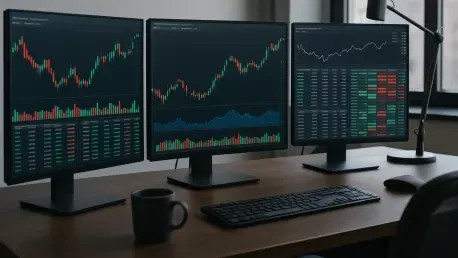

In the world of financial markets, a profound reevaluation is taking place as the old paradigm that celebrated raw execution speed above all else gives way to a more mature and resilient philosophy. For nearly a decade, the competitive landscape was an arms race measured in milliseconds, where the fastest data feeds and quickest order placements reigned supreme. However, the current economic climate—defined by persistent structural volatility, rapid recalibrations of interest rate expectations, and the immediate ripple effects of geopolitical events—has exposed the fragility of this speed-centric approach. Traders are now discovering that the true advantage lies not in the velocity of a single action but in the consistency and control of a well-managed process. This marks a significant “professionalization” of the retail trading space, where the disciplined frameworks once exclusive to institutional desks are becoming the new standard for achieving sustainable success.
The New Pillars of Trading Success
Stability Over Speed The Foundation of Modern Trading
In an environment where market movements can be both swift and severe, the financial impact of a single unforced error has become significantly more punitive than the marginal benefit of a few milliseconds of saved time. This has catalyzed a fundamental shift in trader priorities, with a growing preference for platforms that guarantee reliability and stability over those that merely promise higher leverage or faster execution. The modern trader now seeks an ecosystem with fewer potential points of failure, understanding that a platform’s dependability during periods of high stress is paramount. This demand for a stable trading environment, characterized by an exceptionally high trade execution success rate and negligible downtime, ensures that a trader’s strategic decisions—not platform glitches or pricing inconsistencies—are the ultimate determinants of their financial outcomes. Such reliability forms the essential bedrock upon which all disciplined trading strategies are constructed, empowering participants to manage risk proactively instead of reactively addressing system-induced crises at the worst possible moments.
The practical implications of this demand for stability are transforming the features that define a premium trading platform. Traders are increasingly scrutinizing the consistency of execution, looking for platforms that minimize delayed fills, prevent inconsistent pricing, and eliminate unexpected downtime, particularly during peak volatility when these issues are most likely to occur. In the past, traders were often forced to contend with these technical shortcomings as an unavoidable cost of doing business, but the modern participant views them as unacceptable risks. A truly stable platform provides a seamless and predictable experience, allowing traders to maintain full confidence in their ability to enter and exit positions precisely as their strategy dictates. This operational integrity is no longer a luxury but a core requirement, as it allows for the methodical application of risk management principles and prevents the erosion of capital through preventable technical failures. This focus on a robust and reliable infrastructure is what separates platforms designed for serious, long-term trading from those that cater to a more speculative, event-driven mindset.
The Shift to a Process Driven Approach
Successful trading is now increasingly understood as a continuous and dynamic process rather than a series of disconnected, high-stakes events. The outdated pursuit of isolated, headline-grabbing wins is being supplanted by a more structured and methodical approach centered on the holistic management of one’s entire portfolio. To facilitate this evolution, leading-edge platforms are integrating a suite of institutional-grade tools designed to foster constant control and situational awareness. Features that were once the exclusive domain of professional trading floors, such as real-time performance tracking, comprehensive portfolio visibility dashboards, granular exposure monitoring at the individual asset level, and sophisticated position sizing calculators, are now becoming standard. By embedding these powerful analytical capabilities directly into the user interface, these platforms are empowering traders to move beyond simple buy-and-sell decisions and engage in a more strategic, ongoing management of their capital. This continuous feedback loop cultivates a deeper understanding of one’s financial position and encourages a more disciplined and systematic approach to market engagement.
This process-driven methodology is further enhanced by the integration of sophisticated risk management concepts directly into the retail trading experience. Principles such as risk-adjusted returns, maximum drawdown controls, and Sharpe ratio analysis are no longer abstract academic theories but are now actionable metrics presented in an intuitive and accessible format. Furthermore, the importance of maintaining strategic consistency is addressed through the seamless synchronization of settings and preferences across a trader’s entire ecosystem of devices, including web, desktop, and mobile platforms. This ensures that whether a trader is at their desk or on the move, their strategic framework, risk parameters, and execution capabilities remain uniform and reliable. This technological cohesion is critical for moving trading away from the realm of impulsive, emotional reactions and transforming it into a planned, professional, and data-driven discipline. By providing the tools for consistent and controlled execution, these platforms are enabling a new generation of traders to operate with a level of sophistication previously unattainable in the retail space.
Redefining Capital and the Trader’s Mindset
Making Every Dollar Count The Return of Capital Efficiency
For many years, in a global financial environment characterized by near-zero interest rates, the concept of idle cash was largely an afterthought for most traders; its opportunity cost was negligible. However, the recent normalization of monetary policy has thrust the principle of capital efficiency back into the spotlight. In the current landscape, uninvested cash represents a tangible and significant missed opportunity for generating returns, compelling traders to adopt a more strategic and business-like approach to managing their liquidity. This paradigm shift requires traders to think not just about the potential profits from their active positions but also about the productivity of their entire pool of capital. As a result, every dollar in an account must be viewed as a working asset, and its allocation—whether deployed in the market or held in reserve—must be a deliberate and justified decision. This renewed focus on making every dollar count is a hallmark of the maturing retail trader, who now approaches their activities with the disciplined mindset of a chief financial officer managing a company’s balance sheet.
In response to this renewed emphasis on optimizing capital, modern trading platforms are innovating beyond their core execution functions to address the full lifecycle of a trader’s funds. A key development in this area is the introduction of features that allow clients to earn a competitive interest rate on their uninvested account balances. This is far more than a simple marketing perk; it represents a fundamental alignment between the platform’s offerings and the principles of sound financial management. By transforming idle cash from a dormant asset into a productive one, these platforms actively reinforce a more disciplined approach to capital allocation. This feature encourages patience and discourages the impulse to over-trade, as traders know their reserve liquidity is still generating a return. Consequently, cash is reframed as a strategic asset—a source of both buying power and a stable yield—which supports a more thoughtful and deliberate trading style where capital is deployed based on high-conviction opportunities rather than a fear of missing out.
The Rise of the Institutional Minded Retail Trader
This powerful convergence of platform stability, process-driven tools, and a focus on capital efficiency has cultivated a new archetype: the institutional-minded retail trader. This individual operates not as a hobbyist or a speculator but with the discipline, foresight, and risk-management rigor of a small professional trading desk. Their demands from a platform extend far beyond low commissions and a flashy user interface. They require a partner that treats critical functions like security, advanced data protection, and the stringent segregation of client funds not as premium, add-on features, but as foundational, non-negotiable prerequisites for earning their business and trust. This class of trader is deeply analytical, values transparency, and seeks a platform that provides the sophisticated tools necessary for long-term, sustainable performance rather than one that gamifies the experience for short-term excitement. They are meticulously building a trading business and expect their platform to provide the professional-grade infrastructure to support it.
This evolution in the retail trader’s mindset has signaled a clear direction for the future of the industry. The next generation of successful trading platforms will be defined not by the aggressiveness of their marketing or the level of leverage they offer, but by their unwavering commitment to delivering reliability, analytical clarity, and a profound respect for the capital their clients entrust to them. They understood that their role was to empower traders by providing an environment that rewards preparation, restraint, and consistency. By shifting the focus from the thrill of the trade to the discipline of the process, these platforms are positioning themselves at the vanguard of a market where controlled, thoughtful, and sustainable performance has become the ultimate competitive advantage. This transformation reflected a broader maturation of the retail market, where a more sophisticated participant now demanded a more sophisticated partner to navigate the complexities of modern finance.