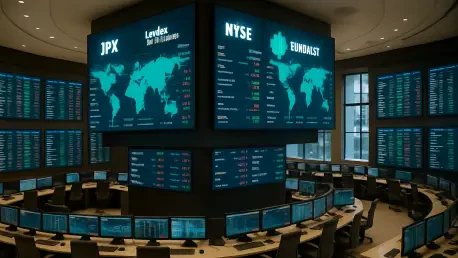

The sudden maturation of event-based trading has transformed the global financial landscape into a high-stakes arena where traditional derivatives venues are racing to capture a new generation of retail participants. Recent industry analysis indicates that nearly forty-seven percent of traditional derivatives exchanges are currently evaluating a strategic entry into prediction markets, yet a striking disparity exists as only five percent have made a definitive operational commitment to the space. This cautious enthusiasm stems from a delicate balancing act where executives seek to harness the viral nature of retail-driven event trading without simultaneously eroding the liquidity of their existing futures and options catalogs. As these institutions navigate the complexities of 2026 and look toward 2028, the primary objective has shifted from mere observation to active experimentation. The lure of diversification is powerful, particularly as the traditional flow of institutional capital remains steady but lacks the rapid growth potential seen in decentralized and event-driven betting platforms that have recently gained massive public traction.
Technical Implementation: Overcoming Legacy Constraints
Transitioning to a robust prediction market framework requires more than just capital; it necessitates a complete overhaul of traditional market design philosophies. Industry executives have highlighted that market design complexity remains the most significant technical barrier, with sixty-two percent of respondents citing it as the primary hurdle to deployment. Integrating these innovative platforms with aging legacy systems presents a formidable challenge, particularly when managing real-time data feeds and the nuances of post-trade settlement. To mitigate these risks, fifty-seven percent of global exchanges favored a hybrid development strategy that combined in-house proprietary expertise with third-party technological solutions. This approach allowed firms to maintain control over their core infrastructure while outsourcing the specialized algorithmic requirements of event-based contracts. By bridging the gap between old-world stability and new-age agility, these venues began to develop institutional-grade environments that could support high-frequency trading in non-traditional asset classes.
Strategic Implementation: Regulatory Alignment
Successful deployment of these platforms ultimately depended on the ability of exchanges to achieve rapid time to market while maintaining compliance with evolving oversight standards. Leadership teams recognized that the competitive advantage belonged to those who could launch reliable services before the landscape became oversaturated. Consequently, the focus shifted toward establishing clearer regulatory frameworks that could harmonize prediction markets with existing financial laws. Firms that prioritized transparency and investor protection were the ones that successfully converted skeptical institutional clients into active participants. This transition required a concerted effort to educate stakeholders on the risk-mitigation benefits of hedging against real-world events, such as political shifts or economic milestones. Moving forward, the industry adopted a more proactive stance by investing in robust surveillance technologies to prevent market manipulation. These actions ensured that prediction markets moved from a niche retail interest into a legitimate pillar of the global financial system, providing diverse participants with new tools for price discovery and risk management.