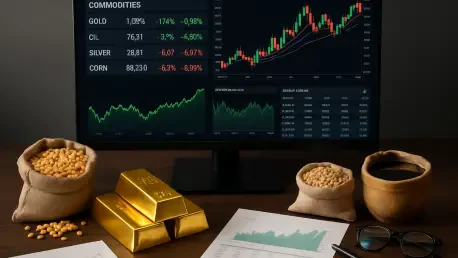

The rapid evolution of decentralized finance has fundamentally altered the landscape of global asset management, as evidenced by the unprecedented surge in trading activity on the Hyperliquid platform. This recent milestone highlights a pivotal shift in market behavior, where participants are increasingly moving away from traditional exchanges to embrace onchain commodity derivatives. The weekend trading volume reached an all-time high, driven largely by a growing appetite for assets like gold, silver, and crude oil within a crypto-native environment. This trend signifies a maturing ecosystem where decentralized protocols are no longer viewed merely as experimental venues for digital tokens but as robust alternatives to conventional financial markets. By providing a seamless bridge between blockchain technology and real-world assets, the platform has successfully captured a significant portion of the global liquidity that typically remains stagnant during traditional market closures. This surge reflects a broader institutional and retail consensus that the future of commodity trading lies in the transparency and efficiency of onchain systems.
Breaking the Barriers of Traditional Market Schedules
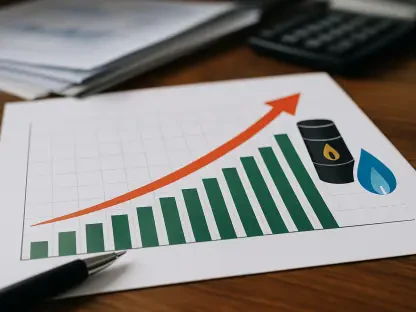
The primary catalyst for this record-breaking activity resides in the inherent structural limitations of traditional commodity exchanges, which operate on rigid schedules and close during weekends. In contrast, the decentralized infrastructure of Hyperliquid remains operational 24/7, providing a continuous venue for price discovery and risk management regardless of the hour or day. This constant accessibility proved to be absolutely critical during recent geopolitical escalations, such as the heightened tensions involving U.S. and Israeli interests in the Middle East. While traditional venues like the CME or NYMEX were unavailable to react to breaking news, onchain traders actively utilized crude oil perpetuals to hedge their positions or speculate on potential price gaps. This resulted in approximately seven hundred and twenty million dollars in volume over a single weekend, demonstrating that market participants value the ability to react in real-time to global events without being constrained by the legacy hours of institutional banking.
Building on this structural advantage, the shift toward onchain commodities represents a sophisticated move by traders to leverage the unique properties of perpetual futures. Unlike traditional futures contracts that require physical delivery or periodic rolls, perpetuals allow for continuous exposure to asset prices with integrated funding mechanisms that keep the price aligned with the spot market. This model has gained immense popularity for crude oil and precious metals, as it simplifies the process for retail investors who wish to participate in commodity markets without the complexities of professional brokerage accounts. Furthermore, the integration of specialized user interfaces has lowered the barrier to entry, allowing a new generation of digital-native investors to interact with traditional macro assets. The resulting liquidity pool has become deep enough to support large-scale trades, further validating the decentralized model as a viable competitor to centralized finance during periods of extreme volatility and high demand.
Technical Infrastructure and Strategic Market Evolution
The sustained success of these trading volumes is largely attributed to the proprietary Layer-1 blockchain architecture that powers the platform, ensuring high performance and security. By focusing on exceptional throughput and sub-second finality, the network provides the execution precision required for professional derivatives trading, which is essential when dealing with fast-moving commodity prices. This technical edge allows the system to handle thousands of transactions per second without the congestion often seen on more generalized networks. Earlier in the year, a sharp silver rally where prices jumped significantly within a fortnight served as a stress test for this infrastructure. The platform handled a massive influx of retail interest, with weekday volumes hitting over four billion dollars and weekend activity remaining remarkably resilient. This capability to maintain stability under pressure has positioned the protocol as a leader among its peers, effectively outperforming established decentralized exchanges in both speed and reliability.
Market participants recognized that the integration of decentralized networks into the broader financial system offered a more resilient framework for managing global economic uncertainty. Throughout the past months of 2026, central bank policy shifts and ongoing macroeconomic volatility encouraged a strategic migration of capital into commodity derivatives as a hedge against inflation and currency fluctuations. Investors sought exposure to non-crypto assets that did not require physical storage, finding the onchain perpetual model to be the most efficient vehicle for this purpose. Traders moved to diversify their portfolios by incorporating silver and oil positions alongside their digital asset holdings, creating a more balanced and risk-aware investment strategy. This transition indicated that the structural gap in global financial infrastructure was being successfully filled by decentralized platforms. By absorbing global demand when traditional markets were offline, these networks established themselves as indispensable tools for modern finance, proving that the demand for liquidity and reactivity is now a permanent fixture of the international trading landscape.