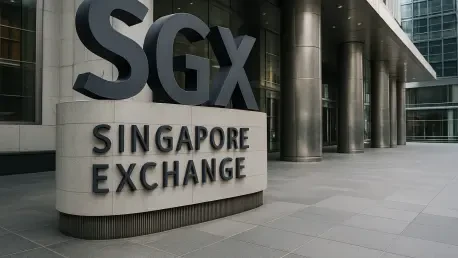

In a decisive move to clarify its identity and build on historic market strength, the Singapore Exchange (SGX) announced a major rebranding of its equities business to the SGX Stock Exchange, a declaration made by chief executive Loh Boon Chye during the momentous 60th anniversary celebration of the Straits Times Index (STI). This strategic name change is far more than a cosmetic update; it is a deliberate effort to provide a more intuitive and distinct identity for a foundational component of the exchange’s operations. Mr. Loh articulated that the rebranding reinforces the centrality of equities within the broader SGX Group’s multi-asset ambitions, underscoring the stock market’s critical role in cementing Singapore’s status as a premier international financial hub. The timing of this announcement is particularly significant, coming on the heels of the successful completion of the Equities Market Review Group’s recommendations, signaling that the rebranding is an integral part of a comprehensive and actionable plan to propel the market’s evolution.
A Year of Unprecedented Market Momentum
Record Highs and Resurgent Activity
The backdrop for this strategic rebranding was an exceptionally robust year of market performance in 2025, a period characterized by a significant resurgence in investor confidence and market activity across a multitude of metrics. The Straits Times Index itself soared to record highs, delivering an impressive total return of over 25 percent. This stellar performance, as highlighted by Mr. Loh, positioned the index to stand “shoulder to shoulder with leading global benchmarks such as the S&P 500 and Nasdaq.” Underscoring this sustained strength, National Development Minister and Monetary Authority of Singapore (MAS) deputy chairman Chee Hong Tat noted that the index had generated total returns exceeding 100 percent in Singapore-dollar terms over the preceding five years. This bullish sentiment permeated the entire market, signaling a powerful and sustained recovery that captured the attention of both domestic and international investors.
This optimistic atmosphere was clearly reflected in the primary markets, where initial public offering (IPO) activity, a key barometer of market health and corporate confidence, rebounded significantly throughout 2025. The total funds raised through IPOs surpassed an impressive $2.4 billion, marking the highest figure recorded since 2019 and signaling a renewed appetite for new listings. In a further testament to the market’s expansion, the total market value of all listed companies crossed the landmark $1 trillion threshold during the year. Concurrently, trading volumes surged, with the average daily traded value of securities reaching its highest level since 2010. Minister Chee interpreted these robust figures as unambiguous indicators of “improving market functionality and stronger two-way interest from market participants,” affirming that the exchange was operating with heightened efficiency and attracting a broad base of active investors, laying a solid foundation for future growth.
Broadening Market Participation
The remarkable growth observed in 2025 was not confined to the traditional blue-chip stocks that have long anchored the market; an overarching trend of broad-based participation became evident, particularly within the dynamic small- and mid-cap segment. Turnover in these counters experienced a notable increase of more than 40 percent in 2025 compared to the previous year, a growth rate that significantly outpaced the rest of the market. This renewed and vigorous interest in a wider array of securities points to a deepening of the market and a more diversified investment landscape. The trend was further supported by the successful launch of the iEdge Singapore Next 50 Index in September 2025. This new index, designed to track the performance of the next 50 largest companies after the STI constituents, itself performed “admirably” by posting total returns of over 25 percent since its inception, providing investors with a new vehicle to engage with Singapore’s rising corporate stars.
The celebration of the STI’s 60th anniversary also provided an opportunity for historical reflection, contextualizing the current market dynamism within a longer narrative of national economic development. Established in 1966 as the Straits Times Industrials Index, the benchmark initially tracked 30 blue-chip companies on the joint Stock Exchange of Malaysia and Singapore. After being rebranded to its current name in 1998, it has continuously evolved to mirror Singapore’s own profound economic transformation. Minister Chee aptly characterized the index as a reflection of the nation’s remarkable journey from an industrializing city-state to a trusted global enterprise and financial hub. Its composition, anchored by the nation’s dominant banks, leading telecommunications firms, and industrial heavyweights, serves as a living chronicle of the corporate champions that have powered Singapore’s success on the world stage, providing a stable yet dynamic foundation for the market’s future.
Charting the Course for Future Growth
Introducing the Value Unlock Initiative
Looking forward, the clear consensus among policymakers and exchange officials is the imperative to capitalize on the powerful momentum generated in 2025 and translate it into sustainable, long-term growth. Minister Chee outlined a clear and ambitious agenda focused on several key pillars: enhancing market liquidity to ensure efficient price discovery, simplifying the trading process to improve accessibility for all investors, increasing the attractiveness of listings to draw in high-quality companies, and strengthening connectivity with other major global markets to expand Singapore’s reach. A cornerstone of this forward-looking strategy is the newly unveiled $30 million “Value Unlock” program. This significant initiative includes two specifically designed grants aimed at helping listed companies gain a deeper understanding of their market valuations and substantially improve their communication strategies with investors and other critical stakeholders.
This proactive “Value Unlock” program is not without precedent; it draws inspiration from similar and highly successful “value-up” initiatives that have been implemented in Japan and Korea. These programs have been instrumental in fostering sustainable growth for their respective stock exchanges by encouraging companies to focus on long-term value creation and transparent corporate governance. By adopting a similar approach, Singapore aims to address the persistent issue of undervalued companies and unlock the latent potential within its market. The program is designed to be a catalyst, providing companies with the necessary resources and incentives to engage more effectively with the investment community, ultimately fostering a market environment where strong fundamentals are more accurately reflected in stock prices, benefiting both the companies and their shareholders.
A Strategic Approach to Unlocking Value
Insights from a panel discussion at the event provided a deeper understanding of the nuances required to make the “Value Unlock” program a genuine success. A key point of consensus among the expert panelists was that the program’s ultimate efficacy hinges on a sophisticated and targeted approach to identifying undervalued companies. The focus must be on meticulously avoiding “value traps”—companies that appear cheap for a valid reason, such as poor fundamentals or a lack of intention to evolve. Instead, the program is designed to strategically target companies where a “kernel of recognition that change is necessary” already exists. This discerning methodology ensures that resources are directed toward businesses that are genuinely committed to transformation and value creation, thereby maximizing the program’s impact on the overall health and dynamism of the market.
The discussion further identified several potential catalysts that could be instrumental in unlocking this intrinsic value for targeted companies. These catalysts included fundamental changes in corporate ownership or the appointment of new management teams, a strategic refresh of the board of directors to bring in new perspectives, or a fundamental shift in the market’s perception of specific industry sectors. Michael Tang, head of listing compliance at SGX RegCo, added that a tangible outcome of this enhanced engagement could be companies making clearer, more public commitments to their dividend policies, a move that would instill greater long-term investor confidence. He also sought to clarify a common misperception among corporates, noting that forward-looking statements are permissible by regulators, provided they are realistic and firmly grounded in the companies’ internal models, thereby encouraging more transparent and forward-thinking communication.