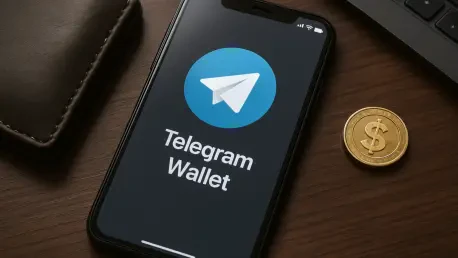

The convergence of social communication and complex financial instruments has reached a significant milestone as messaging platforms transform into all-in-one digital economies. For years, the barrier between chatting with friends and executing high-stakes financial trades remained distinct, requiring users to navigate multiple applications and complex authentication processes. However, the landscape shifted dramatically when the native cryptocurrency wallet within the Telegram application introduced perpetual futures trading capabilities. This development signifies a major move toward “super-app” functionality, where financial derivatives are no longer the exclusive domain of professional traders using specialized terminals. By embedding these tools directly into an interface already familiar to hundreds of millions of people, the platform is attempting to bridge the gap between casual social interaction and sophisticated market participation. This shift reflects a broader trend where distribution and user experience take precedence over traditional technical barriers.
Redefining Retail Participation in Derivative Markets
By lowering the entry threshold to as little as one dollar, the initiative targets a massive demographic of retail participants who were previously priced out or intimidated by the complexities of traditional exchanges. The integration allows the wallet’s extensive user base, totaling roughly one hundred fifty million registered individuals, to engage with over fifty different market types, including both digital assets and traditional commodities like oil and metals. Offering leverage of up to fifty times provides these users with significant market exposure, though it simultaneously introduces substantial risk profiles that were once restricted to professional environments. This democratization of high-leverage trading through a simplified interface suggests that the developers are prioritizing accessibility as the primary driver for adoption. The goal is to make opening a long or short position as intuitive as sending a text message, thereby fundamentally changing how the average person interacts with global market fluctuations in real-time.
Historically, perpetual futures have dominated the total volume of cryptocurrency trading, yet the actual number of individual participants remained relatively small compared to spot trading. This imbalance existed because the technical and cognitive load required to manage perpetual contracts often acted as a deterrent for the general public. The transition to an app-native model removes these hurdles by consolidating wallet management, market analysis, and order execution into a single, unified workflow. Instead of redirecting users to external decentralized exchanges or third-party web portals, the entire process occurs within the messaging environment. This seamlessness is a calculated strategy to capture the attention of users who may have interest in speculation but lack the patience for multi-step onboarding processes. By creating a frictionless path to the derivatives market, the platform is positioning itself as a central hub for the next generation of digital finance, where social connectivity and wealth management coexist without friction.
Strategic Partnerships and Decentralized Infrastructure
The technical backbone of this new feature relies on a strategic collaboration between The Open Platform, known as TOP, and the decentralized exchange infrastructure provided by Lighter. Selecting Lighter as the primary partner for this rollout was a deliberate choice centered on the specific needs of a retail-focused audience. Unlike many traditional decentralized platforms that cater to high-frequency trading firms with deep liquidity needs, Lighter emphasizes a zero-fee trading model and simplified incentive structures. This alignment is crucial for maintaining the low-cost appeal that attracts casual users. By leveraging decentralized order books that function behind the scenes, the wallet can offer a high-performance experience without the overhead typically associated with centralized exchange accounts. This architecture ensures that while the user experience feels as simple as a standard mobile application, the underlying settlement and execution remain transparent and verifiable on the blockchain, providing a hybrid model of convenience and security.
This collaboration highlights a fundamental shift in the industry philosophy, where the emphasis has moved from building superior technical specifications to securing superior distribution channels. While many decentralized finance protocols struggle to find a consistent user base despite having innovative technology, the integration into a massive messaging platform solves the problem of user acquisition overnight. The sheer scale of the existing ecosystem provides a laboratory for testing how decentralized finance products behave when exposed to a non-expert audience. Moreover, the use of decentralized liquidity pools means that the system can scale rapidly to meet demand without the bottlenecks often found in legacy banking systems. This approach demonstrates that the future of decentralized finance may not be found in standalone websites, but rather as invisible layers embedded within the applications that people already use for their daily communication and information gathering, effectively making the technology secondary to the utility.
Regional Constraints and the Shift toward Emerging Markets
Despite the global nature of the messaging platform, the rollout of perpetual futures trading is governed by a strict and selective geographic strategy to navigate the complex web of international financial regulations. Significant markets, including the United States and the United Kingdom, have been excluded from accessing these features due to stringent oversight regarding retail access to high-leverage derivatives. These jurisdictions often require rigorous licensing and consumer protection mandates that do not currently align with the decentralized and streamlined nature of the wallet’s new offering. Consequently, the service is being focused on regions where the regulatory environment is either more flexible or where digital assets are already integrated into the local economy as primary financial tools. This selective availability highlights the ongoing tension between the borderless aspirations of blockchain technology and the persistent reality of national legal frameworks, forcing platforms to make difficult choices about where they can safely expand their services.
In light of these developments, the integration of high-leverage trading into daily communication tools represented a significant gamble on the maturity of the retail market. Organizations that observed this rollout recognized that the primary obstacle to the mass adoption of decentralized finance was not the lack of complex features, but rather the friction of existing entry points. Moving forward, stakeholders should prioritize the development of robust educational frameworks to ensure that users understand the risks associated with fifty-times leverage, especially in volatile markets. Future iterations of these platforms will likely need to incorporate automated risk-management tools that can intervene when market conditions become extreme, protecting novice participants from total liquidation. As the lines between messaging and finance continue to blur, the industry must balance the drive for total accessibility with the ethical responsibility of providing sustainable financial environments. This evolution suggested that the most successful digital tools will be those that empower users while maintaining a high standard of security and transparency.