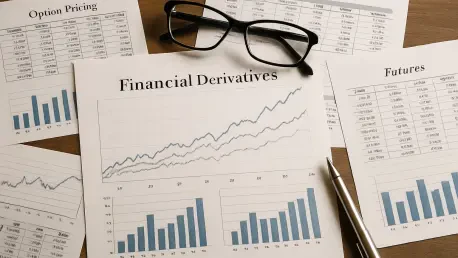

The global financial ecosystem currently manages a notional value of outstanding derivative contracts that dwarfs the total gross domestic product of every nation on Earth combined, acting as a silent yet omnipresent force in modern capital markets. These instruments do not possess intrinsic value in the traditional sense; instead, they function as complex legal agreements where the financial worth is tied to the performance of an external benchmark, such as a stock, a commodity, or a fluctuating interest rate. This unique structure allows market participants to negotiate terms in the present for transactions that will only reach fruition at a predetermined point in the future. By decoupling the price movement of an asset from the physical requirement of owning it, derivatives have transformed how capital is deployed across the globe. Whether dealing with the price of crude oil, the volatility of a tech-heavy equity index, or the shifting exchange rates between major national currencies, these contracts provide a mathematical framework for translating future expectations into current strategic positions.
This decoupling mechanism is the engine that drives the sophistication of 21st-century finance, as it allows for the isolation and transfer of specific risks without the logistical burdens of traditional asset management. For instance, an investor can gain exposure to the price of gold without ever needing to secure a vault or handle physical bullion, simply by entering into a contract that mirrors the metal’s market fluctuations. This abstraction of value creates a dynamic environment where specialized strategies—ranging from conservative risk mitigation to aggressive capital appreciation—can be executed with surgical precision. As the global economy becomes increasingly interconnected, the role of derivatives as a bridge between today’s known variables and tomorrow’s uncertainties has become more central to the stability of the international banking system and the broader corporate world.
Structural Categories of Derivative Instruments
Exchange-Traded Obligations: Futures and Options
Futures contracts stand as one of the most visible and highly regulated forms of derivative instruments, characterized by their rigorous standardization and public accessibility. These agreements represent a binding legal obligation for two parties to conduct a transaction involving a specific asset at a fixed price on a set date in the future. Because these contracts are uniform in size, quality, and expiration dates, they are traded on public exchanges, which ensures that every participant operates under the same transparent rules and pricing mechanisms. This standardization is critical for the maintenance of high liquidity, as it allows traders to enter and exit positions with minimal friction. For a commercial entity like a large-scale agricultural producer, a futures contract provides a vital shield against the unpredictability of the weather and global supply chains. By locking in a guaranteed selling price for a harvest months in advance, the producer effectively eliminates the danger of a sudden price collapse, ensuring that their operational costs remain covered regardless of market shifts.
In contrast to the mandatory nature of futures, options contracts introduce a layer of strategic flexibility by offering the holder a choice rather than an obligation. An options contract provides the right to either buy or sell an asset at a predetermined strike price, but the holder can choose to let the contract expire if the market moves against them. Call options are typically sought by those who anticipate an upward trajectory in an asset’s value, allowing them to purchase the security at a lower price than the current market rate if their prediction proves correct. Put options, meanwhile, act as a form of financial insurance, granting the holder the ability to sell an asset at a set price even if the actual market value plummets. The cost of acquiring this flexibility is the premium, which is the only capital the buyer risks losing if the option is not exercised. This asymmetric risk profile makes options an essential tool for sophisticated investors who wish to protect their portfolios against sudden downturns while maintaining the potential for significant upside gains.
Private Agreements: Forwards and Swaps
Forward contracts represent the more traditional and customized ancestors of the modern futures market, operating primarily in the private, non-standardized realm of finance. Unlike their exchange-traded counterparts, forwards are bilateral agreements negotiated directly between two parties, which allows for total customization of the underlying asset’s quantity, quality, and the specific delivery date. This level of tailoring is particularly advantageous for multinational corporations that need to hedge against very specific currency exposures or commodity needs that do not fit into the rigid boxes of standardized exchange contracts. However, this flexibility comes with a trade-off in the form of elevated credit risk. Because there is no central clearinghouse or exchange to guarantee the transaction, each party must rely entirely on the financial integrity and creditworthiness of their counterparty. If one side fails to honor the agreement, the other may be left with substantial losses and no immediate recourse within a regulated trading floor.
Swap agreements further expand the utility of private derivatives by allowing parties to exchange entire streams of cash flows over a specified duration. The most common iteration of this instrument is the interest rate swap, which has become a foundational tool for corporate treasury departments and financial institutions. In a typical arrangement, one party holding a loan with a fluctuating or floating interest rate might agree to exchange those payments with a party holding a fixed-rate obligation. This allows a company that is concerned about rising borrowing costs to stabilize its debt service payments without having to refinance its original loans. These contracts are generally traded over-the-counter and are essential for managing the long-term structural risks associated with large-scale corporate balance sheets. Because swaps are highly customizable, they can be designed to cover everything from currency fluctuations to credit default protections, making them a versatile, if complex, component of the global financial architecture that requires deep legal and technical expertise to manage effectively.
Economic Utility and Strategic Drivers
Risk Management: Hedging and Speculation
The primary economic purpose of the derivatives market is found in its dual ability to facilitate both hedging and speculation, two activities that are fundamentally different in intent but equally vital for market health. Hedging is essentially a defensive maneuver, used by businesses to insulate their operations from the inherent volatility of the global marketplace. A clear example is found in the airline industry, where the fluctuating cost of jet fuel can determine whether a company remains profitable or faces insolvency. By utilizing energy derivatives, an airline can lock in its fuel expenses for the upcoming year, turning a volatile variable into a predictable line item in its budget. This use of derivatives as an insurance policy allows companies to focus on their core business activities without being derailed by sudden geopolitical events or supply chain shocks that might otherwise cause prices to spike uncontrollably.
While hedging seeks to avoid risk, speculation involves the intentional acceptance of risk in pursuit of financial gain, and it is this activity that provides the necessary liquidity for the entire system. Speculators do not necessarily have an interest in the physical underlying asset; rather, they are focused on the direction of price movements. By betting on whether a market will rise or fall, speculators act as the counterparties that hedgers need to offload their unwanted risks. Without speculators willing to take the opposite side of a trade, a farmer or an airline would find it nearly impossible to find someone to guarantee their future prices. Furthermore, the constant activity of speculators contributes to the process of price discovery, ensuring that market values reflect the most current information and expectations. This symbiotic relationship between those seeking protection and those seeking profit creates a more robust and fluid financial environment where capital can move efficiently to its most productive uses.
Market Dynamics: Leverage and Cost Efficiency
One of the most powerful and frequently cited advantages of utilizing derivatives is the ability to employ significant financial leverage. In the derivatives market, an investor can control a very large position in an underlying asset by putting up only a small fraction of the total value as collateral, a practice known as trading on margin. This magnification of capital allows for potentially massive returns on investment compared to the initial cash outlay. For an institutional fund, this means they can achieve a high level of market exposure while keeping the majority of their capital available for other opportunities or safety reserves. However, the use of leverage is widely recognized as a double-edged sword; while it can amplify profits when a trade is successful, it can just as easily magnify losses if the market moves in an unfavorable direction. This high degree of gearing means that even a minor fluctuation in the price of the underlying asset can result in the total depletion of the investor’s margin, requiring constant and vigilant oversight.
Beyond the power of leverage, derivatives offer significant advantages in terms of transaction costs and general market efficiency. Trading a derivative contract is almost always faster and more cost-effective than attempting to trade the physical underlying asset, particularly when dealing with bulk commodities or foreign currencies. For instance, it is far more efficient to enter into a currency future than to physically acquire, transport, and store millions of dollars in a foreign treasury. Additionally, derivatives provide institutional investors with the ability to adjust their asset allocation with remarkable speed. Instead of selling hundreds of individual stocks to reduce exposure to a specific sector, a fund manager can simply sell a single index future to achieve the same objective in a matter of seconds. This ability to pivot rapidly in response to new economic data or shifting market sentiments ensures that prices across all financial markets remain more closely aligned with reality, reducing the likelihood of long-term mispricing and market distortions.
Navigating the Risk Landscape
Structural Hazards: Market and Credit Risk
Despite the undeniable benefits of financial derivatives, they introduce a set of profound risks that can threaten the stability of individual portfolios and the wider financial system if they are not managed with extreme care. The most direct of these is market risk, which is the possibility that the price of the underlying asset will move in a direction that causes the derivative contract to lose value. Because the world is inherently unpredictable, economic reports, sudden political shifts, or natural disasters can trigger rapid and violent price swings that catch even the most seasoned traders off guard. For those holding leveraged positions, these movements are particularly dangerous, as the speed of the decline can outpace the ability of the participant to exit the position or provide additional collateral. This vulnerability highlights the need for sophisticated modeling and a deep understanding of the macroeconomic factors that drive the value of the benchmarks upon which these contracts are built.
In the world of private, over-the-counter agreements, counterparty risk represents an additional and often more insidious layer of danger. This is the risk that the other party involved in the contract will fail to meet their financial obligations due to insolvency or other operational failures. In a centralized exchange, this risk is mitigated by a clearinghouse that acts as an intermediary, but in a private swap or forward agreement, no such safety net exists. The historical record of major financial disruptions often points to a breakdown in counterparty trust as a primary driver of systemic collapse. When one major institution is unable to pay its obligations, it can trigger a domino effect across the entire network of interconnected contracts, leading to a freeze in credit markets and a general loss of confidence. Managing this risk requires not only a rigorous assessment of the other party’s balance sheet but also the use of collateral management agreements that require the frequent posting of assets to cover potential exposure.
Complex Realities: Liquidity and Valuation
The technical complexity of many modern derivative products introduces another category of risk that is frequently underestimated: the challenge of accurate valuation and the potential for liquidity to vanish during times of crisis. Many specialized derivatives are so intricate that their value is determined by complex mathematical models rather than a simple transparent market price. If the assumptions underlying these models turn out to be flawed, or if the data inputs are inaccurate, the perceived value of the contract can diverge wildly from its actual worth. This “model risk” can lead to situations where institutions believe they are well-protected when they are actually carrying significant hidden liabilities. When market stress occurs, these discrepancies often come to light, leading to sudden and painful revaluations that can erode capital reserves almost instantly.
Liquidity risk further compounds these issues by making it difficult or impossible for an investor to close out a losing position at a reasonable price. In a healthy market, there are always buyers and sellers willing to trade, but during periods of extreme uncertainty, liquidity can “dry up” as participants retreat to safety and refuse to take on new risks. For an investor holding a complex or non-standardized derivative, this means they may be forced to hold onto a plummeting asset because there is simply no one willing to buy it. This situation can transform a manageable loss into a catastrophic one, as the inability to exit the trade prevents the investor from limiting their downside. The interaction between complexity and liquidity creates a volatile environment where the difficulty of understanding a product’s true value makes it even harder to trade when the market turns, emphasizing the importance of transparency and the use of standardized instruments whenever possible.
Participants in the Derivative Ecosystem
Institutional Pillars: Corporations and Banks
The landscape of the derivatives market is dominated by large-scale institutional actors, with non-financial corporations serving as the primary users of these tools for practical, real-world risk management. These entities engage with derivatives not for the sake of profit-seeking in the traditional sense, but to protect their core business operations from the unpredictable nature of global markets. A multinational manufacturer, for example, might use currency forwards to ensure that the profits it earns in Europe are not wiped out by a sudden strengthening of the dollar before they can be brought back to the United States. By locking in exchange rates and raw material costs, these companies can provide more stable pricing to their customers and more predictable returns to their shareholders. This corporate participation provides a steady foundation for the market, as these players are typically looking for long-term stability rather than short-term speculative gains.
Investment banks occupy a different but equally critical role, acting as the primary intermediaries and market makers who provide the infrastructure necessary for these trades to occur. These institutions facilitate the creation of customized products for their corporate clients and manage the complex logistics of the over-the-counter market. By constantly quoting buy and sell prices for a wide array of derivative instruments, banks ensure that there is always a baseline level of liquidity available for other participants. However, their involvement goes beyond mere facilitation; banks also engage in proprietary trading and use derivatives to manage their own massive balance sheets. This dual role as both a service provider and a market participant places them at the center of the financial web, where their health is often synonymous with the health of the entire system. Their ability to accurately price risk and manage their own exposures is a key determinant of whether the derivatives market functions as a stabilizer or a source of systemic vulnerability.
Active Traders: Hedge Funds and Individuals
Hedge funds represent the more aggressive and strategically diverse segment of the derivative ecosystem, often utilizing these instruments to pursue “alpha,” or returns that exceed the broader market average. These funds employ some of the most sophisticated mathematical minds in the world to identify price discrepancies and execute complex arbitrage strategies. By using derivatives to take both long and short positions across different markets, hedge funds can theoretically profit regardless of whether the overall market is moving up or down. Their activities are a major source of the liquidity that allows corporations and banks to hedge their risks effectively. However, the high level of leverage and the directional bets taken by these funds can also contribute to increased market volatility, particularly when many funds are forced to exit similar positions at the same time during a market correction.
The democratization of finance has also opened the door for retail investors to participate in the derivatives market through online trading platforms and specialized brokerage accounts. While this has expanded the reach of these instruments, it has also introduced new challenges regarding investor education and protection. Individual traders now have access to powerful tools like options and futures that were once the exclusive domain of professional institutions. While these tools offer the potential for high returns with limited capital, the steep learning curve and the speed at which capital can be lost make it a dangerous environment for the uninformed. Regulatory bodies have increasingly focused on ensuring that retail participants understand the risks involved and that brokerages provide adequate warnings about the complexities of derivative trading. Despite these risks, the presence of individual investors adds another layer of diversity to the market, contributing to the overall volume and fluidity of global finance.
Forward Strategies for Financial Resilience
The evolution of financial derivatives successfully provided the global economy with a sophisticated set of tools for navigating an increasingly volatile and interconnected landscape. As these instruments became more integrated into the daily operations of both corporations and individual investors, they offered a vital mechanism for transferring risk to those most capable of bearing it. The lessons learned from previous periods of market instability highlighted the necessity of maintaining robust collateral requirements and ensuring transparency in the over-the-counter segments of the market. Participants who prioritized a deep understanding of underlying assets and resisted the temptations of excessive leverage generally found that derivatives served as a stabilizing force in their broader financial strategies. The historical performance of these tools demonstrated that when used with discipline, they facilitated a level of economic predictability that supported long-term growth and capital investment.
Looking ahead, the ongoing refinement of derivative markets will likely focus on the integration of more advanced automated monitoring systems and the further standardization of private contracts to reduce systemic counterparty risk. For the modern professional, the most effective path forward involved a commitment to continuous education and the adoption of rigorous risk-management frameworks that accounted for both market volatility and the potential for liquidity disruptions. Organizations that maintained a balanced approach—using derivatives for their intended purpose of risk mitigation while carefully limiting speculative exposure—were best positioned to weather the inevitable shifts in the global economic climate. By treating these complex instruments as a component of a larger, diversified strategy rather than a shortcut to profit, market participants ensured that the “invisible plumbing” of finance continued to support the stability and efficiency of the global capital markets.