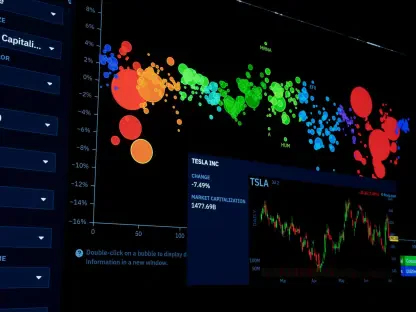

The rapid globalization of financial technology has effectively dismantled the geographic barriers that once confined Australian investors to the domestic equity market. In the current landscape of 2026, the allure of the New York Stock Exchange and the Nasdaq has never been stronger, driven by the dominance of trillion-dollar technology firms and the unparalleled liquidity found in American capital markets. Australian traders are no longer satisfied with the limited sectoral diversity of the ASX, which remains heavily weighted toward banking and mining. Instead, they are turning to international platforms to gain exposure to artificial intelligence, green energy, and global consumer brands that define the modern economy. This shift is supported by a sophisticated ecosystem of brokerage services that provide seamless access to US securities, often with features that were once reserved for institutional players. As the appetite for international diversification grows, selecting the right gateway requires a deep understanding of how different platforms align with specific investment philosophies, from long-term wealth accumulation to high-frequency tactical trading.
The Strategic Choice: Direct Ownership Versus Speculative Derivatives
The primary decision for any Australian investor entering the American market involves choosing between the direct ownership of underlying assets and the use of derivative instruments like Contracts for Difference. Direct ownership is the traditional route, where the investor holds a legal stake in the company, entitles them to receive dividends, and allows for long-term capital appreciation without the complexities of leverage. This approach is highly favored by those building retirement portfolios or seeking to benefit from the steady growth of established blue-chip stocks over several years. Most modern platforms have simplified this process, ensuring that the tax implications and custodial arrangements are handled automatically for the user.
In contrast, many Australian traders gravitate toward CFDs because they offer the ability to speculate on price movements in both directions without owning the actual shares. This model is particularly effective for those looking to capitalize on market volatility or hedge existing positions during periods of economic uncertainty. By using leverage, a trader can control a much larger position than their initial capital would normally allow, which can amplify profits but also significantly increases the risk of loss. The choice between these two methods often dictates which platform is most suitable, as some brokers specialize exclusively in one area while others provide a hybrid environment that allows for a transition between equity and derivatives.
Fractional Shares: Removing the Barriers to Entry
One of the most significant advancements in the US trading space for Australians has been the universal adoption of fractional share trading. Historically, the high price of individual shares in massive tech companies acted as a psychological and financial hurdle for smaller retail participants who could not afford a single unit. Today, however, platforms allow investors to buy as little as one-thousandth of a share, meaning a diversified portfolio can be constructed with a relatively small amount of capital. This democratization of the market has allowed younger investors to participate in the growth of high-value companies that were previously out of reach, fostering a more inclusive financial environment across the country.
Beyond just accessibility, fractional shares facilitate a more precise form of dollar-cost averaging, where investors can commit a fixed Australian dollar amount to their portfolio at regular intervals regardless of the share price. This strategy reduces the risk associated with market timing and allows for the gradual building of a global portfolio. The integration of this feature into mobile apps has made it possible for everyday savers to transform their spare change into meaningful stakes in the world’s most innovative corporations. As a result, the barrier to entry for the American market has shifted from a question of wealth to a question of strategy and consistency.
User Experience: Prioritizing Intuitive Design and Social Features
For many retail investors, the complexity of international markets can be overwhelming, leading to a preference for platforms that prioritize a clean and intuitive user interface. Brokers such as eToro have successfully captured this demographic by blending financial services with social media elements, allowing users to follow successful traders and even replicate their portfolios automatically. This “copy trading” phenomenon has changed how newcomers approach the market, providing a learning curve that is supported by a community of peers. These platforms are designed to be mobile-first, ensuring that Australians can manage their US holdings with the same ease as checking a standard bank account.
However, the focus on simplicity does not mean a sacrifice in functionality, as many of these retail-centric platforms now incorporate advanced charting and real-time news feeds. The goal is to provide a low-friction experience that removes the administrative burden of traditional stockbroking, such as manually filling out W-8BEN forms for US tax purposes. By automating these processes, these platforms allow investors to focus entirely on their market thesis rather than the technicalities of cross-border investing. For the modern Australian investor, the quality of the digital experience is often just as important as the underlying financial products, as it directly impacts their ability to stay engaged with their investments.
Technical Execution: Specialized Tools for Professional Traders
While many are happy with a simplified interface, a growing segment of the Australian market requires professional-grade tools to navigate the complexities of the US exchanges. Platforms like Interactive Brokers and Saxo are widely regarded as the gold standard for those who demand institutional-level data, advanced order types, and deep liquidity. these services provide access to a massive range of securities, including options, futures, and bonds, all from a single integrated account. For the seasoned investor, the ability to execute complex strategies like iron condors or covered calls is essential, and these platforms deliver the technical infrastructure necessary to do so with precision.
These professional-oriented brokers often provide highly customizable desktop environments that can handle massive amounts of data in real-time. This is particularly important for day traders and technical analysts who rely on dozens of indicators and high-speed execution to capture small price discrepancies. Although these platforms come with a steeper learning curve, they offer a level of transparency and control that is unmatched by simpler retail apps. For an investor whose strategy involves high-volume trading or multi-asset management, the investment in learning a more complex system is usually rewarded with lower per-share commissions and better execution prices, which are critical for long-term profitability.
Analytical Depth: Leveraging Research and Proprietary Indicators
Success in the US markets often depends on the quality of the information at a trader’s disposal, leading many Australians to choose brokers based on their research capabilities. Companies like IG and CMC Markets have built reputations by offering extensive educational libraries, expert market commentary, and proprietary analytical tools that help users make sense of global trends. These platforms go beyond basic price charts, providing heat maps, sentiment analysis, and automated pattern recognition software. This wealth of information is designed to empower traders to develop their own unique perspectives rather than relying on hearsay or social media trends.
The availability of high-quality research is particularly valuable when dealing with the volatility of the American tech sector, where earnings reports and macroeconomic data can trigger massive price swings. By providing integrated economic calendars and real-time news alerts, these platforms ensure that Australian investors are never caught off guard by developments in Washington or Wall Street. This analytical depth is a key differentiator for traders who view the market through a mathematical lens and require a robust suite of tools to validate their hypotheses. In a world where data is the most valuable commodity, the broker that provides the clearest insights often wins the loyalty of the most serious participants.
Fee Structures: Evaluating the True Cost of Market Access
Understanding the financial implications of trading US stocks from Australia requires a careful analysis of both transparent and hidden costs. While many platforms advertise “commission-free” trading, they typically generate revenue through the spread or through currency conversion fees. When an investor moves funds from Australian dollars to US dollars, the exchange rate offered by the broker often includes a significant markup, which can erode the initial investment before a single trade is even placed. Active traders must be particularly vigilant about these costs, as frequent currency conversions can lead to a substantial drag on the performance of a portfolio over time.
In addition to currency fees, investors using leverage through CFDs must account for overnight financing charges, which are essentially the interest paid on the borrowed capital. These costs are relatively low for short-term trades but can become prohibitive for positions held over several months. Furthermore, some platforms charge inactivity fees or data subscription fees for access to real-time NYSE or Nasdaq price feeds. Comparing these various cost models is essential for aligning a platform with one’s trading frequency; a low-commission broker might be expensive for a long-term holder due to high FX spreads, whereas a high-commission broker might offer much tighter spreads that benefit the frequent trader.
Regulatory Standards: Ensuring Security and Risk Management
The security of an investor’s capital is paramount, and the Australian regulatory environment provides a robust framework to protect retail participants. Any platform operating in the country must hold an Australian Financial Services License and comply with the strict standards set by the Australian Securities and Investments Commission. This includes the mandatory implementation of risk-management tools such as negative balance protection, which prevents traders from losing more money than they have in their accounts. These safeguards are a critical component of the local market, providing a level of confidence that is not always present in less regulated offshore jurisdictions.
Beyond basic regulation, the leading platforms in 2026 have integrated advanced AI-driven security features and real-time monitoring to detect and prevent fraudulent activity. This technological layer of protection ensures that personal data and financial assets remain secure in an increasingly digital world. For the Australian investor, choosing a broker with a strong local presence and a clear regulatory track record is a non-negotiable step in the due diligence process. The peace of mind that comes from knowing a platform is subject to Australian law allows investors to focus on their market strategies without worrying about the underlying safety of their funds or the integrity of the trading environment.
Strategic Alignment: Future Directions for Global Portfolios
The evolution of the Australian brokerage industry has successfully provided a bridge to the immense opportunities of the American markets. The transition toward more sophisticated international portfolios was marked by a shift from simple domestic holdings to diversified, tech-heavy strategies that leveraged both direct equity and derivative instruments. Investors who prioritized long-term stability found success through platforms that offered low-cost direct ownership and dividend reinvestment, while tactical participants utilized advanced technical tools and leverage to navigate short-term volatility. Throughout this period, the integration of fractional shares and social trading features played a pivotal role in bringing a new generation of Australians into the global financial fold.
Looking ahead, the decision of which platform to utilize should remain grounded in a clear assessment of individual financial goals and risk tolerance. As the distinction between domestic and international investing continues to blur, the most successful investors will be those who remain adaptable, continuously educating themselves on the tools and fee structures that impact their bottom line. The focus should move beyond simply finding a gateway to the US and toward optimizing that connection through a platform that offers the right balance of analytical depth, cost-efficiency, and regulatory security. By aligning their choice of technology with their personal investment philosophy, Australians are well-positioned to continue capturing the growth and innovation that the American markets offer.