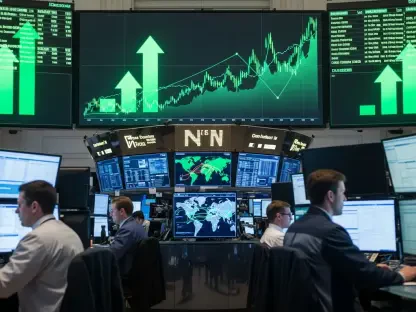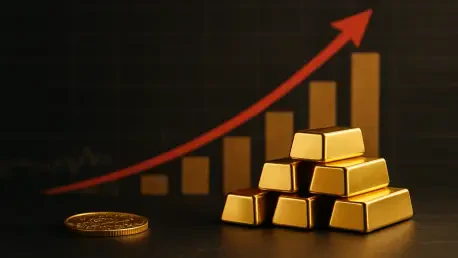

An unusual and seemingly contradictory trend has recently captured the attention of global financial markets, with assets that traditionally move in opposite directions now climbing in powerful, parallel ascents. Asian equity markets, led by notable gains in Japan and South Korea, have surged to a six-week high, painting a picture of renewed investor confidence and an appetite for risk. Simultaneously, however, precious metals like gold and silver, the quintessential safe-haven assets, have also reached record levels, signaling deep-seated caution and a flight to security. This perplexing dual rally, unfolding amidst the characteristically low-volume trading of a holiday period, presents a fascinating puzzle for analysts and investors alike. The thin liquidity has undoubtedly amplified these gains, but it does not fully explain the fundamental divergence in sentiment that underlies these movements. Investors appear to be placing bets on both continued economic stability and potential future turmoil, creating a market environment defined by a delicate and precarious balance of optimism and anxiety.
Equity Markets Ride a Wave of Cautious Optimism
The recent climb in Asian equities to a six-week high was not a reaction to a flood of new, robust economic data, but was instead propelled by a combination of technical factors and forward-looking sentiment. In markets such as Japan and South Korea, the gains were magnified by the thin trading volumes typical of the holiday season, where fewer transactions can lead to more pronounced price swings. Furthermore, year-end portfolio adjustments and rebalancing by institutional investors played a significant role in driving prices higher. Beneath these technical drivers lies a layer of cautious optimism. Investors have been encouraged by relatively stable macroeconomic signals and, more importantly, a growing consensus that global central banks are poised to begin cutting interest rates in the coming months. This anticipation of looser monetary policy has fueled a selective appetite for risk, as lower borrowing costs are generally beneficial for corporate earnings and economic growth. The rally, therefore, represents a bet on a future that is more economically favorable than the present, rather than a celebration of current conditions.
Precious Metals Shine as a Defensive Haven
In stark contrast to the risk-on sentiment in equity markets, the concurrent surge in precious metals was rooted in fundamental, defensive motivations. Gold and silver, which have climbed to record levels, are benefiting from strong safe-haven demand as investors seek to shield their portfolios from persistent geopolitical uncertainty and lingering economic risks. The role of these metals as a traditional hedge against inflation remains a powerful draw, particularly as the long-term trajectory of global price levels remains a subject of debate. The very same catalyst driving equities—the expectation of future interest rate cuts—has had an even more direct and potent effect on gold. As a non-yielding asset, gold becomes significantly more attractive when interest rates fall, as the opportunity cost of holding it relative to interest-bearing assets like bonds diminishes. This powerful rally in defensive assets underscores a deep-seated investor caution, suggesting that despite the optimism in stock markets, a significant portion of capital is being allocated to protect against potential volatility and a downturn in global growth prospects.
A Tale of Two Sentiments
The simultaneous advance in both stocks and gold ultimately revealed a market characterized by a profound dual sentiment. While the equity rally signaled a selective willingness to embrace risk, the powerful surge in precious metals highlighted a persistent and overriding sense of caution among investors. This divergence indicated that the optimism seen in stock markets was not universally shared and was heavily hedged by significant allocations to defensive assets. The market’s behavior suggested that sustained upward momentum in equities would be contingent on receiving clearer, more definitive signals regarding the future trajectory of global interest rates and the underlying strength of the economy. This period of conflicting signals underscored the complex and uncertain environment investors navigated, where the hope for a soft economic landing coexisted with deep-seated fears of geopolitical instability and a potential slowdown, creating a unique and finely balanced market dynamic.