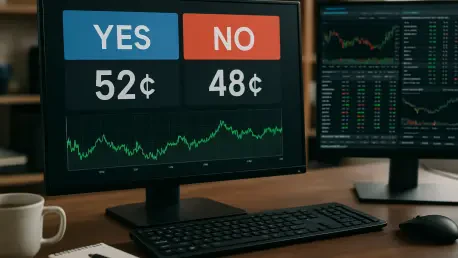

In the fast-paced world of prediction markets, maintaining deep and consistent liquidity is the bedrock of a healthy ecosystem, a challenge that becomes exponentially more difficult in high-frequency trading environments. Polymarket, a prominent player in this space, has recently introduced a significant update to its fee structure, a move designed not as a blanket revenue generator but as a surgical tool to bolster market health. This change introduces a Maker Rebates Program funded by newly implemented taker fees, a system strategically applied exclusively to its most volatile and rapid-fire environments: the 15-minute crypto markets. It is crucial to note that this is not a platform-wide overhaul. The platform has emphasized that its foundational model remains intact, with the vast majority of its diverse prediction markets continuing to operate completely free of fees. Furthermore, the core user experience of depositing and withdrawing USDC without incurring platform charges persists, although standard fees from third-party payment processors may still apply. This targeted initiative represents a calculated effort to enhance market quality where it is needed most without altering the accessible, cost-free nature that defines the broader platform experience for most users.
A Strategic Shift in Market Dynamics
A Taker Pays Maker Gets Paid Model
The core of this strategic update is the “taker-pays, maker-gets-paid” mechanism, a sophisticated model widely adopted in modern electronic markets to cultivate stability and efficiency. The system is funded by collecting small fees from “takers”—participants who actively execute trades by accepting prices already available on the order book. These collected funds are not retained by the platform as revenue. Instead, they are aggregated into a pool that is then redistributed daily, in USDC, to the “makers.” Makers are the crucial liquidity providers who place limit orders, effectively creating the market by setting the bid and ask prices and waiting for takers to fill them. This daily reward distribution provides a direct and consistent financial incentive for professional traders and market makers to commit their capital and maintain deep, liquid order books. By rewarding those who provide liquidity, the program aims to systematically reduce the bid-ask spread—the gap between the highest price a buyer is willing to pay and the lowest price a seller is willing to accept—which translates into better prices and a more efficient trading environment for all participants on these specific high-speed markets.
Balancing Accessibility with Sophistication
The implementation of this fee structure was a deliberate move to balance the platform’s dual objectives of maintaining broad accessibility while fostering a sophisticated environment for its most demanding market segments. This nuanced strategy acknowledged that a one-size-fits-all approach is insufficient for a platform catering to both casual users and high-frequency programmatic traders. For the latter group, the change necessitated a technical adjustment; traders utilizing Polymarket’s API were required to update their systems to correctly account for the new fee structure, ensuring accurate trade execution and P&L calculations. This requirement, while a small hurdle, signaled the platform’s maturation toward a more professional-grade trading infrastructure. Ultimately, the decision to introduce targeted fees while preserving the fee-free nature of most markets demonstrated a commitment to nurturing its entire user base. It fortified the stability of its most volatile offerings, which in turn fostered greater confidence across the entire ecosystem, providing a potential blueprint for how prediction platforms could scale their operations without alienating the community that built them.