
The Indian stock market navigated a precarious tightrope on December 17, 2025, presenting a facade of calm with benchmark indices holding steady while a current of profound uncertainty rippled beneath the surface. This session was defined by a classic tug-of-war, pitting a powerful and decisive domestic intervention against the unyielding pressure of global macroeconomic headwinds. On one side stood the Reserve Bank of India (RBI), which mounted an aggressive and successful defense of the beleaguered Indian rupee, pulling it back from historic lows. On the other side, the market continued to grapple with the persistent drain of foreign capital, lingering ambiguity over a potential India–U.S. trade agreement, and cautious cues from international markets. This complex dynamic left the Nifty 50 index hovering near the 25,900 mark, but investors showed little appetite for a broad-based risk-on rally, instead channeling their focus into a select group of stocks driven by company-specific news, including Axis Bank, HDFC Bank, and the newly listed e-commerce sensation, Meesho.
The Rupee’s Lifeline and Its Market Implications
The RBI’s Decisive Intervention
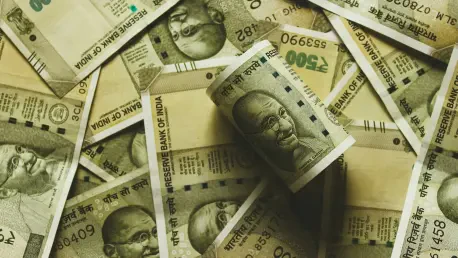
The most significant market-moving event of the day was the dramatic and forceful reversal in the Indian rupee’s downward trajectory. After enduring a punishing four-day losing streak that saw it breach the critical psychological level of 91 per dollar to touch an unprecedented lifetime low of 91.0750, the currency staged a robust and convincing recovery. This rebound was not a result of shifting market sentiment but was directly attributed to decisive and overt intervention by the RBI. According to traders on the ground, state-run banks were seen actively selling U.S. dollars in significant quantities, a move widely understood to be conducted on behalf of the central bank. This strategic action proved highly effective in the short term, causing the rupee to strengthen by approximately 0.7% to trade around 90.25 against the dollar in early deals. This intervention provided a much-needed “breather” for the markets, halting the currency’s slide and injecting a dose of temporary stability into a nervous financial system.
The strategic importance of the RBI’s intervention extends beyond the immediate numerical impact on the exchange rate, signaling the central bank’s resolve to prevent a disorderly depreciation. Such moves are a delicate balancing act; they must be forceful enough to deter speculators but measured enough to avoid creating panic or rapidly depleting the nation’s valuable foreign exchange reserves. For market participants, the intervention was a double-edged sword. On one hand, it provided reassurance that a backstop exists to curb excessive volatility and that the RBI is actively managing the currency. On the other hand, it served as a stark confirmation of the severe underlying pressure the rupee faces from capital outflows and a strong U.S. dollar. The key question for investors now is whether this was a one-off action to shake out short-sellers or the beginning of a more sustained campaign to defend a specific level, a strategy that would have significant implications for India’s forex reserves and monetary policy going forward.
The High Stakes of a Weak Currency
The Indian rupee’s performance has evolved into a primary barometer of investor confidence, and its persistent weakness throughout 2025 has been a significant headwind for the nation’s financial markets. The currency has registered a year-to-date decline of approximately 6% against the U.S. dollar, a depreciation fueled by a potent combination of factors. Chief among them has been the consistent and heavy selling by foreign portfolio investors (FPIs), who have been pulling capital out of emerging markets like India in response to rising interest rates in developed economies and a general risk-off sentiment globally. Compounding this issue is the lingering uncertainty surrounding the protracted India–U.S. trade negotiations. The lack of a definitive agreement has created a policy overhang, making foreign investors hesitant to commit new, long-term capital until there is greater clarity. This has created a self-perpetuating negative feedback loop where a weakening rupee prompts FPI outflows, which in turn exerts further downward pressure on the currency.
While a depreciating currency can theoretically boost the competitiveness of a nation’s export-oriented sectors, its negative consequences in the current environment often outweigh these potential benefits. A weaker rupee directly contributes to stoking imported inflation, as the cost of essential commodities like crude oil, as well as electronic components and capital goods, rises in local currency terms. This can squeeze corporate profit margins and erode household purchasing power, potentially forcing the central bank to maintain a hawkish monetary policy stance. Furthermore, and perhaps most critically for the equity markets, a falling rupee directly diminishes the dollar-denominated returns for foreign investors. This not only discourages new investments but also incentivizes existing investors to sell their holdings to protect their returns in their home currency, thus encouraging further capital outflows and increasing the overall risk premium associated with holding Indian assets, a particularly perilous dynamic when global market sentiment is already fragile and risk-averse.
A Tale of Three Stocks: Divergent Fortunes
Axis Bank: A Crisis of Confidence
While the headline indices presented a picture of relative calm, significant volatility was observed in individual stocks, driven by distinct corporate developments that created a market of sharply divergent fortunes. Axis Bank, a heavyweight in the banking sector, emerged as the day’s most prominent laggard and was the single biggest drag on the benchmark indices. The stock plummeted a staggering 5.1% in the preceding session, a sell-off that continued to cast a pall over the entire financial sector. The direct trigger for this precipitous decline was a widely circulated report from Citi Research, which flagged that the bank’s management had significantly revised its guidance on the recovery of its Net Interest Margins (NIMs). NIM, a critical metric of a bank’s core profitability that reflects the difference between the interest it earns on loans and the interest it pays on deposits, is one of the most closely watched indicators by banking analysts and investors.
The intense disappointment among investors stemmed from the magnitude and nature of the delayed earnings recovery. The anticipated rebound in the bank’s NIMs, which was previously expected to commence in the current October–December 2025 quarter, has now been pushed back substantially. Axis Bank’s management now projects that the recovery will not even begin until the fourth quarter of fiscal year 2026 (January–March 2026) or potentially even the first quarter of fiscal year 2027 (April–June 2026). Adding to the concern, the recovery path was described as a shallow, “C-shaped” trajectory toward a target of 3.8% over the next 15 to 18 months. This cautious language signaled to the market that the path back to healthier profitability would be slow and arduous, dashing any hopes of a swift V-shaped earnings rebound. This fundamental delay in earnings momentum prompted a broad re-evaluation of the stock’s near-term prospects, leading Citi to maintain a “Neutral” rating with a target price of ₹1,285, suggesting limited upside and encouraging investors to adopt a wait-and-see approach.
HDFC Bank and Meesho: Pockets of Strength
In sharp and welcome contrast to the negative sentiment surrounding Axis Bank, its peer HDFC Bank was in focus for a distinctly positive regulatory development. The bank disclosed that it had received a key approval from the RBI, which allows it, along with its associated group entities, to acquire an “aggregate holding” of up to 9.50% of the paid-up share capital or voting rights in rival IndusInd Bank. The approval, which extends to the entire HDFC group ecosystem including HDFC Mutual Fund, HDFC Life, and HDFC ERGO, is valid until December 14, 2026. For the market, the significance of this news was not about an impending acquisition or hostile takeover. Instead, it was interpreted as a strategic green light from the regulator that provides long-term flexibility and valuable positioning optionality for one of India’s largest and most influential financial conglomerates, allowing it to build a strategic stake over time without seeking repeated approvals.
Meanwhile, serving as a powerful counter-narrative to the market’s broader caution, the newly listed e-commerce firm Meesho continued its spectacular post-IPO rally, seemingly defying financial gravity. On Tuesday, the stock surged by as much as 13.28% to hit a new record high of ₹193.44 on the National Stock Exchange. This impressive move marked a staggering 74% gain from its initial public offering issue price of just ₹111 on December 10. Meesho’s robust performance underscored a critical market theme: even when overall sentiment is subdued and benchmark indices are range-bound, powerful stock-specific growth stories can attract significant investor interest and generate substantial returns. The strong investor appetite for Meesho highlighted the market’s willingness to reward companies with disruptive business models, strong execution, and a clear runway for growth, proving that pockets of significant opportunity can exist even in an otherwise cautious and uncertain market environment.
The Broader Market’s Cautious Stance
The market’s underlying caution was clearly evident in its breadth and internal technicals, which painted a picture of a hesitant and selective investor base. While ten of the sixteen major sectoral indices managed to trade in the green, the gains were mostly modest and lacked conviction. Furthermore, the broader market indices, such as the mid- and small-cap segments, were largely flat, indicating that investors were not deploying capital across the board. Instead, they were sticking to specific, news-driven themes and avoiding broad-based bets on an economic recovery. This narrow participation suggested that the day’s stability was fragile and highly dependent on the performance of a few key stocks rather than a widespread improvement in sentiment. This behavior is typical of a market that is waiting for a clear directional trigger, with participants hesitant to take on significant new risk until major uncertainties are resolved.
From a technical perspective, options data provided further evidence of the market’s consolidation phase. The positioning of calls and puts suggested that traders expected the Nifty 50 to remain confined within a near-term range of roughly 25,500 to 26,000 for the weekly expiry. The 26,000 level, in particular, was identified as a key psychological and technical resistance zone, where a high concentration of call options had been written, indicating that traders were betting against a significant move above this mark. Adding to this resistance was the 50-day exponential moving average (EMA), located near 25,971, which served as another level that technical traders were closely monitoring. The market appeared to be in a state of equilibrium, albeit a fragile one, caught between the support provided by the RBI’s intervention and the heavy resistance posed by macro headwinds and technical chart patterns, awaiting a catalyst to break out of its current range.
A Fragile Equilibrium
The trading session of December 17, 2025, was ultimately defined by a fragile equilibrium, where a decisive domestic policy action managed to temporarily counteract persistent global pressures. The Reserve Bank of India’s successful intervention had provided crucial, though perhaps fleeting, support by stabilizing the rupee and calming frayed nerves in the currency markets. However, the more significant and strategic challenges that had plagued the market for months—the relentless selling by foreign institutions, the unresolved ambiguity of trade policy, and the overarching influence of the U.S. Federal Reserve’s future interest rate path—remained firmly in place. The market’s future direction was therefore seen as being contingent not just on the rupee’s newfound stability but on whether a more tangible positive development, such as a breakthrough on the trade front or a reversal in foreign fund flows, could emerge to restore broader investor confidence. The day’s activity had served as a clear illustration of the Indian market’s delicate balancing act, caught between the support of domestic policy and the powerful currents of the global economy.