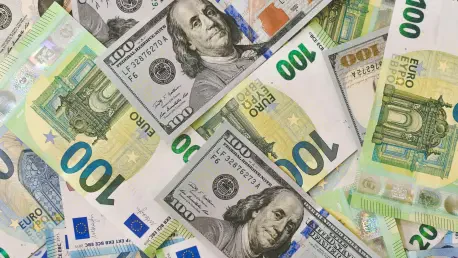

The persistent gap between Cuba’s official exchange rates and the reality of its street-level economy has reached a significant plateau, as major foreign currencies remained remarkably unchanged over a recent forty-eight-hour period. While the global financial landscape often reacts sharply to minor shifts in policy, the Cuban informal market showed a rare moment of equilibrium on March 3, with the U.S. dollar holding at 510 pesos and the euro maintaining its position at 570 pesos. This stability serves as a crucial barometer for millions of citizens who have largely abandoned the state’s banking system in favor of private transactions to navigate a landscape defined by extreme inflation. The current environment forces families to monitor these rates with the same intensity that traders might watch the New York Stock Exchange, as every fluctuation directly dictates the price of basic sustenance. Despite the pressures of a struggling domestic industry, the informal market has become the primary mechanism for survival in a nation where the local currency continues to lose its functional utility.
The Disconnect: Official Mandates Versus Market Demand
State-controlled financial institutions continue to maintain exchange rates that fluctuate between 24 and 120 pesos, yet these figures remain largely symbolic due to a chronic lack of foreign currency liquidity within the banking sector. Because the government cannot satisfy the actual demand for dollars or euros, the informal market has evolved into a sophisticated network that facilitates everything from individual emigration plans to the large-scale importation of consumer goods. Even the Freely Convertible Currency, known locally as MLC, saw a marginal uptick to 413 pesos, reflecting its continued role as a necessary medium for accessing specialized state stores. This discrepancy highlights a systemic failure where the official monetary policy exists in a vacuum, detached from the lived experiences of entrepreneurs and households. Consequently, the reliance on the black market is no longer a matter of choice but a structural requirement for any activity that involves purchasing power beyond the most basic subsidized rations provided by the state.
The progressive dollarization of the Cuban economy has transformed the way small and medium-sized enterprises operate, creating a dual-layered financial reality where the peso is frequently rejected for high-value transactions. Since these private businesses must source their inventory from abroad, they are forced to acquire foreign currency at informal rates, which inevitably leads to higher prices for the end consumer. This cycle perpetuates a domestic crisis characterized by low state salaries that fail to keep pace with the hyper-inflated costs of goods priced in shadow-market valuations. Many citizens now view holding foreign currency not just as a means of exchange, but as a critical hedge against the rapid erosion of their personal savings. As the peso’s purchasing power continues to diminish, the psychological and economic shift toward the dollar and euro has become nearly total, leaving the government with few levers to pull in its attempt to regain control over the national monetary supply.
Strategic Adaptations: Navigating a Volatile Monetary Landscape
Recent geopolitical instability, including heightened tensions following military actions involving the United States and Iran, surprisingly failed to trigger the expected volatility within Cuba’s informal currency markets. This period of 48-hour stability suggests that the internal supply-and-demand dynamics on the island have reached a temporary point of saturation, where the cost of foreign currency is restricted more by the local population’s limited peso liquidity than by external shocks. Even as the broader global economy prepares for potential energy disruptions or trade shifts, the Cuban market remains insulated by its own internal scarcity and the exhaustion of its traditional economic drivers. The ability of the dollar and euro to remain steady in such a climate indicates that the informal market has matured into a resilient, albeit expensive, infrastructure that operates independently of both local legislation and international headlines. This resilience underscores the depth of the current economic equilibrium, where the value of the peso is anchored to the sheer necessity of survival.
The landscape of 2026 required stakeholders to adopt more proactive measures to mitigate the risks associated with a bifurcated economy that prioritized foreign denominations over the national currency. Financial advisors suggested that individuals focused on preserving wealth looked toward decentralized digital assets or peer-to-peer exchange platforms to bypass the inefficiencies of physical cash transactions. It became clear that waiting for state-led monetary reform was no longer a viable strategy, so many households diversified their holdings into tangible goods or regional trade credits that maintained value across borders. Future considerations pointed toward the necessity of establishing more transparent informal tracking mechanisms to prevent predatory pricing during periods of sudden market shifts. By analyzing the patterns of this period, it was determined that the most effective response involved creating community-based micro-economies that reduced the frequency of currency conversion. These steps provided a temporary buffer, though the underlying structural imbalances remained a primary challenge.