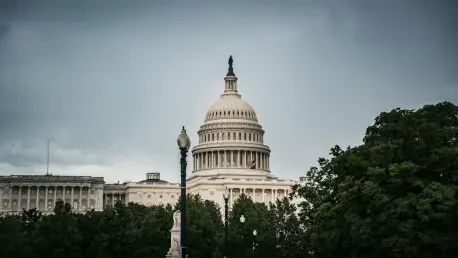

The U.S. House of Representatives, emerging from a nearly seven-week hiatus, is mired in a swamp of internal discord that has all but drowned out the pressing needs of the nation, leaving lawmakers from both sides of the aisle more focused on political theater than on delivering solutions for the American people. Far from tackling vital matters such as health care reform or securing government funding to prevent another federal shutdown, the chamber finds itself entangled in a relentless cycle of censures, reprimands, and ethics investigations. This environment of bitter partisan conflict and personal vendettas has not only stalled legislative progress but also cast serious doubt on the ability of Congress to govern effectively. Lawmakers appear more focused on political theater than on delivering solutions for the American people, leaving critical issues unresolved and public trust in the institution at a dangerously low ebb. As the House reconvenes, the spectacle of infighting overshadows any hope for meaningful action, raising questions about whether this dysfunction is a temporary lapse or a deeply entrenched new reality.
A Chamber Consumed by Conflict
The current state of the House reveals a body more preoccupied with internal battles than with serving its constituents. Disciplinary actions, once reserved for grave misconduct, have morphed into tools for partisan warfare, with lawmakers targeting each other over alleged personal and political missteps. High-profile attempts to censure members across party lines have turned the chamber into a battleground, where settling scores often takes precedence over policy debates. This relentless focus on reprimands consumes time and energy that could be directed toward addressing national challenges, leaving many observers and even some lawmakers dismayed at the apparent disregard for governance. The ongoing drama not only distracts from legislative duties but also erodes the public’s confidence in the ability of elected officials to prioritize the common good over petty disputes.
Beyond the immediate impact of these conflicts, the sheer frequency of censures and investigations signals a troubling shift in the House’s culture. What was once a rare mechanism to maintain decorum has become a routine weapon for political advantage, deepening divisions within an already polarized chamber. Lawmakers express growing frustration as these proceedings drag on, pulling attention away from substantive issues that affect millions of lives. The tit-for-tat nature of these actions fuels a cycle of retaliation, making cooperation across party lines increasingly elusive. This atmosphere of hostility undermines the very purpose of the House as a deliberative body, replacing reasoned debate with personal grudges and procedural gamesmanship. As a result, the chamber struggles to function as a unified entity, leaving critical legislative work languishing in the shadow of endless conflict.
Critical Issues Sidelined by Chaos
While internal disputes dominate the House’s agenda, urgent legislative priorities remain woefully neglected, posing real risks to the well-being of countless Americans. Health care tax credits, crucial for ensuring affordable insurance for millions, are set to expire at the end of the year, yet no meaningful action has been taken to extend them. Simultaneously, routine government funding bills linger unresolved, heightening the specter of yet another federal shutdown that could disrupt essential services and economic stability. These looming crises demand immediate attention, but the chamber’s fixation on political skirmishes has left little room for serious policy discussions. The failure to address such fundamental issues underscores a profound disconnect between the House’s current activities and the needs of the public it serves.
Adding to the frustration, Democratic leaders have sharply criticized the Republican majority for prioritizing partisan stunts over substantive governance. Figures like Hakeem Jeffries have pointed out that the high cost of living and other pressing concerns continue to burden everyday Americans, yet the House remains bogged down in self-inflicted chaos. This lack of progress on critical fronts not only exacerbates existing challenges but also amplifies public discontent with a Congress that appears out of touch with reality. The inability to move forward on essential legislation reflects a deeper failure to bridge partisan divides, as each side seems more intent on scoring political points than finding common ground. If this trend persists, the consequences could be dire, further straining the nation’s already fragile social and economic fabric.
Leadership Tested Amidst Turmoil
House Speaker Mike Johnson faces mounting challenges in steering a narrowly divided Republican majority through an increasingly unruly chamber. With a slim margin of control, Johnson’s authority is frequently tested by rank-and-file members who employ procedural maneuvers, such as discharge petitions, to push their own priorities and bypass leadership directives. A notable instance of this defiance came when lawmakers forced a vote on releasing sensitive documents, despite Johnson’s initial opposition—a decision he later reversed under intense pressure. Such episodes highlight the precariousness of his position, as internal dissent within his party complicates efforts to maintain unity and focus on a coherent legislative agenda. The struggle to assert control in this fractious environment reveals the limits of traditional leadership in the face of growing individualism among lawmakers.
This erosion of hierarchical structure within the House points to a broader trend of diminished leadership influence, as members increasingly assert independent power over collective goals. Johnson’s difficulties are emblematic of a chamber where internal power dynamics often overshadow the need for cohesive governance, leaving critical decisions mired in uncertainty. The frequent use of procedural tactics to challenge the speaker’s decisions not only undermines his role but also hampers the House’s ability to function efficiently. As lawmakers prioritize personal or partisan agendas over party discipline, the legislative process becomes fragmented, further stalling progress on issues that require unified action. If this pattern of defiance continues unchecked, it could redefine the operational norms of the House, making effective leadership an even more elusive goal in an already turbulent political landscape.
Navigating a Path Out of Gridlock
Reflecting on the tumultuous period that unfolded, the House found itself ensnared in a web of censures and dysfunction that stifled legislative progress at every turn. The preoccupation with internal conflicts and partisan reprisals left little room for addressing the urgent needs that had been piling up, from health care protections to government funding stability. Speaker Johnson’s efforts to maintain order amid a divided caucus were repeatedly thwarted by procedural rebellions, underscoring a profound challenge to traditional governance structures. This era of disruption, marked by a departure from cooperative policy-making, painted a stark picture of a chamber struggling to fulfill its fundamental purpose.
Looking ahead, breaking free from this cycle of gridlock demands a renewed commitment to prioritizing national interests over partisan skirmishes. Lawmakers must consider mechanisms to streamline disciplinary processes, ensuring they do not derail the broader legislative agenda. Collaborative efforts to tackle looming crises, such as securing health care access and averting shutdowns, could serve as a starting point for rebuilding trust and functionality within the House. Additionally, fostering dialogue across party lines and curbing the misuse of procedural tools might help restore a semblance of order, enabling leadership to guide the chamber toward tangible outcomes. While the road to recovery appears daunting, these steps offer a potential framework for shifting the focus back to governance and ensuring that the needs of the American people are no longer drowned out by internal discord.