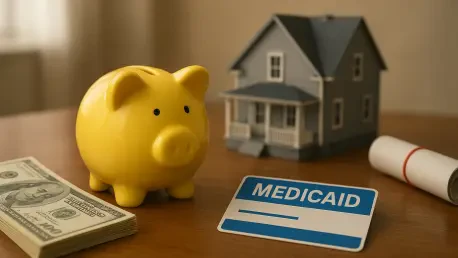

Strategic financial planning is required to ensure that the transition from home equity to cash does not violate the strict five-year look-back period enforced by state Medicaid programs. Many retirees view their primary residence as a permanent fortress of financial stability, but the rising costs of healthcare and daily living in 2026 often necessitate a more aggressive approach to wealth management. Home Equity Conversion Mortgages, or reverse mortgages, offer a tempting solution by allowing seniors to access the value of their homes without the immediate burden of monthly repayments. This mechanism effectively converts a stagnant physical asset into a source of flexible funding for medical needs or basic survival. However, this conversion process is not a simple administrative swap; it represents a fundamental change in the way government agencies evaluate an individual’s net worth. Consequently, many homeowners find themselves facing unexpected eligibility hurdles that threaten their access to government support.
The Financial Transition from Home Equity to Liquid Resources
Medicaid operates as a strictly means-tested program designed to provide a safety net for those who have exhausted their financial resources. In the current landscape of 2026, most states maintain an asset limit of approximately $2,000 for single applicants seeking nursing home coverage. While the primary residence is traditionally categorized as an exempt asset, this protection is contingent upon the equity remaining locked within the structure of the home. When a borrower receives funds from a reverse mortgage, that wealth is reclassified as a countable liquid resource the moment it enters a personal checking or savings account. This shift can occur almost instantaneously, moving a senior from a position of relative financial security into a state of technical disqualification for government benefits. Maintaining the exemption requires a sophisticated understanding of how state auditors distinguish between home equity and cash reserves when reviewing applications for institutional care.
The specific timing of fund distribution plays a paramount role in determining whether a senior remains eligible for state assistance. Under the prevailing guidelines across most jurisdictions, reverse mortgage proceeds are treated as loan debt rather than income during the calendar month in which they are initially received. This distinction provides a brief window of opportunity for the borrower to utilize the funds for pressing needs without triggering an immediate loss of benefits. However, the regulatory environment shifts dramatically on the first day of the subsequent month. If any portion of the loan proceeds remains in the borrower’s bank account, it is no longer viewed as a temporary influx of cash but rather as a countable asset. For individuals who have taken a significant lump-sum payment, this reclassification can create a permanent barrier to Medicaid eligibility until the funds are entirely exhausted through legitimate spending patterns dictated by the state.
Strategic Spending Patterns and the Look-Back Period
Selecting the appropriate method of disbursement is perhaps the most effective way to mitigate the risks associated with reverse mortgages and long-term care eligibility. Financial advisors often suggest that a Home Equity Conversion Mortgage line of credit provides more flexibility and security than a traditional lump-sum payout. Because funds that remain undisbursed by the lender are not technically in the possession of the borrower, they are generally ignored by Medicaid caseworkers during the asset evaluation process. This structure allows seniors to draw only the specific amounts needed for immediate expenses, such as property taxes, insurance premiums, or minor home repairs. By keeping the majority of the loan capacity within the line of credit rather than in a personal bank account, the homeowner prevents their cash balance from exceeding the $2,000 threshold. This proactive management ensures that the equity remains available for emergencies without jeopardizing the individual’s path to future state support.
When a senior inadvertently accumulates excess cash from a reverse mortgage, the only path back to Medicaid eligibility is through a controlled spend-down process. This involves utilizing the surplus funds for goods or services that provide fair market value, such as paying off existing medical debt, purchasing a pre-paid funeral plan, or making necessary accessibility modifications to the home. It is absolutely imperative that these funds are not gifted to children or other heirs, as such transfers trigger a violation of the five-year look-back period. If an auditor discovers that home equity was converted to cash and then distributed to family members for less than its actual value, the state will impose a penalty period of ineligibility. This penalty often leaves the individual without both their home equity and the government assistance they desperately need, forcing the family to cover the high costs of nursing home care out of their own pockets during the penalty phase.
Physical Residency Requirements and Loan Maturity Risks
A secondary but equally dangerous risk involves the residency requirements mandated by the Department of Housing and Urban Development for all reverse mortgage contracts. A reverse mortgage is technically a loan that becomes due and payable when the borrower no longer utilizes the home as their primary place of residence. If a health crisis, such as a severe stroke or cognitive decline, requires a homeowner to stay in a skilled nursing facility for more than 12 consecutive months, the loan matures automatically. At this point, the lender has the legal right to demand full repayment of the balance, which often necessitates the immediate sale of the property. For a senior who is already struggling with the complexities of Medicaid applications, this creates a compounding crisis. They must navigate the loss of their home while simultaneously proving to the state that they have no remaining assets to pay for their care, leading to a period of profound financial instability during a critical health transition.
The intersection of reverse mortgages and Medicaid necessitated a proactive and highly coordinated approach to estate planning for seniors living in 2026. Successful applicants avoided these pitfalls by engaging with certified HUD counselors and elder law attorneys long before a health crisis occurred. These professionals provided the necessary oversight to ensure that every draw from a home equity line of credit served a specific, documented purpose that aligned with state-specific asset limits. Rather than viewing the reverse mortgage as a simple bank account, families treated it as a regulated financial instrument that required monthly monitoring to maintain compliance with federal and state regulations. By documenting all expenditures and avoiding unauthorized transfers of wealth, seniors effectively preserved their right to professional care while still benefiting from the equity they built over a lifetime. This structured methodology turned a potential liability into a manageable component of a comprehensive care strategy.