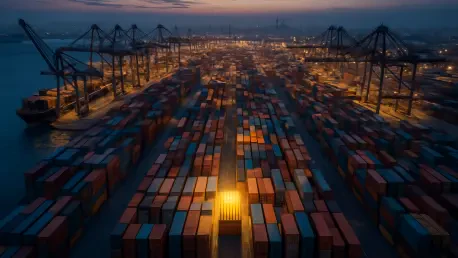

The global financial ecosystem is currently vibrating with a frequency of instability that hasn’t been seen in generations, as the delicate threads of international cooperation are being severed by ballistic missiles and protectionist mandates. As 2026 progresses, the world finds itself in a precarious balancing act between maintaining market liquidity and responding to the blunt-force trauma of geopolitical aggression. Investors are no longer merely tracking interest rate hikes; they are monitoring troop movements in the Middle East and social media posts that threaten the livelihoods of northern neighbors. This environment of “risk-off” sentiment is not a temporary blip but a significant structural realignment that dictates how capital moves across borders. By examining the current convergence of military action and aggressive trade stances, the profound changes occurring in the global financial order become visible.
The Convergence of Geopolitical Strife and Economic Protectionism
The start of 2026 serves as a stark reminder that economic stability is often a byproduct of peace, a luxury that appears to be fading. Currently, markets are reacting to a combination of direct military confrontations between the United States and Iran and a renewed emphasis on “America First” policies that challenge traditional North American alliances. This dual pressure creates a uniquely difficult landscape for central banks, which must manage the inflationary consequences of expensive energy while navigating the trade-distorting effects of new tariff regimes. The result is a high-stakes environment where traditional safe havens are being reevaluated and the predictability of global supply chains is no longer guaranteed.
Economic resilience is being tested by these simultaneous shocks, as the Dow Jones Industrial Average futures and S&P 500 futures reflect a growing caution among market participants. While technology-heavy sectors like the Nasdaq-100 show some independence from these trends, the broader market remains tethered to the volatility of international relations. This period of instability highlights how quickly domestic economic goals can be derailed by external conflicts, forcing a re-evaluation of growth projections for the remainder of the decade.
Historical Context and the Shift Toward Economic Sovereignty
To comprehend the friction defining the early part of 2026, one must recognize the long-term erosion of the globalization model that dominated the turn of the century. For decades, the reliance on interconnected manufacturing and a stable flow of cheap energy allowed for low-volatility growth. However, the current shift toward economic sovereignty marks a departure from that era, as nations increasingly view trade as a zero-sum game. The present standoff in the Persian Gulf and the escalating tension with Canada are symptoms of a broader decade-long trend where economic tools are weaponized for national security purposes.
This background is essential for understanding that the current market turmoil is the culmination of a fundamental shift in how the balance between domestic security and international commerce is managed. The transition from a multilateral world to one defined by regional blocs and bilateral aggression has been gradual, but the events of 2026 have accelerated this process significantly. As nations prioritize self-sufficiency over efficiency, the global economy must adapt to a landscape where political alignment is just as important as comparative advantage in determining trade flow.
Navigating a Landscape of Volatility and Protectionism
The Energy Crisis and Its Inflationary Aftershocks
The immediate concern for global stability centers on the Middle East, where military exchanges have directly impacted energy infrastructure. With Brent crude climbing toward the $97 per barrel threshold after strikes on oil tankers, the reality of “economic warfare” has disrupted previous pricing models. This supply-side shock functions as a regressive tax on global consumption, potentially stifling economic growth in developing nations while keeping inflation levels uncomfortably high in developed markets. Unlike demand-driven price increases, these spikes are rooted in deep-seated hostilities that suggest a prolonged period of elevated energy costs, further pressuring Treasury yields.
Central banks are now caught in a difficult position, as they must decide whether to tighten monetary policy to combat energy-led inflation or remain accommodative to support a slowing economy. This dilemma is exacerbated by the fact that traditional monetary tools have limited impact on supply-side disruptions caused by military conflict. As energy costs remain high, the fiscal health of oil-importing nations is strained, leading to a “litmus test” for the global economy to see if it can withstand a persistent cost-push inflationary environment.
Retaliatory Trade Policies and Supply Chain Fragmentation
At the same time, the relationship between the United States and Canada has soured, leading to a significant trade friction characterized by $20 billion in retaliatory measures. The recent mandates targeting manufacturers such as Bombardier, requiring them to move production to American soil to maintain market access, represent a move away from open trade. This push for localized manufacturing may serve domestic political goals, but it frequently leads to fragmented supply chains and higher costs for the final consumer. For businesses, this necessitates a shift in strategy, where political resilience is prioritized over the sheer efficiency of logistics, fundamentally altering the cost structures of modern industry.
The impact of these protectionist policies extends beyond immediate price increases, as they signal a more permanent shift in how international business is conducted. Companies are now forced to navigate a “balkanized” trade environment where tariffs and local content requirements are common tools of statecraft. This environment discourages long-term foreign direct investment and complicates the planning process for multinational corporations that relied on the seamless movement of goods across the North American border.
Shifting Capital Flows and the Strengthening Yen
Financial landscapes are also shifting due to significant movements in the Asian markets, particularly regarding the Japanese yen. As the Bank of Japan adopts a more hawkish stance, the potential for Japanese capital to return home from the United States creates a specific risk for the American bond market. This development is occurring alongside a notable trend where foreign investors are favoring U.S. equities over sovereign debt for the first time since the Global Financial Crisis. This pivot away from Treasurys indicates a growing wariness of government debt in an era of high spending and rising geopolitical risk, forcing a reassessment of what truly constitutes a “safe haven” asset.
Furthermore, the repatriation of capital by Japanese investors could add upward pressure on American yields, complicating the Federal Reserve’s efforts to manage borrowing costs. This shift signifies a broader change in global investment patterns, where the search for yield is being replaced by a search for stability and private sector growth. As sovereign debt loses some of its luster, the resulting volatility in the bond market could have far-reaching consequences for everything from mortgage rates to corporate financing.
Future Trends in a Fragmented Global Order
Moving forward, the global economy is poised to experience an acceleration of “friend-shoring,” with trade increasingly restricted to politically aligned blocs. This likely leads to a divergence in technology and regulatory standards as nations begin to treat sectors like semiconductors and aerospace as vital national security interests. Predictions suggest that if Middle Eastern conflicts remain unresolved, the era of relatively inexpensive energy has come to a definitive end. This will require a faster transition to alternative energy sources, though the initial investment costs may continue to weigh on global growth.
Furthermore, the role of the U.S. dollar may see gradual pressure as alternative payment systems are developed to bypass the reach of sanctions and protectionist barriers, leading to a more regionalized financial world. This decentralization of the global financial system would mark a historic departure from the post-war era, potentially leading to more frequent but smaller-scale economic shocks. As the world fragments into competing economic spheres, the ability to maintain diplomatic channels for trade will become the primary determinant of a nation’s economic success.
Strategies for Resilience in an Uncertain Market
For entities navigating this era, the transition from “just-in-time” to “just-in-case” logistics has become a necessity. Diversification must now include geographic and political risk assessments alongside traditional asset class allocations. It is critical for companies to conduct rigorous stress tests on their supply chains to prepare for sudden tariff increases or regional infrastructure shutdowns. By creating redundant systems and sourcing materials from multiple politically stable regions, businesses can protect themselves from the sudden onset of trade hostilities.
For individuals, maintaining a close watch on PPI and CPI data is essential, as these indicators will determine the trajectory of monetary policy in a high-inflation climate. Understanding the nuances of energy-driven inflation will allow for better personal financial planning and asset protection. Ultimately, a flexible operational model that can adapt to shifting alliances and volatile energy markets is the most effective defense against the current global instability.
Conclusion: The New Economic Reality
The rise of conflict and trade wars effectively transitioned the global economy into a state of flux that challenged traditional recovery patterns. This era proved significant because it disrupted the foundations of international finance and diplomacy that many took for granted. To adapt, successful organizations prioritized the decentralization of production and the integration of geopolitical forecasting into their core financial planning. Developing strategic stockpiles and securing alternative energy sources became standard practices for mitigating the risks of a fragmented global order. By embracing these proactive measures, the global market began the long process of establishing a new equilibrium that valued security as much as efficiency. This structural transformation required a fundamental rethink of risk management, ensuring that future growth was built on a more resilient, albeit more complex, foundation.