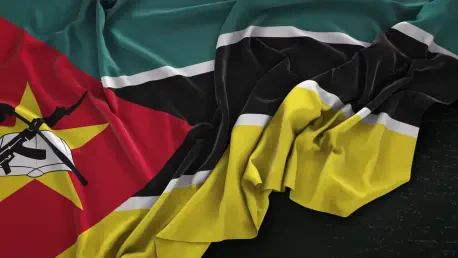

Concerns are escalating over a deepening foreign currency shortage in Mozambique, particularly a lack of U.S. dollars, which threatens to intensify in the short term due to significant fiscal pressures on the government. A recent analysis, based on a comprehensive monthly survey of approximately 400 private sector companies across diverse industries, highlights a growing liquidity problem that is already hamstringing business operations. This foreign exchange crunch has left a trail of unpaid international invoices, with some businesses reporting payment delays exceeding six months for crucial imported raw materials and goods. While the promise of future revenue from massive Liquefied Natural Gas (LNG) projects offers a beacon of hope for the medium term, the immediate financial challenges present a clear and present danger to the nation’s economic stability, forcing businesses and policymakers into a precarious waiting game. The unfolding situation places a spotlight on the delicate balance between long-term potential and pressing short-term vulnerabilities.
Looming Fiscal Pressures and Economic Threats
The Double-Edged Sword of Natural Gas
The core of Mozambique’s economic strain is a severe liquidity problem that has already manifested in tangible ways for its business community, underscoring the gap between future prospects and current realities. In a stark illustration of this challenge, the Confederation of Business Associations of Mozambique reported earlier this year that 63 of its member companies were struggling with outstanding invoices for imported necessities, a direct consequence of the inability to access foreign currency through commercial banks. According to Fáusio Mussá, chief economist at Standard Bank, this immediate fiscal strain is a more urgent concern for foreign exchange availability than the anticipated benefits from future LNG projects. While the development of natural gas resources is widely expected to inject substantial foreign capital into the economy, these gains are not projected to materialize in the immediate future. This timing mismatch creates a perilous environment where current operational needs are unmet, potentially stifling the very economic activity needed to bridge the gap until the LNG revenues begin to flow, posing a significant risk to short-term stability.
The Mozal Smelter’s High-Stakes Negotiation
A critical and potentially decisive factor threatening to destabilize the Mozambican economy revolves around the ongoing negotiations between the government and the Mozal aluminium smelter over a new electricity tariff. The bank’s report issues a stark warning about the potential consequences of failure, cautioning that if a favorable agreement is not reached and the smelter is forced to cease operations, the ripple effects would be severe and far-reaching. A shutdown of Mozal, a cornerstone of the nation’s industrial sector and a major source of foreign exchange, would exert immense and immediate pressure on several fronts. It would not only deliver a significant blow to Mozambique’s economic growth projections but also strain public finances through lost tax revenue. Perhaps most critically, it would drastically curtail the country’s foreign exchange liquidity, exacerbating the very currency shortage that is already plaguing the private sector. The outcome of this single negotiation has thus become a focal point, holding the potential to either secure a key economic pillar or trigger a cascade of negative impacts across the entire economy.
A Tale of Two Economies
Contradictory Signals from Macroeconomic Data
The broader economic landscape of Mozambique presents a complex and often contradictory picture, reflecting a nation grappling with instability and uncertainty. Official data revealed that the economy experienced a contraction of 1.9% during the first three quarters of 2025, a downturn largely attributed to a sluggish recovery following a period of post-election tensions. While forecasts suggest a return to positive growth in the final quarter of the year, this optimism is heavily tempered by significant underlying risks. A considerable threat looms for the period from the second quarter of 2026 onward, with a high probability of the economy slipping back into negative territory. This pessimistic outlook is almost entirely contingent on the fate of the Mozal smelter. The potential cessation of its operations serves as a tipping point, illustrating the fragility of the economic recovery and how dependent the nation’s macroeconomic health is on the fortunes of a single industrial giant. The situation highlights an economy walking a tightrope, where any positive momentum could be quickly reversed by a single adverse event.
Private Sector Resilience Amidst Uncertainty
In sharp contrast to the troubling macroeconomic indicators and fiscal pressures, Mozambique’s private sector has demonstrated remarkable resilience and even signs of growth. The Purchasing Managers Index (PMI), a key barometer of private sector health, provided a glimmer of optimism by increasing from 50.4 in October to 50.8 in November. This marked the second consecutive month of slight improvement, signaling an expansion in business activity. The upward trend was primarily fueled by the highest volume of new business orders recorded in nearly a year and a half, suggesting robust underlying demand for goods and services. Furthermore, this positive activity translated directly into the labor market, with the survey noting a significant boost in employment. The rate of job creation was the strongest observed since July of the previous year, indicating that businesses were confident enough in the immediate future to expand their workforce. These positive microeconomic signals paint a picture of a private sector that is actively navigating challenges and finding opportunities for growth.
Despite the encouraging signs of current activity, a subtle undercurrent of caution has emerged regarding the future, casting a shadow over the private sector’s otherwise positive performance. While the PMI survey indicated that companies generally remained optimistic about the year ahead, the overall level of business confidence saw a slight deterioration. This suggests that while businesses are successfully managing day-to-day operations and securing new orders, they are increasingly wary of the larger economic headwinds on the horizon. The persistent foreign currency shortage, coupled with the high-stakes uncertainty surrounding the Mozal smelter, likely contributes to this tempered outlook. Business leaders, though buoyed by current successes in job creation and new orders, are looking ahead with a more guarded perspective. This duality highlights a fragile confidence; the private sector’s resilience is being tested by macroeconomic vulnerabilities that remain unresolved, creating a complex environment where short-term gains are weighed against long-term risks.
A Precarious Path Forward
The economic narrative of Mozambique was one of stark contrasts, defined by the tension between a resilient private sector and severe macroeconomic vulnerabilities. The resolution of the currency shortage and the broader fiscal pressures hinged on a series of critical decisions. Foremost among these was the negotiation with the Mozal aluminium smelter, the outcome of which stood as a pivotal moment that could either stabilize or severely disrupt the nation’s economic trajectory. Navigating this period required a delicate balancing act from policymakers, who needed to address the immediate liquidity crisis without undermining the long-term potential offered by the burgeoning natural gas industry. The situation underscored the profound interconnectedness of industrial policy, fiscal health, and currency stability, where the fate of one major enterprise could reverberate throughout the entire economy, ultimately determining whether the nation could build on its private sector’s dynamism or succumb to the weight of its fiscal challenges.