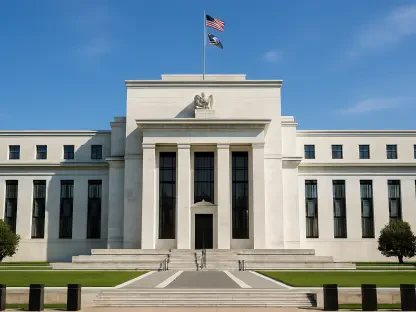

The recent Supreme Court decision to strike down reciprocal tariffs under the International Emergency Economic Powers Act represents a seismic transformation in the architecture of American trade policy, effectively stripping the executive branch of one of its most potent economic tools. This 6-3 ruling specifically targets the broad interpretation of emergency powers previously used to bypass traditional legislative hurdles for trade barriers. By determining that the administration exceeded its constitutional authority, the Court has introduced a period of profound uncertainty for global financial markets and the stability of the domestic currency. Investors have reacted swiftly to the prospect of the federal government being forced to liquidate approximately $170 billion in previously collected tariff revenues. This massive fiscal obligation, described by dissenting Justice Brett Kavanaugh as a looming administrative mess, has already begun pushing U.S. Treasury bond yields higher as the market anticipates the logistics of such a substantial repayment process.
Strategic Shifts and the Implementation of Section 122
Facing this judicial roadblock, the administration has pivoted toward Section 122 of the Trade Act of 1974 to maintain its protectionist stance, albeit under much stricter legal constraints. This alternative mechanism allows for a fifteen percent tariff to address substantial trade deficits, but its legal lifespan is restricted to a mere 150 days without explicit approval from Congress. Such a transition from permanent tariff structures to temporary, lower-rate measures creates a volatile environment that complicates the strategic planning of American manufacturing and logistics firms. Corporate leaders now face a landscape where trade costs can fluctuate wildly within a single fiscal year, often discouraging the long-term capital investments and hiring initiatives necessary for sustainable growth. While this stopgap measure provides a degree of continuity, the lack of policy durability forces companies to prioritize liquidity over expansion. Consequently, the reliance on short-term trade authorities diminishes the overall predictability that global markets demand.
International Market Adjustments and Economic Repercussions
Beyond domestic borders, the judicial reversal served as a significant catalyst for growth among major trading partners like Brazil, China, and Canada, who benefited from the immediate reduction in effective tariff rates. As these nations saw their currencies strengthen against a faltering greenback, the cooling of import-driven inflation provided the Federal Reserve with the necessary latitude to sustain its cycle of interest rate reductions. This alignment of lower rates and heightened policy volatility suggested that the negative pressures on the dollar would persist despite the potential stimulus of tariff refunds. Institutional investors were advised to reevaluate their exposure to dollar-denominated assets in favor of more stable international equities. Stakeholders navigated this transition by diversifying supply chains to mitigate the risks inherent in a fluctuating trade regime. The collective shift toward a less restrictive but more unpredictable global landscape ensured that market participants prioritized flexibility and transparency as they adjusted to the new economic reality.