
The recent decision by the U.S. Supreme Court to dismantle the executive branch’s broad tariff framework has sent shockwaves through the international financial community, yet the reprieve for global trade appears short-lived as the administration signals an immediate and defiant pivot toward new executive mandates. This judicial reversal was intended to curb what the court deemed an overreach of power, but the White House has already countered by proposing a ten to fifteen percent global levy through alternative administrative channels and Commerce Department investigations. Consequently, the consensus among veteran market analysts is that American trade policy has entered a period of extreme fluidity, where the boundaries between legislative oversight and executive authority are increasingly blurred. This environment has transformed the global economy into a shifting landscape of winners and losers, forcing corporations to recalibrate their supply chain strategies almost weekly as they navigate a maze of evolving barriers.
Divergent Responses in Western and Eastern Equities
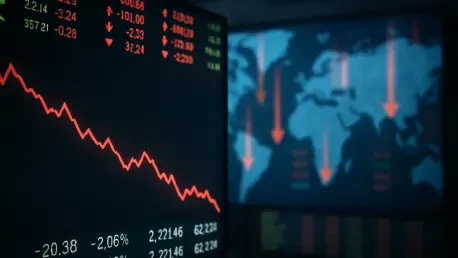
Market performance across the globe remains highly fragmented and mixed as investors struggle to price in the conflicting signals from the American judicial and executive branches. In the United States, equity futures for the S&P 500, the Dow Jones Industrial Average, and the Nasdaq composite all trended downward as the initial optimism surrounding the court ruling was quickly overshadowed by the prospect of renewed trade hostilities. European markets reflected this pervasive caution, with Germany’s DAX slipping by half a percentage point while major indices in London and Paris remained largely stagnant throughout the trading session. The overarching sentiment in Western financial hubs is one of apprehension, as the threat of unilateral executive action suggests that the removal of previous trade barriers may be nothing more than a temporary pause in a much longer and more taxing protectionist era that shows no signs of resolution.
In stark contrast to the somber mood in the West, certain Asian markets saw significant gains, although the overall picture in the region was complicated by scheduled bank holidays in major economies. Hong Kong’s Hang Seng index surged by two and a half percent, while South Korea’s Kospi added point seven percent, reflecting a temporary boost for nations that had previously struggled under the now-defunct trade terms. However, the scope of regional data remained limited because mainland China and Japan were closed for holidays, preventing a full assessment of how the two largest Asian economies would react to the potential for new American levies. This localized rally in Hong Kong and Seoul highlights the desperate search for growth in an environment where trade connectivity is being redefined by political friction rather than economic logic, leaving many participants to wonder how long this specific regional momentum can actually be sustained.
Asset Reallocation and the Economic Path Forward
In the digital and commodity sectors, Bitcoin experienced a sharp decline, tumbling five percent to fall below the sixty-five thousand dollar mark as speculative appetite evaporated. This sell-off is part of a broader retreat from high-risk assets, with the leading cryptocurrency losing nearly half of its value since its record high reached in the previous year. Conversely, precious metals saw a significant surge as institutional investors sought safe-haven assets to hedge against the looming uncertainty of global trade wars; gold rose by nearly two percent and silver increased by more than five percent in a single day. Oil prices experienced a slight dip, with both U.S. benchmark crude and Brent crude falling amid a general atmosphere of economic apprehension. The movement in these markets suggests that the investment community is prioritizing capital preservation over growth as the threat of executive branch defiance creates a volatile floor for commodity pricing.
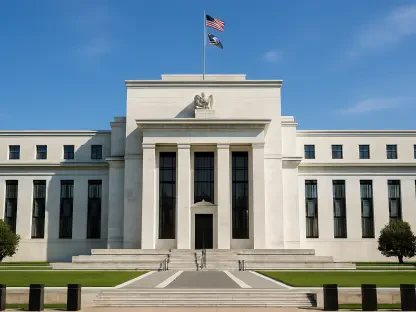
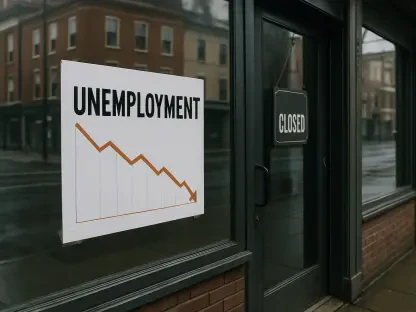
The persistent dilemma facing the Federal Reserve was further complicated by data indicating a dual challenge of slowing economic growth and accelerating inflation within the United States. This stagflation signal forced traders to reconsider their expectations for interest rate cuts, even as central bank officials maintained a conservative stance while waiting for clearer evidence of cooling inflation. Financial institutions responded by advising clients to diversify into tangible assets and inflation-protected securities to mitigate the risks associated with this judicial and administrative gridlock. Successful strategies involved moving away from sectors heavily dependent on international logistics and toward localized service industries that remained shielded from tariff fluctuations. These proactive steps allowed many to navigate the flux, ensuring that portfolios were better positioned for the next phase of trade policy evolution, which remained defined by executive branch maneuvering and macroeconomic instability.