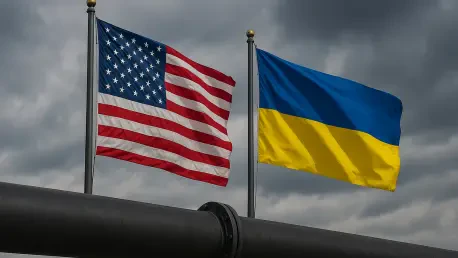

The seamless integration of satellite communications and global energy markets has fundamentally transformed modern warfare into a high-stakes economic balancing act for the United States. As 2026 progresses, the longstanding alliance between Washington and Kyiv is facing its most rigorous test to date as the second Trump administration grapples with the complexities of modern warfare and domestic economic pressures. At the heart of this friction is a two-pronged crisis involving the strategic control of satellite communication technology and a controversial pivot in energy procurement. This analysis explores how the intersection of military logistics and surging fuel prices has created a diplomatic rift that threatens to reshape the Western response to the conflict in Eastern Europe. By examining the public disputes over Starshield and the administration response to a tightening oil market, the analysis provides insight into a relationship currently defined by mutual suspicion and diverging national interests.
Escalating Tensions in a Shifting Geopolitical Landscape
The current friction marks a departure from previous years of unified defense, signaling a more transactional approach to international security. The evolution of the relationship has moved from a period of unconditional support to one of strategic skepticism. Historically, the United States served as the primary guarantor of Ukrainian sovereignty, providing the intelligence and hardware necessary to repel external advances. However, the landscape is now shaped by a shift in Washington’s priorities, where the costs of foreign aid are increasingly weighed against domestic economic stability and voter sentiment.
From Strategic Alliance to Public Friction
As global supply chains face new disruptions and the novelty of the conflict fades for the American electorate, the foundational concepts of the alliance are being renegotiated in real-time. This transition has led to public confrontations that were previously confined to private diplomatic channels. The administration is increasingly viewing foreign commitments through the lens of domestic inflation, leading to a cooling of relations as the economic burden of the conflict becomes a central point of political contention within the United States.
The Starshield Standoff: Control of Military Intelligence
Technical Throttling: The Dispute Over Command
The friction reached a fever pitch when President Volodymyr Zelenskyy suggested that the United States was intentionally degrading Starshield to hamper Ukrainian defensive capabilities. This technology, the military-grade version of the prominent satellite network, serves as the backbone of drone operations and battlefield communications. While high-ranking administration officials have flatly denied these claims, the proprietor of the satellite network has publicly asserted that the United States military ultimately holds the “kill switch” for these services. This contradiction highlights the inherent risks when a nation defense relies on proprietary technology managed by private entities under government oversight.
Energy Security: The Strategic Blame Game
The diplomatic strain is being exacerbated by a domestic energy crisis in the United States, where gas and diesel prices have spiked due to volatile conditions in the Middle East. President Trump has increasingly linked high American fuel costs to Ukraine tactical decisions, specifically the targeting of Russian oil refineries. By framing military successes as a direct cause of economic pain for American consumers, the administration has created a political justification for distancing itself from Kyiv’s operational goals. This represents a significant departure from 2025, when energy infrastructure was viewed as a legitimate target.
The Russian Diesel Pivot: Domestic Backlash
Adding a layer of complexity is the decision to utilize national interest waivers to import Russian diesel. Despite sanctions meant to cripple the energy sector of the adversary, the White House has prioritized lowering domestic prices, even if it means revitalizing trade with a sanctioned power. This move has sparked a rare bipartisan outcry in Congress, with senior lawmakers labeling the policy a capitulation. The decision underscores a messy reality where the United States is simultaneously acting as a benefactor and a customer of a rival, creating a contradictory foreign policy that confuses allies and emboldens competitors.
The Future of Transatlantic Defense: Resource Dependency
Looking ahead from 2026 to 2028, the relationship between Washington and Kyiv is likely to be defined by a movement toward “de-risking” military dependencies. Ukraine may seek to diversify its technological portfolio to avoid reliance on a single American-controlled system. Meanwhile, the United States energy landscape will likely see a push for even greater domestic production to avoid the political fallout of trading with adversaries. Technological shifts in satellite autonomy could eventually stabilize the alliance, but the current atmosphere of distrust suggests that the path forward will be marked by more rigorous conditionality on aid.
Strategic Realignment: The Path Toward Stabilization
The major takeaway from this deepening divide is that technical and economic variables are now exerting more influence on foreign policy than traditional ideological commitments. For policymakers, the Starshield controversy served as a case study in the dangers of tech-dependency during active warfare. To mend the rift, the United States must find a way to balance its domestic economic needs with its role as a global leader. For Ukraine, the strategy must involve a more nuanced approach to public diplomacy that acknowledges the domestic political pressures facing its most powerful ally.
Navigating a Contested Partnership
The fraying of relations over Starshield and energy policy was a symptom of a broader shift toward a more transactional American foreign policy. The significance of this topic lay in its potential to alter the outcome of the conflict and the future of the NATO alliance. As both nations navigated these turbulent waters, the world watched to see if the partnership survived the collision of military necessity and economic reality. Ultimately, the long-term stability of the region depended on whether Washington and Kyiv moved past public recriminations and found a sustainable middle ground.