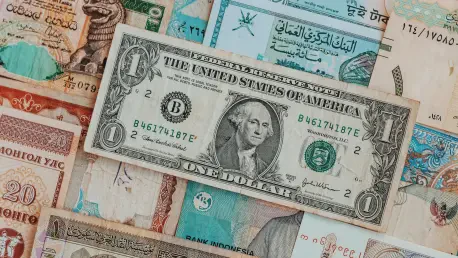

The recent foreign exchange rate announcement from Nepal Rastra Bank (NRB) has sent a clear and powerful signal across the nation’s economy, as the US dollar has officially surged to its highest recorded value against the Nepali Rupee. This development is more than a mere statistical update from the central bank; it represents a critical economic juncture with far-reaching consequences for importers, exporters, and the millions of Nepali families who rely on foreign remittances. With the dollar’s buying rate now fixed at 144.15 Nepali rupees and its selling rate at 144.75 rupees, the strengthening American currency is set to reshape financial landscapes. This shift directly impacts the cost of imported goods, the value of earnings sent from abroad, and the country’s overall trade balance, creating a complex mix of challenges and opportunities that will be felt in markets and households throughout Nepal. The official rates provide the benchmark for all international transactions, making this new peak a focal point for economic analysis and strategic planning in the coming months.
A Comprehensive Look at Global Currency Rates
While the US dollar’s new peak captures headlines, the NRB’s report provides a complete picture of the global currency landscape, revealing how the Nepali Rupee is positioned against other major world currencies. The European Euro, another key player in international trade, was set with a buying rate of Rs 168.40 and a selling rate of Rs 169.10. Similarly, the UK Pound Sterling, a historically strong currency, was valued at Rs 194.70 for buying and Rs 194.88 for selling. The Swiss Franc also demonstrated significant strength, pegged at a buying rate of Rs 181.30 and a selling rate of Rs 182.50. This broader context is vital for understanding Nepal’s multifaceted trade relationships. Beyond Europe, currencies from other major economies also showed their standing, with the Australian dollar at Rs 96.36 (buying) and Rs 96.77 (selling), and the Canadian dollar at Rs 104.70 (buying) and Rs 105.13 (selling). The Singaporean dollar, a crucial currency in Asian finance, was set at Rs 111.99 for buying and Rs 112.46 for selling. These figures collectively illustrate a dynamic global environment where Nepal must navigate varying currency strengths to manage its economic stability.
The financial lifelines for many Nepali families extend from the Middle East, making the exchange rates for currencies from this region particularly significant. The latest figures from the central bank underscore the direct impact on the value of remittances, which form a substantial portion of the nation’s GDP. The Saudi Arabian Riyal was fixed at a buying rate of Rs 38.43 and a selling rate of Rs 38.59, while the Qatari Riyal was set slightly higher at Rs 39.55 for buying and Rs 39.71 for selling. The UAE Dirham, another key currency from a major employment hub for Nepalis, was valued at Rs 39.25 (buying) and Rs 39.41 (selling). In addition to these, the report detailed rates for high-value currencies that represent significant earning power for expatriates. The Kuwaiti Dinar commanded an impressive rate of Rs 469.06 for buying and Rs 471.01 for selling, while the Bahraini Dinar stood at Rs 382.39 (buying) and Rs 383.98 (selling). A stronger dollar often correlates with stronger rates for these pegged currencies, amplifying the purchasing power of money sent home.
In contrast to the fluctuating values of many global currencies, Nepal’s economic relationship with its immediate neighbors presents a different dynamic. The exchange rates for major Asian currencies reflect the diverse trade partnerships within the continent. One Chinese Yuan was trading at Rs 20.64 for buying and Rs 20.73 for selling, a crucial rate given the significant volume of goods imported from China. Meanwhile, 10 Japanese Yen were valued at Rs 9.20 (buying) and Rs 9.24 (selling), affecting transactions with one of the world’s largest economies. However, the most critical and stable element in Nepal’s foreign exchange policy remains its relationship with the Indian Rupee. The long-standing pegged exchange rate held firm, with a buying rate of 160.00 rupees and a selling rate of 160.15 rupees for every 100 Indian rupees. This peg acts as an economic anchor, ensuring stability and predictability in trade and financial transactions with Nepal’s largest trading partner, providing a buffer against the volatility observed in the wider global currency markets.
Navigating the Economic Ripple Effects
The period following the dollar’s record-breaking climb prompted a significant re-evaluation of economic strategies across Nepal. This currency milestone created a dual reality for the nation’s economy. On one hand, the powerful dollar directly increased the value of remittances sent home by millions of Nepalis working abroad, boosting the disposable income for their families and stimulating local economies. Similarly, Nepali exporters found their goods becoming more competitive on the global market, as their products became cheaper for buyers paying in dollars. However, this same currency strength brought considerable challenges. The cost of essential imports, particularly fuel, machinery, and technology, rose sharply, putting upward pressure on inflation and increasing operational costs for businesses. This environment compelled policymakers and corporate leaders to devise new strategies to mitigate the risks associated with currency fluctuations while capitalizing on the opportunities presented. The economic landscape that emerged was one where financial agility and diversified trade relationships became more critical than ever for ensuring long-term stability and growth.