
Navigating the financial landscape of 2026 requires more than just a passing familiarity with market trends because the sheer velocity of data coming from decentralized finance and global stock exchanges has outpaced human cognitive capacity. Traditional methods of checking prices on a single monitor or waiting for the morning news cycle have been replaced by a pervasive reliance on algorithmic assistance and machine learning models that process information in milliseconds. Investors are no longer just looking for a good stock pick; they are building comprehensive infrastructures that combine real-time sentiment analysis, macroeconomic indicators, and liquidity flow data to maintain a competitive edge. This shift is not merely about speed but about the qualitative improvement of the decision-making process, where human judgment is supported by systematic precision rather than replaced by it. As the boundary between retail and institutional technology continues to blur, the adoption of specialized automation tools has become a standard requirement for anyone attempting to manage a portfolio across diverse asset classes like equities and cryptocurrencies. The modern investor must now operate as a system architect, focusing on the configuration of these powerful tools to ensure they align with specific risk tolerances and long-term financial goals in an environment that never truly sleeps.
1. Modern Evaluation Frameworks for Trading Platforms
Assessing the reach and coverage of a modern trading platform is the foundational step for any investor looking to integrate artificial intelligence into their daily routine. In the current market, a tool is only as valuable as the breadth of the data it can ingest, which means investors prioritize systems that offer seamless connectivity to both traditional equity exchanges and high-speed cryptocurrency markets. The evaluation process involves checking for deep liquidity data, real-time order book transparency, and the ability to process unstructured data like news feeds or social sentiment. Investors specifically look for platforms that do not just provide price alerts but offer a holistic view of market correlations, such as how a sudden shift in Bitcoin volatility might impact high-beta technology stocks or semiconductor manufacturing equities. By ensuring that a platform covers multiple asset classes, users can maintain a diversified approach while using a single technological stack to monitor global capital flows.
Analyzing the clarity of user operations and defensive features is equally critical when selecting an automation partner for financial management. A high-quality platform must provide a transparent window into its logic, allowing the user to understand exactly why a specific signal was generated or why an automated action was taken. This transparency is vital for maintaining personal oversight, as the investor remains the final arbiter of any strategy that involves their capital. Defensive features, such as hard stop-loss limits, maximum drawdown triggers, and exposure caps, are scrutinized to ensure they can operate even during periods of extreme market stress or connectivity issues. In 2026, the emphasis has shifted away from “black box” systems that hide their methodology and toward open frameworks where the investor can fine-tune every parameter to match their unique psychological profile and financial resilience. Maintaining this level of control ensures that technology serves as a robust shield against market unpredictability rather than a source of hidden risk.
2. Accelerating Market Scans and Minimizing Impulse
Accelerating market scans for equities and digital assets has become a primary use case for artificial intelligence, enabling investors to filter through thousands of potential setups in a fraction of a second. Rather than manually clicking through charts, users employ sophisticated filters that identify assets meeting very specific criteria, such as unusual volume expansion, specific candlestick patterns, or divergence between price and momentum. This capability is especially useful in the cryptocurrency space, where thousands of tokens trade simultaneously, making it impossible for a human to catch every significant move. By automating the discovery phase, investors can focus their energy on the highest-probability setups that align with their core strategy. This high-speed filtering ensures that capital is deployed efficiently, targeting sectors that are currently showing the strongest institutional interest or retail momentum without the lag inherent in manual research.
Minimizing impulse-based decisions is perhaps the most significant psychological benefit of implementing automated trading logic in a volatile environment. Financial markets are often driven by fear and greed, and even the most disciplined investors can fall prey to “fear of missing out” or panic-selling during a sudden liquidity crunch. By relying on pre-established logic and automated entry rules, investors can ensure that their trades are executed based on data rather than emotion. If a specific price level or technical condition is not met, the system simply does not act, preventing the investor from chasing a move that has already extended beyond a safe entry point. This systematic approach fosters a more professional mindset, where the focus is on the execution of a repeatable process rather than the outcome of a single trade. Over time, reducing the number of reactive, heat-of-the-moment decisions leads to more consistent performance and a significant reduction in the mental fatigue associated with active market participation.
3. Constructing Code-Free Flows and Stock Procedures
Constructing code-free operational sequences has democratized access to advanced trading technology, allowing individuals without a background in programming to build complex systems. Modern visual interfaces use drag-and-drop modules or natural language commands to define how the software should react to specific market conditions. An investor might create a workflow that triggers when a specific technology stock breaks its 50-day moving average on high volume, followed by a secondary check on the broader index performance. This flexibility allows for the creation of multi-step logic that was once the exclusive domain of hedge funds and institutional quant desks. By lowering the barrier to entry, these no-code tools empower a wider range of participants to compete on a level playing field, focusing on strategic creativity rather than technical syntax. The ability to build, test, and refine these sequences visually also makes it easier to spot logic errors before any real capital is committed to the market.
Streamlining stock market procedures with intelligence involves applying automated filters to track critical data points like earnings reports, volume shifts, and technical patterns in equities. In 2026, the volume of corporate data is staggering, with real-time updates on supply chain health, insider buying, and macroeconomic shifts constantly hitting the wires. Automated systems can be programmed to monitor these variables across a watch list of hundreds of companies, alerting the investor only when a significant anomaly occurs. For instance, an automated procedure could be set to identify companies that are reporting positive earnings surprises while simultaneously seeing an uptick in institutional accumulation. This ensures that the investor is always looking at the most relevant opportunities without getting bogged down in the daily noise of the broader market. By refining the research process into a series of automated checkpoints, investors can maintain a high level of situational awareness across multiple industry sectors with minimal daily effort.
4. Monitoring Crypto and High-Impact News Events
Overseeing cryptocurrency fluctuations day and night is a necessity for anyone involved in digital assets, given that these markets never stop for holidays, weekends, or traditional trading hours. AI-driven monitoring tools act as a constant sentinel, watching Bitcoin and altcoin price action across multiple exchanges to detect liquidation cascades or sudden shifts in whale activity. These systems are particularly adept at identifying when a move is driven by genuine buying pressure versus artificial volatility caused by low liquidity. Because the crypto market is prone to sharp movements at three o’clock in the morning, having an automated system that can adjust positions or tighten stop-losses based on predefined rules is essential for capital preservation. This 24/7 surveillance allows investors to sleep without the constant anxiety of a market crash occurring while they are offline. The technology provides a level of continuity that is simply impossible for a human being to maintain on their own.
Observing price instability ahead of major news events is another critical application for investor automation, as volatility often spikes before Federal Reserve meetings, inflation data releases, or major corporate earnings. Automation tools can be configured to track the “volatility surface,” measuring how options markets are pricing in potential moves before an event takes place. Investors use this information to adjust their exposure, perhaps reducing position sizes or hedging their portfolios if the expected move is unusually large. By programming the system to recognize these patterns of instability, investors can avoid being caught on the wrong side of a “news gap” where the price jumps over their stop-loss order. This proactive approach to event-driven volatility allows for a more defensive posture during uncertain times. Rather than guessing which way the market will react, the investor uses the technology to prepare for multiple scenarios, ensuring they are positioned to react logically regardless of the headline.
5. Governing Potential Loss and Verifying Strategy Concepts
Governing potential loss before deploying a method is a fundamental rule of institutional-grade trading that retail investors are now adopting through the use of automation. Before a single dollar is risked, an automated system can calculate the exact position size required to keep the total risk per trade within a specific percentage of the total portfolio. This prevents the common mistake of “over-leveraging” on a trade that feels certain but ends up failing. By establishing strict parameters for maximum daily loss or maximum exposure to a single industry segment, the software acts as a secondary risk manager that can shut down trading activity if things go south. This level of governance is especially important in the crypto world, where volatility can quickly turn a small mistake into a catastrophic loss. Automated risk settings ensure that the investor lives to fight another day, protecting the core capital from the inevitable periods of poor market performance.
Verifying concepts prior to real-world execution is done through historical simulations or demo trials that show how an idea would have performed in different market environments. In 2026, backtesting has evolved to include “forward-looking” simulations that account for slippage, exchange fees, and changing liquidity conditions, providing a much more realistic view of a strategy’s viability. An investor might have a theory that buying tech stocks after a 10% pullback always works, but a rigorous automated test might reveal that this only works during specific interest rate environments. By running these simulations, investors can discard weak ideas and refine strong ones before risking actual capital. This verification process builds confidence in the strategy, making it easier to stick to the plan during the inevitable periods of drawdown. Testing is not about finding a perfect system that never loses, but about understanding the statistical characteristics of a strategy so the investor knows what to expect when the market gets volatile.
6. Tracing Capital Movement and Programming Shift Signals
Tracing capital movement across different industry segments is a sophisticated way to stay ahead of market trends, and automation is the perfect tool for monitoring these massive flows of money. Investors use technology to track “sector rotation,” which is the process of capital moving from defensive sectors like utilities into aggressive sectors like semiconductors or artificial intelligence companies. By monitoring the relative strength of different indices and sub-sectors, an automated system can signal when a new trend is emerging or when an old one is starting to lose momentum. This bird’s-eye view of the market allows investors to position themselves in the areas with the highest probability of outperformance. Instead of following the headlines, they are following the actual money as it moves through the global financial system. This macro-level surveillance provides a level of context that helps investors avoid “value traps” and identify the real leaders of the current market cycle.
Programming automatic signals for price shifts ensures that an investor is notified the moment an asset breaks out of a consolidation range or pulls back to a major support level. These signals are much more than simple price alerts; they can be combined with volume and momentum filters to ensure that only the most significant moves are brought to the investor’s attention. For example, a signal might only trigger if a stock moves 2% on double its average daily volume, suggesting that institutional players are involved in the move. This allows the investor to be a “passive observer” until the market actually provides a high-quality opportunity. Once a signal is received, the investor can then decide whether to execute the trade manually or let an automated workflow take over. By automating the discovery of these critical technical junctions, investors can manage a much larger watch list without becoming overwhelmed by the daily fluctuations of every individual ticker.
7. Assessing Diversified Assets and Dashboard Efficiency
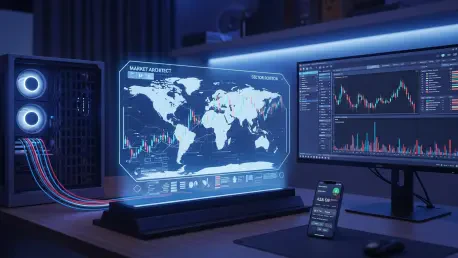
Assessing diversified asset prospects within a unified interface has become a standard practice for the modern multi-asset investor who manages both traditional and digital wealth. In 2026, the artificial silos between “stock people” and “crypto people” have largely dissolved, leading to a need for dashboards that can display Bitcoin, S&P 500 futures, and global tech stocks in a single view. These unified interfaces allow investors to see how their entire net worth is moving in real-time and how different assets are correlating with each other. If the stock market starts to sell off, the investor can quickly see if their crypto holdings are acting as a hedge or if they are falling in tandem. This consolidated view is essential for maintaining a balanced portfolio and for making informed decisions about where to allocate new capital. By removing the friction of switching between multiple apps and websites, investors can maintain a clearer perspective on their overall financial health and strategy.
Cutting back on passive screen observation is a significant lifestyle benefit of using AI-driven trading tools, as it allows investors to move away from the habit of staring at charts for hours on end. Instead of being tethered to a desk, investors rely on structured data summaries and periodic reports generated by their automation systems. These summaries can be delivered at set intervals, providing a concise overview of portfolio performance, current open positions, and any new signals that have been generated. This transition from “monitoring” to “reviewing” allows the investor to spend more time on high-level strategy and research rather than the mechanical task of price watching. Efficiency is the ultimate goal, where the technology handles the heavy lifting of data collection and initial filtering, leaving the final decision-making to the human operator. This approach not only improves trading results but also prevents the burnout that often comes with the high-stress environment of active market participation.
8. Transforming Raw Statistics and Appraising Past Results
Transforming raw statistics into logic-based guidelines is the process of taking price history, volume data, and other metrics and turning them into specific, repeatable instructions for a machine to follow. In 2026, investors are increasingly moving away from “discretionary” trading, where entries are based on a feeling, and toward “systematic” trading, where every move is backed by data. An investor might analyze years of data to find that a specific combination of technical indicators has a 65% win rate in the crypto market. They then convert this statistical insight into a series of “if-then” statements that the software can execute automatically. This transformation of data into logic is the core of successful automation, as it removes the guesswork and provides a clear roadmap for the future. By basing their decisions on proven statistical edges, investors can operate with a level of confidence that is simply not possible when trading by intuition alone.
Appraising past results and modifying configuration is a continuous cycle of improvement that keeps a trading system aligned with current market conditions. Markets are not static; a strategy that worked perfectly last year might struggle today if volatility regimes or interest rate environments change. Automated tools provide detailed performance metrics, such as Sharpe ratios, maximum drawdowns, and profit factors, which allow investors to objectively evaluate their results. If a strategy is underperforming its historical benchmarks, the investor can use this data to identify exactly where the breakdown is occurring—perhaps the stop-loss is too tight, or the entry signals are firing too late. This periodic review process is similar to a corporate performance audit, where the goal is to optimize every part of the operation for maximum efficiency. By treating their trading as a business and using data to guide their adjustments, investors can evolve alongside the market rather than being left behind by it.
9. Human Insight and the Case for Specialized Automation
Blending human insight with computational efficiency represents the “pinnacle” of modern investing, where the speed of technology handles the data processing while the investor makes the final high-level strategic calls. Even the most advanced AI in 2026 lacks the “common sense” or “contextual awareness” that a human brings to the table, such as understanding the long-term impact of a geopolitical shift or a revolutionary new technology. The most successful investors use automation to do the “grunt work”—scanning markets, managing risk, and executing trades—so they can focus on the big picture. This synergy ensures that the portfolio is managed with the precision of a machine but the wisdom of an experienced navigator. By maintaining this balance, investors can avoid the pitfalls of “pure” algorithmic trading, which can sometimes fail in “black swan” events that have no historical precedent for the machine to learn from.
A practical example of where this workflow comes together is found in platforms like BulkQuant, which focus on simplifying the integration of AI-assisted market monitoring and automated execution. In an environment where investors are juggling stocks, crypto, and forex, a tool that provides a guided, no-code environment for multi-market access can significantly reduce the complexity of the daily routine. Such platforms allow users to set up their “automation stack” quickly, focusing on the configuration of risk and strategy rather than the underlying infrastructure. By using a specialized tool to handle the technical execution, the investor can maintain their focus on the broader market landscape. This type of workflow represents the modern standard: using specialized software to bridge the gap between complex market data and actionable investment decisions. The key is to treat the software as an assistant that enhances capabilities rather than a replacement for personal accountability and judgment.
10. Selecting the Most Suitable Automation Solutions
Confirming asset compatibility and an intuitive user interface is a vital part of the selection process when an investor is ready to commit to an automated solution. It is not enough for a platform to be powerful; it must also support the specific markets where the investor intends to operate, whether that is high-growth semiconductor stocks or liquid altcoins. If an investor wants to trade across multiple sectors, they must ensure the platform provides deep integration with all necessary exchanges and brokers to avoid fragmented data. The interface itself should be designed for clarity, allowing the user to see their “exposure” and “performance” at a glance without having to dig through confusing menus. A dashboard that is easy to navigate reduces the risk of making a “fat-finger” error or misinterpreting a critical alert during a fast-moving market. Investors often look for a balance between sophisticated functionality and a clean, modern design that makes the complex task of market management feel manageable.
Checking for robust risk management features and educational resources is the second pillar of choosing a high-quality automation tool. A serious platform should offer more than just “buy” and “sell” signals; it should provide a suite of defensive tools that allow the investor to protect their downside. This includes features like “trailing stops” that lock in profits as a trade moves in their favor, or “emergency kill switches” that can pause all automated activity if a certain loss threshold is reached. Furthermore, the best platforms provide extensive documentation, tutorials, and trial access so that investors can fully understand the system’s mechanics before risking real money. Utilizing a trial period to run the software in a “paper trading” or “simulation” mode is a common practice that allows the user to see how the logic handles different market scenarios. This educational phase is crucial for building the trust and competence required to successfully manage an automated portfolio over the long term.
11. Understanding the Inherent Risks of Algorithmic Systems
Acknowledging the existence of inaccurate signals and market extremes is a necessary part of a realistic approach to automated investing in 2026. No matter how advanced a machine learning model is, it cannot predict the future with 100% certainty because markets are influenced by unpredictable human behavior and external shocks. Sometimes an AI tool will identify a “perfect” setup that still results in a loss because a sudden piece of news changed the market’s perception of value in an instant. Managing the high volatility found in crypto and high-growth stocks requires an understanding that even the best systems will have losing streaks. The goal of automation is not to eliminate losses entirely, but to manage them so they remain small and controlled. Investors who expect a “magic button” for profits are often the ones who are most disappointed when the market behaves in an irrational or extreme manner that the software did not anticipate.
Recognizing that configuration errors and a lack of profit guarantees are real risks helps investors maintain a healthy level of skepticism and caution. Automation can amplify mistakes just as easily as it can amplify successes; if a user sets a “stop-loss” incorrectly or picks a strategy that is not suited for the current market environment, the software will faithfully execute those bad orders at high speed. This “execution risk” means that the investor must remain vigilant and regularly audit their settings to ensure everything is functioning as intended. Furthermore, it is a hard truth that no tool can guarantee a specific financial outcome, as market success depends on a combination of strategy, risk management, and market conditions. Keeping expectations realistic and maintaining a focus on the “process” rather than the “payday” is what separates professional investors from those who are simply gambling with technology. Automation is a tool for improvement, not a replacement for the fundamental realities of risk and reward in the global financial markets.
12. Frequently Asked Questions Regarding Modern Automation
One of the most common questions regarding modern automation in 2026 is whether these tools are truly suitable for novices who have no prior experience with coding or advanced mathematics. The answer is that the current generation of tools has been specifically designed with “accessibility” in mind, using visual builders and natural language interfaces to hide the underlying complexity. A beginner can start by simply using the software for market scanning and basic price alerts, gradually moving toward more complex automation as they become more comfortable with the technology. The primary function of automation for a novice is often “guardrail creation,” where the software prevents them from making common beginner mistakes like over-trading or ignoring stop-losses. However, even with these simplified tools, a basic understanding of market mechanics remains essential, as the software is only as good as the instructions it is given by the human user.
Another frequent inquiry involves the methods used for reducing exposure to losses while utilizing specialized software for stocks and cryptocurrencies. Investors often ask how they can prevent a “glitch” or a sudden market crash from wiping out their account when they are not watching the screens. The solution lies in the implementation of “layered” risk controls, which include exchange-side stop-losses, platform-side drawdown limits, and portfolio-wide exposure caps. By having multiple levels of defense, the investor ensures that if one system fails, another is there to catch the fall. Additionally, diversifying across different strategies and asset classes can help mitigate the risk of a single “bad setting” causing significant damage. The key takeaway for most investors is that automation should be viewed as a way to “tighten” their risk management rather than a reason to ignore it. By combining these defensive settings with regular human oversight, investors can significantly reduce their vulnerability to the inherent dangers of the financial markets.
13. Strategic Evolution of the Modern Trading Workflow
The transition toward automated systems offered significant advantages to those who recognized that the speed of the 2026 markets demanded a more structured approach than manual observation alone. By shifting the focus from “finding trades” to “refining processes,” investors were able to build more resilient portfolios that stood up to the tests of extreme volatility and macroeconomic uncertainty. The integration of artificial intelligence into the daily routine transformed the act of trading from a stressful, reactive struggle into a calm, systematic operation where every action was backed by data and predefined logic. Those who embraced this evolution found that they could manage more assets in less time, allowing them to remain competitive in a world where institutional-grade technology became the baseline for all participants. The evolution was not just about the software itself, but about the mental shift toward becoming a disciplined operator who prioritized long-term consistency over short-term excitement.
Looking back at the progress made, it became clear that the most successful participants were the ones who treated technology as a partner rather than a replacement for human judgment. They used platforms to automate the repetitive and emotionally draining parts of the market while retaining the authority to intervene when their unique insights suggested a change in direction was necessary. This hybrid model provided a “margin of safety” that was absent in purely manual or purely algorithmic approaches. As the markets continued to grow in complexity, the ability to effectively manage this human-machine synergy became the single most important skill for any investor. The future of market participation belonged to those who mastered the configuration of their automation stack, ensuring that their tools were always working toward their specific financial objectives. Ultimately, the successful application of AI in trading proved that while technology could process the numbers, the vision and the responsibility remained firmly in the hands of the individual.