
The American consumer is currently facing a dual-pronged economic squeeze as surging gasoline prices and a sudden shift in monetary policy threaten to derail the fragile stability achieved late last year. While the markets had grown accustomed to the comfort of easing borrowing costs, the Federal Reserve is now signaling a dramatic pivot that could see interest rates climb once again. This potential reversal highlights how quickly global events can shatter domestic economic projections, leaving households to grapple with both higher monthly bills and the prospect of more expensive debt.
Beyond the Pivot: Why the Federal Reserve Is Reconsidering Its Hawkish Stance
The landscape of American finance has transformed with startling speed, moving away from the three consecutive rate cuts that defined the closing months of 2025. This transition marks a departure from the “easing cycle” many analysts believed would persist throughout the current year. Instead of further relief, the central bank is now entertaining the possibility of “upward adjustments” to the benchmark rate, which currently sits at approximately 3.6%. The primary driver of this shift is the realization that inflation is not merely lingering but is actively gathering new momentum.
The suddenness of this policy reversal can be traced to a single geopolitical disruption in early 2026 that effectively paralyzed the Fed’s previous roadmap. For months, the narrative focused on a soft landing and the return to normalcy; however, the reality of unanchored inflation expectations has forced Beth Hammack and her colleagues to reconsider the necessity of aggressive borrowing costs. The critical question facing the board is whether the “personal pain” inflicted by high gas prices will mandate a return to a hawkish stance to prevent a total loss of price stability.
The Intersection of Global Conflict and Domestic Energy Prices
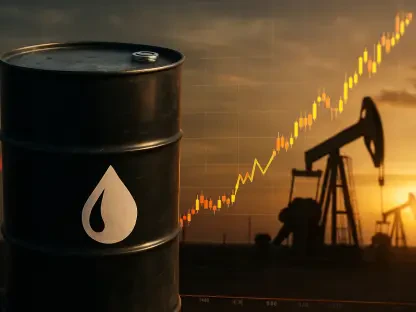
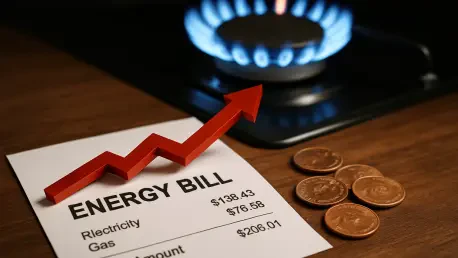
A major catalyst for this economic tension is the ongoing conflict involving Iran, which has sent shockwaves through the global oil market since late February. In just one month, the national average for a gallon of gasoline has surged to $4.12, representing a staggering 80-cent increase that hits commuters immediately at the pump. This spike functions as a de facto tax on the American public, draining disposable income that would otherwise support discretionary spending in sectors like retail and hospitality.
The ripple effect of this energy volatility is already visible in regional economic data, particularly within the Cleveland Fed’s district covering Ohio, Pennsylvania, West Virginia, and Kentucky. Residents in these areas are reporting that energy costs have become their primary financial concern, overshadowing previous gains in wage growth. As energy prices permeate the supply chain, Consumer Price Index projections for March and April are being revised upward toward a 3.5% peak, moving significantly further from the Federal Reserve’s long-standing 2% target.
Balancing the Dual Mandate Amidst a Volatile Economic Landscape
The Federal Reserve remains locked in a struggle to satisfy its dual mandate: maintaining price stability while fostering maximum employment. Currently, these two goals are in direct opposition, as the tools used to cool inflation—specifically higher interest rates—often risk cooling the labor market too much. While the benchmark rate of 3.6% was intended to be a neutral middle ground, it is increasingly viewed as a baseline that may need to rise if the “higher for longer” strategy fails to temper the current inflationary spike.
Policymakers are weighing the risk of a potential recession against the catastrophic long-term effects of allowing inflation to become a permanent fixture of the economy. A 3.5% inflation rate represents a significant failure in the eyes of the central bank, challenging the credibility of its internal forecasting. To prevent a spiral where workers demand higher wages to keep up with $4 gasoline, the Fed may be forced to prioritize price stability even if it leads to a temporary uptick in unemployment.
Inside the Boardroom: Expert Perspectives on Inflationary Pressures
Internal discussions within the 19-person rate-setting committee suggest a growing consensus that the door to future hikes must remain open. Beth Hammack has established a conditional outlook, noting that while a weakening labor market could prompt cuts, any further deviation from the 2% inflation goal would necessitate a more restrictive policy. This perspective is echoed by Austan Goolsbee of the Chicago Fed, who has aligned with the idea that the central bank cannot afford to be complacent while energy costs drive the cost of living higher.
This internal resolve faces significant external pressure, particularly from the Executive Branch, where there is a vocal demand for rates to drop as low as 1%. This creates a historic tension between the independent Federal Reserve and political leaders who view high interest rates as a barrier to economic expansion. Despite this friction, the prevailing sentiment among Fed governors is that the data provided by the Commerce Department must dictate the path forward, rather than political preference or public sentiment.
Financial Strategies for a Sustained High-Interest Environment
In this era of shifting goalposts, businesses are being forced to develop robust frameworks to hedge against rising capital costs and unpredictable energy spikes. Many firms are locking in long-term financing now to avoid the sting of future hikes, while also implementing efficiency measures to offset the rising cost of logistics and transport. For the average consumer, the strategy involves a defensive posture, focusing on debt reduction and the preservation of disposable income as inflation continues to erode purchasing power across the board.
Monitoring the leading indicators from the labor market and price reports will be essential for anyone trying to navigate the coming months. If upcoming reports show that inflation is consistently moving in the “wrong direction,” it will serve as a definitive signal that the era of cheap credit has truly ended. Stakeholders must now prepare for a reality where the Federal Reserve prioritizes the structural integrity of the dollar over the immediate comfort of the markets.
The central bank transitioned toward a “wait-and-see” approach that emphasized data-driven flexibility over rigid forward guidance. Policymakers recognized that the immediate priority was stabilizing consumer expectations before the energy-driven price hikes became embedded in the broader economy. By maintaining a hawkish tilt, the Fed sought to signal its unwavering commitment to the 2% target, regardless of the political climate. These actions suggested that the path to a balanced economy would require a period of sustained fiscal discipline and a cautious reevaluation of global supply chain vulnerabilities.