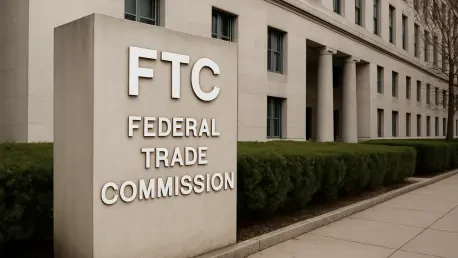

In a decisive display of regulatory authority, the Federal Trade Commission has unleashed a series of far-reaching enforcement actions that underscore a new era of accountability for businesses operating across the American economy. A review of the agency’s activities between late November and early December 2025 reveals a concerted effort to police misconduct in the digital marketplace, challenge deceptive pricing schemes, and dismantle barriers to fair competition. Wielding its expansive powers under Section 5 of the FTC Act, the Commission targeted major players in technology, real estate, healthcare, and professional services, sending a clear message that consumer protection and market integrity are paramount. These actions collectively paint a portrait of a vigilant agency actively addressing the complex challenges of the modern economy, from the misuse of personal data and hidden “drip pricing” to anti-competitive noncompete agreements and fraud targeting the nation’s most vulnerable populations.
Holding Companies Accountable for Data and Deception
Data Security and Privacy Violations
The FTC has intensified its scrutiny of how companies handle sensitive user information, taking significant action against education technology provider Illuminate Education, Inc. This enforcement followed a major data breach in late 2021 where a hacker exploited the credentials of a former employee to access the personal data of an astounding 10.1 million students. According to the FTC’s complaint, Illuminate not only failed to implement reasonable and appropriate security measures to safeguard this highly sensitive information but also actively misrepresented its data protection standards to the school districts it served. The resulting proposed consent agreement, announced on December 1, 2025, mandates sweeping operational reforms. While it does not impose an upfront monetary fine, the order requires Illuminate to establish and maintain a comprehensive data security program, create a public data retention schedule, and delete all student data no longer necessary for its services. Furthermore, the company must significantly improve its breach notification protocols, ensuring schools are alerted more quickly to future incidents. This agreement establishes a powerful, long-term compliance obligation, with the looming threat of substantial civil penalties for any future violations.
In a separate action demonstrating the significant financial repercussions of privacy violations, the FTC announced on December 2, 2025, that it was distributing nearly $15.3 million in payments to consumers affected by the deceptive practices of software company Avast. The agency’s original complaint, which culminated in a landmark settlement in 2024, alleged that Avast, through its widely used antivirus software and browser extensions, surreptitiously collected and sold vast quantities of its users’ detailed web browsing history without their knowledge or consent. This practice was in direct contradiction to the company’s marketing, which explicitly promised to protect consumer privacy and block online tracking mechanisms. The FTC charged that this conduct constituted a clear deceptive practice under Section 5 of the FTC Act. The 2024 settlement not only mandated the payment for consumer redress but also permanently prohibited Avast from selling or licensing any web browsing data for advertising purposes. The current distribution of funds to consumers who filed valid claims represents the final, critical stage of holding the company accountable and providing tangible financial relief to those who were misled by its privacy promises.
Misleading Pricing and Unsubstantiated Claims
The Commission also took aim at opaque and deceptive pricing structures that harm consumers in the housing and health sectors. On December 2, 2025, it was announced that Greystar, the largest manager of multi-family rental properties in the United States, had agreed to a substantial $24 million settlement with the FTC and the State of Colorado. The joint complaint alleged that Greystar engaged in a deceptive practice known as “drip pricing” by advertising deceptively low rental prices on its properties. These advertised prices failed to disclose numerous mandatory monthly fees, thereby misrepresenting the true total cost of leasing an apartment. These actions were alleged to be in violation of both Section 5 of the FTC Act and Colorado’s robust consumer protection laws. The settlement requires Greystar to provide $23 million in direct refunds to affected consumers and pay an additional $1 million to the State of Colorado. Critically, the company is now legally bound to clearly and conspicuously disclose the total monthly lease price, including all mandatory fees, in its advertising and is prohibited from making any future misrepresentations about fees and pricing.
Similarly, the FTC finalized an order on December 3, 2025, against the telehealth provider NextMed and its principals, addressing a host of deceptive marketing practices associated with their prescription GLP-1 weight-loss programs. The Commission’s initial complaint, filed in July 2025, accused NextMed of violating Section 5 by making bold weight-loss claims that were not substantiated by credible scientific evidence. The company was also charged with using fabricated consumer testimonials, manipulating online review platforms to suppress negative feedback, and failing to clearly disclose critical program costs and cancellation policies to prospective customers. Furthermore, NextMed was accused of processing recurring charges without obtaining proper informed consent from consumers. The finalized order mandates that NextMed pay $150,000 for consumer refunds and imposes strict requirements for its future operations. The company must now support all advertising claims with competent scientific evidence, cease all manipulation of reviews, prominently disclose all fees and terms, obtain explicit informed consent before billing, and promptly honor all consumer cancellation requests.
Advancing Fair Competition Across Markets
Protecting Worker Mobility and Preventing Harmful Mergers
In its efforts to foster a more competitive labor market, the FTC finalized a significant consent order on November 26, 2025, against Gateway Services, Inc., a company operating in the pet cremation industry. This order compelled the company to completely stop imposing restrictive noncompete agreements on its employees. The FTC’s complaint had alleged that Gateway’s practice of prohibiting former employees from working anywhere in the U.S. pet cremation industry for a full year post-employment was an overtly anticompetitive measure. The agency argued that this practice unlawfully suppressed competition for labor and severely limited the mobility of workers seeking better opportunities. The finalized order is comprehensive, requiring Gateway to cease enforcement of all its existing noncompete clauses and permanently prohibiting the company from entering into any similar agreements with its workers in the future. This action is part of a broader agency focus on dismantling such barriers to worker freedom and ensuring a more dynamic and fair labor environment for all employees.
The Commission’s vital role in preemptive merger review was highlighted on December 5, 2025, when Aya Healthcare announced it was abandoning its proposed acquisition of Cross Country Healthcare. This decision came after FTC staff identified and communicated serious competitive concerns regarding the merger. Agency analysis concluded that the consolidation of these two major players would have significantly reduced competition in the crucial market for software and services that hospitals rely on to manage their temporary healthcare workforce, including traveling nurses and other essential staff. The FTC believed the merger would have inevitably led to fewer choices and lower pay for healthcare workers, higher operational costs for hospitals, and, ultimately, increased healthcare expenses passed on to patients. The companies’ decision to withdraw the deal in direct response to the staff’s findings serves as a powerful demonstration of the FTC’s influence in preventing potentially harmful market consolidation before it can inflict damage on workers, businesses, and consumers.
Addressing Systemic Issues and Protecting Vulnerable Groups
Beyond individual enforcement actions, the FTC also engaged in broader policy advocacy to address systemic anti-competitive structures. On December 2, 2025, the FTC’s Office of Policy Planning and Bureau of Competition submitted a formal letter to the Texas Supreme Court. The letter strongly endorsed a proposed amendment that would remove the American Bar Association’s (ABA) exclusive authority to set law school accreditation standards for bar admission within the state. FTC staff argued that the current rule is fundamentally anti-competitive, as it grants a private association of practicing lawyers—who possess a natural interest in limiting their own competition—the immense power to restrict entry into the legal profession. The letter contended that this system likely prevents many qualified individuals from providing legal services to the public, thereby reducing access to justice and inflating costs. The FTC’s position is that the proposed reform would create a more competitive market for legal education and services, ultimately benefiting both aspiring lawyers and consumers in Texas.
In its role as a primary protector of consumers, the FTC also shed light on a deeply troubling trend. On December 1, 2025, the agency issued its annual report to Congress on protecting older adults, revealing a stark and alarming increase in financial losses due to scams. The report highlighted that total fraud losses reported by consumers aged 60 and over surged from $600 million in 2020 to a staggering $2.4 billion in 2024. Investment scams, which frequently originate on social media platforms, were identified as a particularly devastating category, with many older adults reporting devastating individual losses that exceeded $100,000. While the report noted that older adults lose money to fraud at a lower overall rate than younger consumers, their median individual losses are significantly higher, reflecting the often catastrophic impact of these schemes on retirement savings. The report detailed the FTC’s ongoing efforts to combat this trend through targeted educational campaigns and the collaborative work of its Scams Against Older Adults Advisory Group, underscoring the agency’s commitment to safeguarding this vulnerable population.
A Renewed Focus on Market Fairness
The Commission’s actions in late 2025 demonstrated a clear resolve to enforce consumer protection and competition laws with renewed vigor across a diverse range of industries. By targeting everything from the mishandling of student data to anti-competitive noncompete clauses, the FTC established important precedents that put businesses on notice. These cases collectively signaled that the agency would not tolerate deceptive marketing, unfair billing practices, or actions that stifled fair competition in labor and product markets. The tangible outcomes, including millions of dollars in consumer refunds and the prevention of a potentially harmful healthcare merger, underscored a commitment to delivering real-world results that protect both the public’s privacy and its pocketbooks. This period of intense activity solidified the FTC’s role as a formidable regulator in the modern economy.