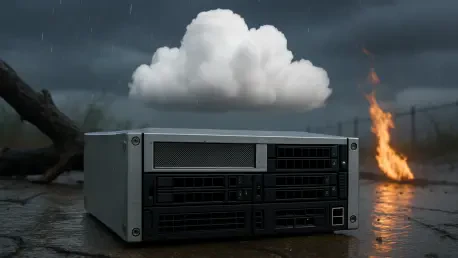

As cloud infrastructure becomes the backbone of modern society, the physical safety of the massive facilities housing our digital lives is coming under intense scrutiny. Recent events in the Middle East, specifically the drone strikes targeting Amazon Web Services (AWS) facilities in the United Arab Emirates and Bahrain, have shattered the illusion that the “cloud” is a weightless, ethereal entity. These attacks highlight a growing tension between the need for high-speed data transmission and the physical vulnerabilities of the hardware that makes it possible. In this discussion, we explore the precarious balance of geographic clustering, the logistical nightmare of recovering from physical destruction, and the evolving nature of data center defense in an era of kinetic warfare.
To maintain those ultra-low-latency networks we all rely on, providers have to cluster data centers within 100 kilometers or about 60 miles of each other. How do you balance this need for speed against the risk of regional conflict, and what happens when fire suppression systems add to the chaos of structural damage?
The 60-mile threshold is a technical necessity for the “real-time” feel of the modern internet, but in a conflict zone, it creates a concentrated target for an adversary. When we see “direct strikes” like those in the UAE, the immediate concern isn’t just the hole in the roof; it is the cascading failure of sensitive electronics. For instance, when structural damage occurs, AWS reported that fire suppression activities were triggered, which often results in significant water damage to the server racks. Imagine the sensory overload of a facility: the smell of ozone and charred plastic mixing with the high-pressure hiss of water or chemicals flooding millions of dollars of hardware. This complicates recovery because even if you restore power delivery, the moisture and physical debris mean you can’t just “flip a switch”—you are often looking at a total hardware replacement.
Most cloud regions rely on at least three isolated availability zones to maintain operations. How does the simultaneous loss of multiple facilities within one zone threaten total capacity, and what steps should organizations take to migrate their data to entirely different geographic regions?
While cloud providers design their systems so the loss of a single data center is relatively unimportant, the math changes quickly when multiple facilities are hit. In the Middle East, AWS operates in three regions—the UAE, Bahrain, and Israel—and if you lose two zones in one region, you hit a bottleneck where there simply isn’t enough remaining capacity to handle the workload of a modern economy. Organizations must have a “break-glass” protocol to migrate to one of the other 39 geographic regions globally. This process starts with identifying mission-critical data, then rerouting online traffic away from the affected area using automated failover scripts, and finally synchronizing databases to a stable region like Europe or North America. It is a high-stakes race against time that requires having your data mirrored in a distant “safe haven” long before the first drone is ever spotted.
Physical security measures like fences and guards are designed to stop intruders rather than airborne strikes. Given that these massive facilities are difficult to hide, what new defensive infrastructure is required, and what metrics should businesses use to evaluate a provider’s resilience?
The reality is that security guards and fences are effective against a trespasser, but they are useless against a drone landing nearby or a direct missile hit. These data centers are massive, recognizable facilities that are nearly impossible to hide from satellite surveillance, making them prime targets for kinetic attacks. Moving forward, we need to see defensive infrastructure that includes hardened shells, subterranean server halls, and perhaps even localized anti-drone technologies. When evaluating a provider, businesses should look at “geodiversity” metrics—specifically asking how many miles of “meaningful distance” actually separate availability zones and whether those zones share the same power grid or water source. If a provider’s entire regional presence is clustered in one high-risk metropolitan area, their physical resilience is essentially a house of cards.
Physical damage often results in localized disruption compared to the global impact of software failures. Why does localized infrastructure failure contain damage better than a software bug, and why do redundant power and internet connections sometimes fail during a direct kinetic attack?
It is a strange paradox, but a physical strike is often “cleaner” for the global network than a software bug because the damage is physically bound to a specific coordinate. A software glitch can propagate through the entire global system in milliseconds, acting like a digital contagion, whereas a drone strike in Bahrain only affects the local hardware. However, the reason redundant power and internet connections fail during a kinetic attack is that they are often designed for accidental outages, like a construction crew cutting a line, rather than intentional destruction. If a strike hits the central “hub” where these redundant lines converge, or if it compromises the building’s structural integrity, the “redundancy” becomes irrelevant. We see power delivery disrupted not because the backup generator failed, but because the electrical conduits themselves were shredded by the blast.
What is your forecast for the physical security of cloud infrastructure in conflict zones?
My forecast is that we will see a shift toward “stealth and hardening,” where cloud providers move away from the massive, branded warehouses of the past in favor of smaller, more discreet, and heavily fortified installations. We may also see a shift in how companies choose their cloud regions, with “geopolitical stability” becoming a more important metric than “local latency” or “tax incentives.” As the industry realizes that the cloud is not a magical, invisible force but a collection of physical assets vulnerable to disaster, we will see a tiered service model where the most critical government and financial data is stored exclusively in regions with low conflict profiles. Ultimately, the era of assuming the cloud is safe simply because it is “distributed” is over; the physical ground beneath these data centers has become just as important as the code running inside them.