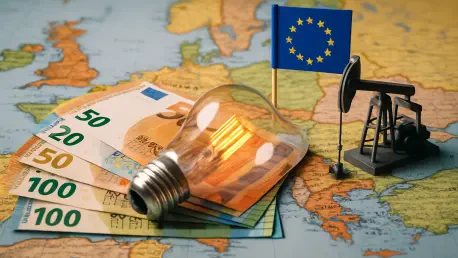

Priya Jaiswal joins us to unpack the heavy toll of the Middle Eastern conflict on European energy security. As oil prices surge and the Strait of Hormuz remains a flashpoint, Jaiswal’s background in international market analysis provides a vital lens through which we can understand the proposed “solidarity contributions” and the shifting fiscal landscape of the European Union.
Several European nations are proposing a bloc-wide windfall tax on energy companies to address current market distortions. How would such a policy be structured to ensure a fair distribution of costs, and what specific mechanisms prevent these companies from passing the tax burden directly to struggling households?
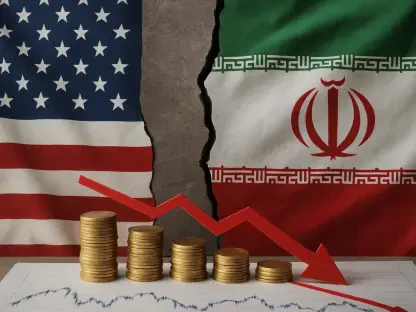
To truly tackle these market distortions, a windfall tax must target excess profits that occur solely due to external shocks rather than operational efficiency. By modeling this after the “solidarity contribution” seen in 2022, the EU can redirect those funds to provide immediate relief to those feeling the pinch. Preventing cost-pass-through requires rigorous oversight and perhaps price caps that limit the ability of utilities to raise rates based on tax liabilities. The goal is to send a clear message that those profiting from the war must contribute to the public good, ensuring the financial weight of this crisis doesn’t fall entirely on the shoulders of ordinary citizens.
With regional inflation recently jumping from 1.9% to 2.5%, what immediate risks do these rising energy costs pose to broader economic stability? Please detail the specific fiscal tools governments should use to protect consumer purchasing power and what metrics indicate these interventions are actually working.
A jump from 1.9% to 2.5% in just a single month is a significant red flag for economic stability across the 21 countries using the euro. This surge, fueled by high oil prices, risks dampening consumer spending as more household income is swallowed up by heating and fuel costs. Governments should look toward fiscal tools like energy rebates or temporary tax reductions to keep purchasing power afloat during this volatility. We will know these interventions are working if we see a stabilization in core inflation and a slowing of the upward trend in the Consumer Price Index.
The closure of the Strait of Hormuz has disrupted approximately 20% of global oil and gas traffic. What logistical alternatives can be implemented to bypass this chokepoint, and what step-by-step infrastructure changes are necessary for countries to reduce their vulnerability to these types of external supply shocks?
When a single chokepoint controls 20% of the world’s energy flow, the vulnerability of import-dependent regions like Europe becomes painfully clear. Immediate logistical shifts include rerouting tankers around the Cape of Good Hope, though this adds significant time and fuel costs to every shipment. Long-term infrastructure changes require a massive investment in LNG terminals and pipelines that tap into alternative suppliers to diversify the energy mix. By reducing the reliance on any single geographical corridor, nations can build a buffer against the sudden shocks we are seeing in the Middle East.
Policymakers are looking at the “solidarity contributions” used during the 2022 energy crisis as a model for current profit caps. How do the current market conditions compare to those following the invasion of Ukraine, and what lessons from that period should guide the development of new price instruments?
The parallels to the 2022 invasion of Ukraine are striking, particularly the way external geopolitical turmoil creates immediate price spikes that result in double-digit inflation in some sectors. Back then, the EU realized that energy giants were seeing massive gains while the public suffered, leading to the first iteration of the solidarity contribution. The lesson we learned is that price caps on excess profits must be implemented swiftly to be effective, rather than waiting for the market to correct itself. Today’s situation is even more complex due to the physical blockade of the Strait of Hormuz, making the development of these price instruments more urgent.
Since energy prices are unlikely to return to normal levels in the near future, how should industrial leaders adapt their long-term business models? What specific strategies can they use to maintain productivity in a high-cost environment, and what role does accelerated renewable transition play in this shift?
Industrial leaders must face the hard truth that the era of cheap, reliable fossil fuels is fading, especially with warnings that prices won’t return to normal soon. To maintain productivity, companies are looking at aggressive efficiency measures and shifting production schedules to match energy availability. The transition to renewable energy is no longer just an environmental goal; it is a critical strategy for energy independence and long-term cost stabilization. By investing in on-site solar, wind, or hydrogen, businesses can decouple their operational costs from the volatile swings of the global oil market.
What is your forecast for global energy markets?
My forecast suggests a period of structural volatility where high prices become the new baseline rather than a temporary anomaly. We are likely to see a permanent shift in trade routes as Europe tries to sever its dependency on volatile regions, which will keep logistical costs elevated for the next several years. Until the renewable capacity can fully replace the 20% of energy currently caught behind the Hormuz blockade, we will remain in a state of high alert. This means that fiscal interventions and profit caps will likely become permanent features of the European economic landscape rather than emergency one-offs.