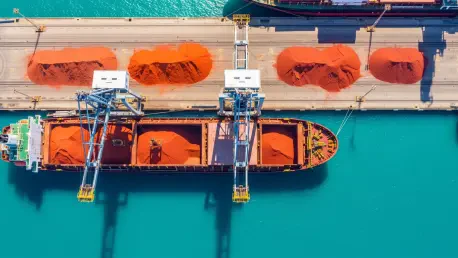

In an international financial landscape dominated by software giants and digital service providers, the Australian Securities Exchange stands as a formidable and unique outlier. While the NASDAQ and various European indices have pivoted aggressively toward artificial intelligence and cloud computing, the Australian market remains anchored in the tangible world of earth and ore. This divergence is not a sign of stagnation but rather a strategic specialization that has transformed the continent into a primary engine for global industrialization. For investors seeking a hedge against the ephemeral nature of tech valuations, the exchange offers a concrete alternative where market movements are tied to the physical building blocks of the world. The sheer scale of operations in Western Australia and Queensland ensures that the exchange is not merely a regional player but a global powerhouse that provides the essential lithium, iron, and copper required for the survival of modern civilization. This resource-heavy profile provides a unique level of transparency and stability in a world of digital abstraction, ensuring the market remains a vital destination for capital.
Geological Foundations and Market Dynamics
Australia’s Inherent Resource Advantages
The status of the Australian exchange as a global resource superpower is a direct consequence of the continent’s vast and high-quality mineral reserves that have been mapped over decades. Australia has attracted significant investment in extraction infrastructure, allowing local firms to achieve a scale and level of efficiency that few global competitors can currently match. This geological wealth has fostered a domestic economy built on the extraction and export of minerals, creating a feedback loop where successful mining operations drive broader economic growth and encourage further exploration across the vast outback. These companies have perfected the art of bulk commodity logistics, ensuring that they can move millions of tons of material to global markets at a cost per unit that remains competitive even during periods of price suppression. The resilience of this infrastructure provides a safety net for the exchange, grounding its valuation in tangible assets that possess intrinsic value regardless of the prevailing trends in the global digital economy.
Building on this geological foundation, the Australian mining sector has pioneered advanced extraction technologies that have set new global standards for productivity and safety. Automation in drilling and the use of driverless haulage trucks have significantly lowered operational risks and costs, making the ASX-listed firms highly attractive to international institutional investors. Furthermore, the regulatory framework governing exploration and mining licenses in Australia is among the most stable and transparent in the world, reducing the sovereign risk often associated with resource extraction in other mineral-rich regions. This combination of natural abundance and technological sophistication has allowed Australian miners to dominate the global supply of iron ore and bauxite. As the world continues to demand higher-grade materials to meet stricter environmental standards, the premium quality of Australian reserves ensures that the exchange maintains its competitive edge. The consistent delivery of high-profit margins even in volatile cycles has solidified the reputation of these firms as the cornerstone of many global industrial portfolios.
Historical Development and Market Sentiment
As a result of this long-term development, the ASX is dominated by massive mining and energy corporations that wield significant influence over the broader market index performance. Unlike the S&P 500, where the performance of various technology firms dictates market sentiment, the health of the ASX is often a direct reflection of the operational success and profitability of major resource producers. This concentration provides a clear and transparent look at the global industrial cycle, making the exchange a vital barometer for the health of worldwide manufacturing and construction sectors. When global demand for raw materials surges, the Australian market typically leads the way, providing investors with early signals of an impending industrial expansion. Conversely, a slowdown in the ASX often serves as a warning that global manufacturing activity may be cooling, allowing seasoned traders to adjust their portfolios accordingly. This predictive quality makes the exchange an indispensable tool for those tracking the macroeconomic pulse of the industrial world.
Moreover, the historic focus on commodities has protected the Australian market from some of the extreme volatility seen in tech-heavy indices during periods of high interest rates. While high-growth technology stocks often struggle when borrowing costs rise, resource companies frequently benefit from the inflationary pressures that drive commodity prices higher. This provides a natural hedge for investors, allowing them to balance the risks of a traditional equity portfolio with the cyclical strength of physical assets. The presence of diversified giants like BHP and Rio Tinto provides a level of corporate stability that is rarely found in younger, more speculative sectors. These companies possess the capital reserves necessary to continue investing in long-term projects even when shorter-term market conditions are unfavorable. This structural stability has cultivated a culture of consistent dividend payments, making the ASX a preferred destination for income-focused investors who seek reliable returns from established, asset-backed businesses. This blend of growth and income has defined the Australian investment landscape for generations.
Critical Commodities and Strategic Shifts
Driving Modern Infrastructure and Technology
The ASX provides a platform for companies that produce the essential materials required for the modern global economy to function and expand its physical footprint in several regions. Iron ore remains the bedrock of the exchange, serving as a critical input for steel production in emerging markets and developed nations alike, particularly as they modernize their urban centers. However, the exchange has also successfully pivoted toward the future by becoming a leading destination for lithium and copper producers who are essential to the next phase of technological growth. These minerals are the lifeblood of the electric vehicle revolution and the expansion of global electrical grids, ensuring that the ASX remains relevant as the world transitions to more advanced and sustainable technologies. By hosting the world’s most efficient miners, the exchange ensures a steady supply of the ingredients necessary for everything from skyscraper skeletons to the batteries found in high-end consumer electronics. This dual focus on traditional and futuristic materials creates a balanced and resilient profile for the exchange.
Furthermore, the deep symbiotic relationship with the Chinese economy has traditionally served as the primary engine for Australian mineral exports and market performance. China’s rapid urbanization and massive infrastructure projects created an insatiable demand for Australian raw materials, effectively turning the ASX into a proxy for Chinese industrial activity. Investors looking to gain exposure to Asian growth utilize the Australian market because it offers a highly regulated environment to trade the companies that supply the manufacturing engines of the East. This relationship allowed Australian firms to weather several global downturns, as sustained demand from the region provided a constant stream of revenue and capital for expansion. Even as regional economies shift toward domestic consumption, the demand for high-grade Australian iron ore remains robust due to the efficiency gains these materials provide to modern steel mills. This interdependency ensures the exchange remains central to the narrative of global economic development, bridging the gap between Western capital and Asian industrial demand.
Adaptation to a Greener Global Economy
The global move toward decarbonization is currently reshaping the composition of the ASX as companies pivot away from traditional high-carbon assets toward greener and more sustainable alternatives. While the exchange has a long-standing history with traditional fossil fuels like coal, it is rapidly evolving to prioritize critical minerals such as nickel, cobalt, and rare earth elements. This shift ensures that the Australian resource sector remains a central player in the global energy landscape even as the world moves away from carbon-intensive energy sources, providing a clear path for long-term sustainability within the exchange. Large-scale miners have begun reinvesting their profits from traditional operations into the development of green hydrogen and solar-powered smelting processes, aiming to reduce the overall carbon footprint of the mining industry. This proactive approach not only satisfies the demands of environmentally conscious investors but also positions Australian firms as the preferred suppliers for the global green transition and other emerging environmental initiatives.
Ultimately, the evolution of the Australian Securities Exchange demonstrated that the future of global commodities was defined by a sophisticated blend of extraction and high-tech sustainability. Investors who recognized the shift toward critical minerals early were able to position their portfolios for the next phase of industrial growth, while the market itself showed a remarkable ability to integrate rigorous environmental standards without sacrificing profitability. Looking ahead, the focus moved toward securing domestic processing capabilities to keep more of the value chain within Australian borders rather than simply exporting raw materials to offshore facilities. This strategy involved deeper collaborations between mining firms and technology developers to create integrated supply chains that were resilient to geopolitical disruptions. Decisions made by policymakers and corporate leaders solidified the competitive edge of the ASX in an increasingly scrutinized global market. The historical success of the resource sector provided a strong foundation, but the transition to a low-carbon economy required a bold reimagining of what it meant to be a leading global commodity hub.