
Priya Jaiswal stands at the forefront of the complex dialogue between global capital markets and national energy infrastructure. As a recognized authority in international business trends and market analysis, she provides a critical lens through which to view the massive financial shifts currently reshaping the American power sector. Her expertise is particularly relevant now, as multi-billion dollar federal settlements trigger a strategic retreat from offshore wind, forcing major energy players to reconsider their portfolios. By examining the intersection of policy and private investment, Jaiswal helps demystify how these high-stakes negotiations impact the stability and direction of the national grid.
The discussion explores the strategic withdrawal of major energy corporations from offshore wind projects and the subsequent federal buybacks that have now reached a total of nearly $4 billion. We delve into the specific pivot of companies like RWE toward natural gas infrastructure, the legal friction between renewable developers and national security agencies regarding onshore projects, and the polarizing political debate over consumer costs and energy independence. The conversation highlights the mandatory reinvestment of settlement funds into fossil fuels and the broader implications for the future of the American energy mix.
How would you characterize the strategic decision by RWE to accept a $1.22 billion settlement and completely relinquish its offshore wind leases in the United States?
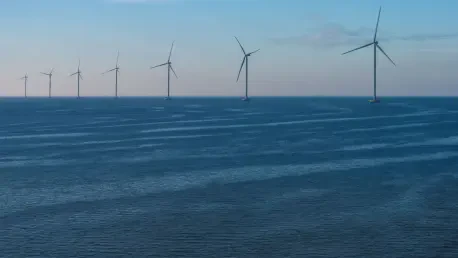
This move by RWE represents a definitive and costly pivot away from an offshore ambition that once seemed central to their U.S. strategy. By accepting $1.22 billion to walk away from projects in New York, California, and Louisiana, the company is signaling that the regulatory and permitting environment has become an impassable thicket for the foreseeable future. These leases represented years of investment and could have generated seven gigawatts of power—enough for more than 5 million homes—but the lack of a clear path to completion made the “exit” the only viable financial choice. RWE is now aggressively reallocating that capital, committing $900 million to a liquefied natural gas project in Louisiana and another $300 million to natural gas turbines. With 15 natural gas projects currently under development across the country, the German-headquartered firm is clearly betting that traditional baseload power is a much safer harbor for their billions than the volatile offshore wind market.
With the total amount spent on lease buybacks now reaching nearly $4 billion, what does this trend tell us about the current federal policy regarding renewable energy investments?
The fact that the federal government has spent nearly $4 billion to effectively “un-ring the bell” on offshore wind indicates a seismic shift in national energy priorities. We are seeing a structured dismantling of the offshore wind sector, where companies like TotalEnergies received nearly $1 billion and Invenergy was reimbursed $765 million for leases that were still in their infancy. These aren’t just simple refunds; they are strategic buybacks that often come with the explicit requirement that the funds be reinvested into fossil fuel infrastructure, such as the $900 million agreement split between Golden State Wind and Bluepoint Wind. This policy creates a massive financial incentive for companies to abandon green energy in favor of natural gas, essentially using federal funds to subsidize a return to more traditional energy sources. From a market perspective, it injects a high degree of uncertainty for any developer looking to invest in long-term renewable projects that rely on federal consistency.
How do you reconcile the conflicting narratives between the administration’s focus on “common sense” energy and the criticism that these buybacks are a “money pump” at the expense of consumers?
The debate is framed by two very different views of economic reality, with Interior Secretary Doug Burgum arguing that the current energy system must be built on dependable baseload power rather than costly subsidies. From his perspective, welcoming RWE’s investment in gas projects is a win for energy security because it focuses on technologies that can reliably meet the country’s current demand. However, this stands in stark contrast to the views of Senator Sheldon Whitehouse, who characterizes the lease buybacks as a “real scam” and a “money pump” designed to enrich fossil fuel donors. Whitehouse argues that by bribing companies to step away from clean energy, the government is forcing regular families to pay higher costs for more expensive fossil fuel plants. This creates a situation where the “cost story” and the “corruption story” are intertwined, leaving the average consumer to wonder if their utility bills are being used as a tool for political and corporate maneuvering.
In light of the recent court ruling against the Pentagon regarding onshore wind reviews, how might legal challenges reshape the balance between national security and renewable development?
The federal judge’s ruling in Oregon is a significant blow to the idea that national security reviews can be used as an indefinite stalling tactic for renewable energy. By ordering the Defense Department to resume its reviews of onshore wind farms on private lands and provide regular status reports, the court is demanding a level of transparency that has been missing for years. This ruling empowers renewable energy groups who felt that their projects were being unfairly sidelined without proper justification or a clear timeline for resolution. While the offshore sector is being dismantled through multi-billion dollar buybacks, the onshore sector is fighting back through the legal system to ensure that private land development isn’t arbitrarily blocked. It suggests that while the executive branch can buy its way out of offshore commitments, the judiciary may still protect the procedural rights of developers on the mainland.
What is your forecast for the American energy landscape over the next several years as these natural gas investments begin to come online?
I anticipate a significant “re-gasification” of the American power grid, where natural gas becomes the dominant and most reinforced sector of our energy infrastructure for the next decade. With $4 billion already spent to clear the way and major players like RWE pivoting to 15 different natural gas projects, the momentum behind fossil fuel expansion is becoming institutionalized. While this may provide the “dependable baseload power” that proponents advocate for, it also locks the country into a fossil-fuel-dependent pricing model that could be vulnerable to global market fluctuations. We will likely see a period of short-term stability in energy supply, but it will come at the cost of a stalled renewable transition and continued legal and political warfare over the environmental impact of this pivot. The “common sense” approach currently being touted will be put to the ultimate test when these new gas plants have to compete with the declining costs of global green technology.