
The meteoric rise of artificial intelligence is quietly creating a colossal and unprecedented demand for electricity, forcing the technology titans driving this revolution to fundamentally rethink their relationship with the power grid. As data centers work around the clock to train and operate sophisticated AI models, their energy consumption has begun to strain local and national power infrastructures, leading to a volatile and increasingly expensive energy market. This emerging reality is compelling corporations, long accustomed to being passive recipients of electricity, to adopt a radically new and aggressive strategy: becoming active participants in the complex world of wholesale energy trading to secure their power supply and shield themselves from crippling operational costs.
The New Power Play in Corporate Strategy
From Passive Consumers to Active Market Shapers
The traditional model where a corporation simply pays a monthly utility bill has become insufficient for the energy-intensive demands of the modern digital economy. The projected five to ten-fold increase in the growth rate of U.S. power demand over the next decade, driven almost entirely by AI and data center expansion, has introduced a level of unpredictability that is a significant business risk. This surge in demand, coupled with an aging grid infrastructure, has created a perfect storm of price volatility. With electricity prices already seeing a 7% year-over-year increase, the financial exposure for a company consuming terawatt-hours of power is immense. A sudden price spike could impact quarterly earnings, while a supply disruption could bring operations to a grinding halt. This new environment necessitates a proactive, rather than reactive, approach to energy procurement, transforming what was once a simple operational expense into a complex strategic challenge that requires constant management and foresight to mitigate risks effectively.
To navigate this new landscape, technology behemoths like Meta, Microsoft, and Apple have successfully secured licenses from federal regulators that permit them to buy and sell electricity on the wholesale market. This move represents a foundational shift in corporate strategy, turning these companies into sophisticated players in a market traditionally dominated by utility companies and specialized energy firms. Possessing this capability allows them to hedge against future price increases by locking in rates through long-term contracts and financial derivatives. More importantly, it provides them with the flexibility to manage their power portfolio in real-time. By actively trading, they can respond to market signals, purchase power when it is cheapest, and even sell surplus energy back to the grid. This transforms them from price-takers, who are at the mercy of market fluctuations, to market-shapers who can exert a degree of control over their energy costs and ensure the operational stability essential for their AI-driven growth ambitions.
The Rationale Behind an In-House Trading Desk
A primary driver behind this strategic pivot is the changing behavior of utility providers, who are themselves grappling with the challenge of forecasting and meeting this new, immense demand. In response, utilities have begun imposing stricter contract terms on their largest customers, increasingly requiring them to commit to purchasing fixed volumes of power months or even years in advance. This practice shifts the risk of demand forecasting from the utility to the consumer. If a tech company, for instance, contracts for a certain amount of power but its actual data center usage falls short due to efficiency gains or shifting workloads, it would traditionally be forced to pay for the unused electricity, resulting in a significant financial loss. Establishing an in-house energy trading desk provides a direct and effective solution to this dilemma. A dedicated trader can take that contracted surplus power and sell it on the open wholesale market, often recouping most, if not all, of the cost and turning a potential liability into a managed operational task.
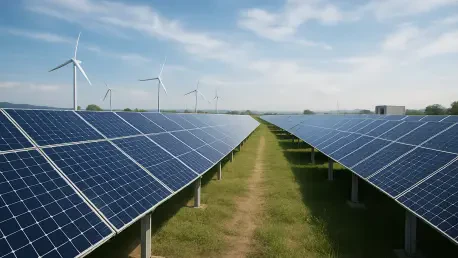
This emerging trend is not confined to the technology sector, signaling a broader shift in how large-scale enterprises manage their energy needs. The Walt Disney Company, with its vast network of theme parks, resorts, and production studios, has also moved to hire energy traders, illustrating that any organization with a substantial and complex energy footprint faces similar pressures. The in-house trading capability serves a dual purpose. Beyond mitigating the risks of fixed-volume contracts, it also enables companies to more effectively pursue their sustainability goals. As corporations invest heavily in renewable energy sources like solar and wind, they must contend with their intermittent nature. An energy trading desk can manage this variability by selling excess power to the grid when generation is high and buying power from the market when it is low. This active management makes large-scale renewable investments more economically viable and allows companies to integrate green energy seamlessly into their operations, aligning risk management with corporate environmental objectives.
Navigating a Volatile and Demanding Future
The Ripple Effects on the Energy Sector
The entry of these corporate giants into the wholesale energy market is poised to send significant ripple effects throughout the entire sector. Their immense purchasing power and sophisticated trading operations could introduce new dynamics, potentially increasing market liquidity but also creating new forms of volatility if their trading activities become large enough to sway prices. This development is also reshaping the long-standing relationship between large industrial consumers and traditional utility companies. While it can be seen as an adversarial move that bypasses the utilities’ retail models, it can also be collaborative. By managing their demand and selling surplus power, these corporations can help balance the grid, especially during peak times. However, this shift inevitably creates a more complex, multi-layered market that could pose challenges for regulators tasked with ensuring fairness and stability, as well as for smaller commercial consumers who lack the scale and resources to participate in these sophisticated energy markets.
The trend of corporations becoming energy traders also throws a harsh spotlight on the urgent need for comprehensive grid modernization. The current electrical infrastructure in the United States was largely designed for a different era, with centralized power plants delivering predictable loads to dispersed consumers. It was not built to handle the massive, concentrated, and relentlessly growing energy demands of sprawling data center campuses that can consume as much electricity as a small city. While corporate energy trading is an innovative financial strategy to manage the risks associated with this strain, it does not address the underlying physical limitations of the grid itself. It is a sophisticated workaround, not a permanent solution. Ultimately, ensuring a stable energy future will require massive public and private investment in upgrading transmission lines, developing advanced energy storage solutions, and integrating smart grid technologies that can dynamically manage the complex power flows of the 21st-century economy.
A Glimpse Into the Future of Corporate Energy Management
Looking ahead, the practice of in-house energy trading is likely to become a standard and essential function for any large-scale enterprise with significant power needs, extending well beyond the technology industry. The role of the corporate energy trader may soon be as indispensable as that of a chief financial officer, responsible for managing a critical resource that is both a massive operational cost and a significant source of financial risk. The sophistication of this practice is also set to evolve, creating a compelling feedback loop. The very artificial intelligence that is driving this energy demand will almost certainly be deployed to optimize the trading strategies used to procure its power. AI-powered algorithms will be able to analyze market data, weather patterns, and internal consumption forecasts in real-time to execute trades with a speed and precision far beyond human capability, maximizing efficiency and further minimizing costs in an increasingly complex and fast-moving market.
This strategic evolution is also inextricably linked to the broader corporate imperative of environmental sustainability. Direct participation in energy markets provides companies with unprecedented control over the source of their electricity, which is a critical component of achieving ambitious carbon reduction goals. Rather than simply buying generic renewable energy credits, a company with a trading desk can directly enter into Power Purchase Agreements (PPAs) with specific wind or solar farm developers. The trading desk then becomes the mechanism for integrating this intermittent renewable power into the company’s overall energy supply, selling excess generation and buying power to cover shortfalls. This hands-on approach transforms energy procurement from a simple cost-management exercise into a powerful tool for advancing a company’s Environmental, Social, and Governance (ESG) agenda, demonstrating a tangible commitment to sustainability that resonates with investors, customers, and employees alike.
A New Era of Corporate Responsibility
The confluence of artificial intelligence’s immense energy requirements and the subsequent volatility of power markets had fundamentally redefined the relationship between major corporations and the national energy infrastructure. What was once a straightforward consumer-provider dynamic evolved into a complex interplay where leading companies became integral, active participants in the wholesale energy markets. This strategic pivot was not merely a cost-saving measure; it became a necessary adaptation for survival and growth in an economy increasingly powered by data. The decision to build in-house trading desks marked a permanent shift, embedding energy strategy deep within the core of corporate operations and elevating it from a simple overhead expense to a critical component of risk management and long-term planning. This evolution heralded a new level of corporate integration with national infrastructure, which introduced novel efficiencies while also creating complex responsibilities that reshaped the energy landscape for years to come.