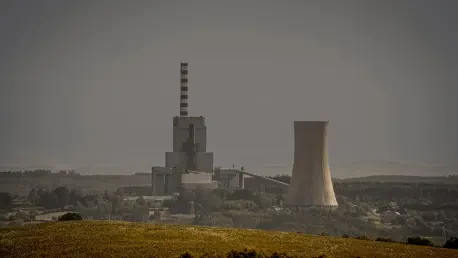

A massive coal-fired generator, already silenced and marked for retirement by its owners, was unexpectedly ordered back to life by a federal directive that defied both market logic and the company’s own strategic plans. This emergency order, aimed at a Colorado power plant, ignited a national debate, pitting a top-down federal energy policy against the on-the-ground realities of economics and environmental transition. At the heart of the issue was a fundamental question: Can political will force an aging, economically unviable industry to persist, and at what cost to the very consumers it purports to protect? The situation at Craig Station became a microcosm of a larger battle over the future of American energy.
An Industry Sunset Meets a Federal Sunrise Order
The focal point of this federal intervention was Craig Station, a 45-year-old plant whose owners, Tri-State Generation and Transmission Association, had made a decisive move back in 2016. They announced a planned retirement for the facility’s first unit, a move driven by the shifting economics of power generation and the increasing costs of regulatory compliance. The decision was a clear reflection of the nationwide trend away from coal power in favor of cheaper natural gas and renewable energy sources.
However, this carefully planned shutdown was abruptly halted. The emergency order from the Trump administration was not an isolated event but part of a broader, concerted effort to support the declining U.S. coal industry. Similar federal interventions and political pressures were observed in states like Indiana and Washington, where political rhetoric often clashed with market realities. The directive for Craig Station placed the Colorado facility directly on the front lines of a national policy aimed at reversing coal’s long, slow decline.
The Rationale and the Reality of Intervention
Publicly, the administration justified its command by citing a potential electricity shortage in the northwestern United States. The order, issued by then-Energy Secretary Chris Wright, was framed as a necessary measure to ensure grid reliability and maintain low energy costs for consumers across the region. This rationale presented the intervention as a proactive step to safeguard the public interest against potential power disruptions.
In stark contrast, the reality for Tri-State was one of immediate and unforeseen financial strain. The mandate forced the utility to undertake costly repairs on a broken valve that had already taken the unit offline, an expense that was not in their budget. Duane Highley, Tri-State’s CEO, confirmed that these compliance costs would not be absorbed by the company but would be passed directly to the cooperative’s members. This created a direct contradiction: a federal order meant to ensure low energy costs was, in practice, guaranteeing higher bills for rural electricity customers.
Skepticism on the Ground in Colorado
The federal directive was met with significant skepticism from those closest to the plant. Wade Gerber, a longtime employee at Craig Station, viewed the order not as a genuine lifeline for the community’s future but as a temporary maneuver in a “dizzying political battle.” His perspective reflected a pragmatic understanding that a single mandate could not reverse the powerful economic tides working against the coal industry.
This sentiment was reinforced by actions, not just words. Gerber himself was already investing in a new business venture outside the fossil fuel sector, a personal move that signaled a broader local acceptance of an inevitable post-coal economy. This on-the-ground view was echoed in the political arena by Democratic U.S. Senator Michael Bennet. He sharply criticized the order, labeling the financial burden it placed on Colorado ratepayers as both “unnecessary” and “unacceptable,” and framing the mandate as a political stunt with real financial consequences for his constituents.
Analyzing the Mandate’s True Impact
Despite the dramatic nature of the intervention, its actual impact was far more limited than the headlines suggested. The federal order provided only a temporary reprieve for a single unit. It did not alter the scheduled retirement of Craig Station’s other two units, nor did it change the fate of the local mine supplying its coal, both of which are still set for closure in 2028. The mandate was a short-term patch, not a long-term reversal of the plant’s decommissioning.
Furthermore, the financial ripple effect directly undermined the administration’s stated goals. By forcing Tri-State to operate an uneconomical unit and incur unexpected repair costs, the policy guaranteed that consumers would pay more for their electricity. This outcome starkly illustrated the disconnect between the political objective of appearing to save the coal industry and the economic principle that forcing an inefficient producer to stay online ultimately raises costs for everyone. The long-term outlook remained unchanged, with the incident serving as a case study in the ultimate futility of political intervention against overwhelming market forces.
The saga of Craig Station’s forced revival served as a powerful lesson in the collision between political ambition and economic reality. It demonstrated that a federal mandate, while capable of temporarily delaying the inevitable, could not fundamentally alter the market-driven trajectory of an industry in decline. The episode left behind a legacy of increased costs for consumers and reinforced the consensus that the transition away from coal was guided by financial and technological forces far greater than any single political directive. Ultimately, the plant’s fate was a stark reminder that the future of energy would be written by balance sheets and innovation, not by executive orders.