
The rhythmic click of a gas pump stopping at eighty dollars used to signal a full tank for most American SUVs, but today that same sound often triggers a sense of disbelief as the digital display reveals the tank is barely half-full. Since the commencement of joint military operations in the Middle East on February 28, the domestic energy landscape has shifted from relative stability to a state of high-alert volatility. As motorists pull into stations across the country, they are greeted by glowing LED numbers that have climbed with a speed and ferocity not seen in a generation. This sudden escalation is not merely a fluctuation in the commodities market; it is the direct fallout of a geopolitical confrontation that has effectively severed one of the world’s most critical energy arteries.
The $100 Barrel Returns to the American Pump
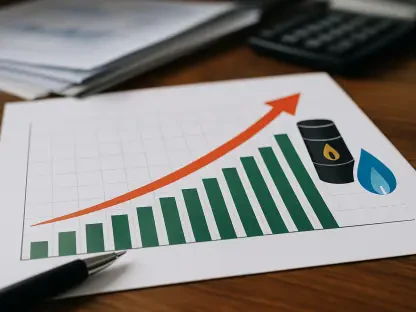
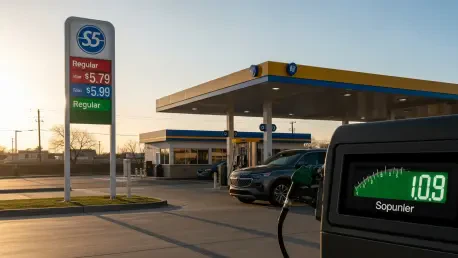
The return of triple-digit oil prices has fundamentally altered the math of the American commute, turning a routine errand into a significant financial burden. By mid-March, the national average for regular gasoline surged to $3.79 per gallon, a staggering leap from the $2.98 recorded just weeks prior. This spike represents a multi-year high, shattering the psychological barrier that had kept consumer confidence afloat during the early months of the year. The speed of this ascent—climbing nearly a dollar in less than three weeks—has left both retailers and consumers struggling to keep pace with a market that seems to have no ceiling.
The transition from a period of relative peace to a prohibitively expensive reality occurred in a mere eighteen days, catching many households off guard. While the initial strikes were localized, the immediate reaction of the global oil benchmarks was anything but contained. Brent crude quickly bypassed the $103 mark, while West Texas Intermediate followed closely behind, peaking at $96. For the average American, these abstract numbers translate into a tangible “tax” at the pump, draining discretionary income and forcing a rapid reevaluation of household priorities as the cost of basic mobility becomes a luxury for many.
Geopolitical Volatility and the Global Energy Interdependence
The current crisis serves as a stark reminder of how a conflict thousands of miles away can dictate the price of a gallon of milk or a commute in the Midwest. Despite being a major producer, the United States remains inextricably linked to the global energy grid, where any tremor in the Middle East sends shockwaves through local economies. When the Strait of Hormuz is threatened, the entire world feels the constriction, regardless of domestic drilling levels. This interdependence means that local fuel prices are less a reflection of regional supply and more a barometer of international stability.
The fragility of global crude benchmarks, particularly the spread between Brent and West Texas Intermediate, highlights the vulnerability of the current system. Even as domestic production remains robust, the “main ingredient” of the American fuel supply is priced on a global stage where perception of risk is just as influential as physical supply. Investors and speculators, wary of a prolonged conflict, have baked a significant “war premium” into every barrel. This speculative pressure ensures that as long as the kinetic conflict continues, the price of fuel in America will remain tethered to the whims of a volatile international landscape.
Anatomy of a Crisis: Supply Chains and Physical Bottlenecks
The primary driver behind the current shortage is the neutralization of the Strait of Hormuz, a narrow maritime passage that handles roughly one-fifth of the world’s daily oil consumption. Iran’s decision to halt tanker traffic has effectively locked in millions of barrels of crude, leaving major exporters with no viable path to reach their customers. This maritime blockade has created a massive hole in the global supply chain that cannot be easily filled by other regions. The resulting scarcity is not just a theoretical projection; it is a physical reality that has left tankers idling and refineries searching for alternative feedstocks.
Beyond the blockade, kinetic strikes on energy infrastructure have dealt a blow to global production capacity. Both offensive and defensive operations have targeted processing facilities and storage hubs, leading to a permanent loss of capacity that may take months or years to repair. Furthermore, the United States faces a unique refinery mismatch; most domestic facilities on the coasts are designed to process the “heavy” oil typically imported from abroad, rather than the “light” crude produced in American shale fields. This structural hurdle means that even with record domestic output, the U.S. remains reliant on a global market that is currently under fire.
Expert Perspectives on Economic Divergence and Policy Shifts
Economic analysts from institutions like Georgetown University are warning of a macroeconomic “freeze” as the energy shock ripples through the broader economy. High fuel costs act as a regressive tax, disproportionately affecting lower-income families and reducing the overall velocity of money. As consumers divert funds from retail and services to cover their transportation costs, the risk of a wider economic slowdown increases. This shift in spending habits creates a cooling effect across various sectors, leading to a period of uncertainty where businesses and households alike are hesitant to make long-term financial commitments.
In response to this pressure, a notable political pivot has emerged, reframing the pain at the pump as an industrial gain for the nation’s energy sector. Leadership has begun to emphasize that higher prices drive investment in domestic drilling and boost national revenue, though this narrative offers little comfort to the average driver. Simultaneously, the government has authorized emergency interventions, including a massive release from the Strategic Petroleum Reserve. In an even more desperate move for stability, previous sanctions on Russian oil have been softened, illustrating the lengths to which policymakers will go to prevent a total collapse of the global energy market.
Strategies for Navigating the 2026 Energy Shock
As the nation grapples with these record-breaking prices, households are being forced to adopt new strategies to absorb the inflationary pressure. Adjusting budgets has become a necessity rather than a choice, with many families opting to consolidate trips or switch to more fuel-efficient modes of transport where possible. Managing discretionary spending has become the primary defense against the rising cost of living, as the “gasoline tax” eats away at the funds usually reserved for leisure and non-essential goods. This belt-tightening is a direct reflection of the economic anxiety caused by the ongoing military engagement.
Preparing for the upcoming summer months adds another layer of complexity to the situation, as the industry prepares for the annual transition to the “summer blend.” This more expensive fuel mixture, combined with the traditional spike in seasonal demand, suggests that the current price ceiling may yet be broken. Motorists are being encouraged to plan for continued volatility and to remain mindful of how global events influence local realities. The ability of the average American to weather this storm was tested by a combination of strategic planning and the hope that diplomatic efforts would eventually restore the flow of oil through the world’s most contested waters.