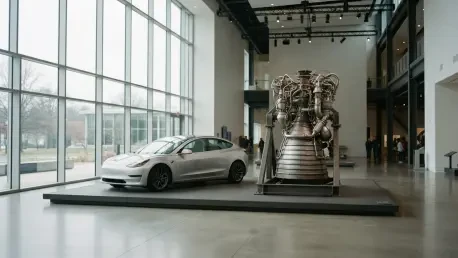

Following the November 2026 elections, Texas Attorney General-elect Nathan Johnson has pledged to impose tremendous scrutiny on any potential consolidation of Elon Musk’s Tesla and SpaceX. This announcement signals a dramatic departure from the business-friendly environment that previously defined the relationship between the billionaire entrepreneur and the Lone Star State. For years, Texas served as a corporate sanctuary, offering a hands-off regulatory approach under the leadership of officials like Ken Paxton. However, the recent electoral shift on November 3, 2026, has installed a new guard of Democratic leaders, including Governor-elect Gina Hinojosa and Senator-elect James Talarico, who are determined to reevaluate the state’s deference to large-scale corporate empires. Their collective stance suggests that the era of exceptionalism for Musk’s ventures may be coming to an end, as regulators prepare to investigate the intricate financial interdependencies and ensure that public power is not being leveraged for private corporate gain at the expense of transparency.
Financial Disparities and Market Outlook
Valuation Risks: The Speculative Premium
Tesla is currently grappling with intense valuation pressures that complicate the logic of a potential merger with SpaceX. As of mid-November 2026, the electric vehicle giant’s stock was trading at more than 400 times its earnings, a figure that many analysts find difficult to justify given the recent performance of the company’s core automotive business. The third-quarter financial reports revealed a sharp 55.79% drop in operating income, which fell to $718 million. While some of this decline is attributed to increased research and development spending on autonomous driving and artificial intelligence, the cooling growth in the global electric vehicle market has made investors increasingly nervous. Consequently, a significant portion of Tesla’s current market capitalization rests on a speculative premium tied to the hope that a merger would provide access to the more robust and diversified revenue streams currently being generated by Musk’s aerospace venture.
The risk for Tesla shareholders is particularly acute because any regulatory delay could trigger a massive correction in the company’s stock price. If the Texas Attorney General’s office successfully stalls the deal through administrative challenges or court injunctions, the narrative of a seamless integration between the two entities would likely crumble. Market participants have already expressed concerns that the merger is less about industrial synergy and more about a financial bailout for Tesla’s stagnating car business. Without the promised stability of SpaceX’s launch services and Starlink revenue, Tesla’s high earnings multiple becomes increasingly vulnerable to market volatility. The potential for a sharp downward adjustment in valuation is a looming threat that the incoming administration in Austin is well aware of, as they seek to determine whether the proposed consolidation is truly in the best interest of all shareholders or merely a strategic move to mask financial weakness.
SpaceX Strength: Revenue and Growth
In stark contrast to the challenges facing the automotive side of Musk’s empire, SpaceX continues to demonstrate remarkable financial resilience and growth. The aerospace company reported third-quarter revenue of $14.60 billion, supported by a healthy net income of $4.40 billion. This financial strength is built upon a diversified foundation that includes high-frequency launch services for both commercial and government clients, the rapid expansion of the Starlink satellite internet constellation, and emerging capabilities in large-scale space infrastructure. Unlike Tesla, which faces stiff competition from traditional automakers and new international entrants, SpaceX maintains a dominant position in the private space sector with few peers capable of matching its launch cadence or cost efficiency. This disparity in financial health creates a complex dynamic where SpaceX would effectively serve as the stable anchor in any merged entity, providing the necessary cash flow to support Tesla’s ongoing R&D.
The integration of SpaceX’s AI capabilities and telecommunications infrastructure into Tesla’s hardware ecosystem is a key selling point for the merger, yet this also presents significant regulatory hurdles. Regulators are keen to investigate whether the pricing of internal transactions and the sharing of technology between the two companies are being conducted fairly. With SpaceX’s valuation continuing to soar, any deal that appears to undervalue the aerospace venture to save Tesla could face legal challenges from SpaceX investors. The incoming Texas leadership has indicated that they will closely examine the terms of the deal to ensure that the aerospace company’s assets are not being leveraged inappropriately. As SpaceX prepares for more ambitious missions, the potential for its balance sheet to be weighed down by Tesla’s automotive liabilities is a major point of contention that Nathan Johnson’s office intends to explore in depth during the upcoming investigative proceedings.
Legal Mechanisms and Governance Oversight
Antitrust Statutes: The Power of Investigation
Texas law provides the Attorney General’s office with potent tools to impede or investigate corporate consolidations, most notably through the Texas Free Enterprise and Antitrust Act of 1983. This legislative instrument grants the state the authority to prohibit the acquisition of stock or assets if the result is a substantial decrease in competition or the creation of a monopoly. While Tesla and SpaceX operate in different primary sectors—automobiles and aerospace—the broad language of the act allows for a wide-ranging inquiry into how a combined entity might dominate the broader technology and energy markets. Nathan Johnson has already hinted at using Civil Investigative Demands, which are essentially administrative subpoenas, to compel the production of internal documents and executive testimony. These tools allow the state to look behind the curtain of corporate strategy and evaluate the true intent and impact of the merger on the state’s economy.
Beyond the initial investigation, the state has the power to file for temporary or permanent injunctions in district court to halt the merger process entirely. Even if the state were eventually to lose an antitrust case on its technical merits, the procedural friction caused by such litigation could be devastating for the deal’s timeline. For a consolidation of this magnitude, which involves complex cross-border assets and national security implications, any delay is costly. Market analysts believe that the mere threat of a protracted legal battle in Texas could force Musk to renegotiate the terms of the merger or abandon it altogether. The unified perspective of the incoming leadership in Austin represents a paradigm shift where the state is no longer a passive observer of corporate maneuvers. By leveraging existing statutes, the Attorney General-elect intends to demonstrate that no corporate entity, regardless of its size or political connections, is beyond the scope of state-level oversight and legal accountability.
Corporate Governance: Examining Fiduciary Duties
The existing entanglements between Tesla and SpaceX already present a maze of governance issues that the new administration plans to address. Before the merger was even formally proposed, Tesla had already made a $2 billion equity investment in SpaceX, and the two companies collaborated on significant hardware projects, such as a joint chip fabrication facility at Gigafactory Texas. These pre-merger ties raised immediate questions about whether these transactions were conducted at “arm’s length” or if they represented a commingling of interests that favored Musk’s personal vision over the fiduciary duties owed to minority shareholders. The presence of special committees of independent directors was meant to mitigate these concerns, but regulators remained skeptical of their true autonomy. By focusing on these historical financial relationships, the state sought to establish a pattern of behavior that could justify stricter conditions on the final consolidation agreement.
The strategic transition toward a unified corporate structure required Tesla and SpaceX to demonstrate a clear benefit to the public interest of Texas, rather than just a consolidation of executive power. Future considerations for these companies involved establishing more transparent reporting requirements and ensuring that state-funded incentives were not being used to subsidize private mergers. Legal experts suggested that the state might require the appointment of a court-monitored compliance officer to oversee the integration process and prevent the unfair sharing of proprietary data between the different business units. As the inauguration of the new administration approaches, the focus shifted from simple approval to a rigorous process of ensuring long-term corporate accountability. This proactive stance provided a roadmap for how other states might handle the rise of multi-industry conglomerates, emphasizing that the protection of shareholder rights and market competition remained a primary responsibility of state government.