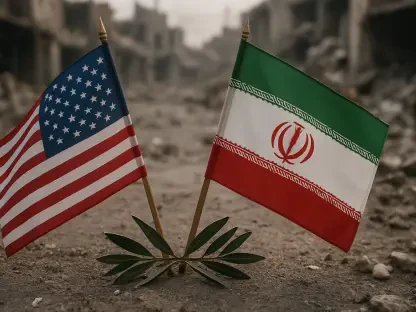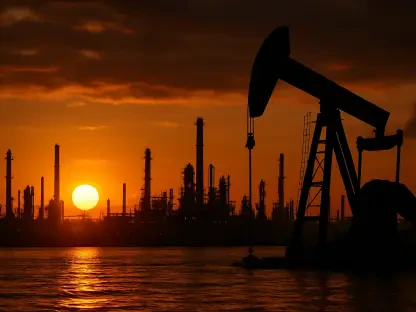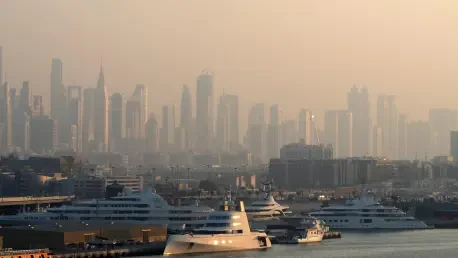

The announcement of a regional ceasefire has fundamentally altered the economic landscape of the United Arab Emirates, replacing months of strategic hesitation with a renewed sense of institutional confidence. Corporate entities that have spent much of the current year navigating the complexities of maritime disruptions and fluctuating operational costs are now pivoting toward a more sustainable growth model. This transition from reactive crisis management to proactive long-term planning is not merely a response to a pause in hostilities but a reflection of the deep-seated resilience inherent in the UAE’s economic infrastructure. While the previous period was defined by the necessity of building redundancies and securing supply chains against external shocks, the current environment allows for a systematic refocusing on core expansion goals. By maintaining a steady hand throughout the height of regional tension, the Emirates has successfully demonstrated that its role as a global safe haven for capital is grounded in tangible stability rather than temporary market trends.
The prevailing sentiment among the UAE’s private sector is one of measured optimism, where the focus remains on the gradual restoration of market predictability rather than an overnight economic boom. Business executives emphasize that the true value of the ceasefire lies in the reduction of “risk surcharges” and the normalization of investor psychology, which had been previously clouded by geopolitical concerns. This period of de-escalation is viewed as a foundational stabilizer that allows for the resumption of deferred investment cycles and the activation of large-scale infrastructure projects. As the UAE continues to position itself as a reliable nexus for international trade, the business community is leveraging this diplomatic opening to reinforce the nation’s status as a premier destination for foreign direct investment. The shift in focus highlights a collective realization that while external volatility is inevitable, the internal economic fundamentals of the Emirates provide a robust buffer that ensures continuity even during the most challenging regional circumstances.
Logistics and Global Trade Normalization
The logistics and maritime sectors have emerged as the most immediate beneficiaries of the regional ceasefire, with operational constraints finally giving way to streamlined global trade flows. For months, the necessity of utilizing longer, more expensive shipping routes and the imposition of high-risk insurance premiums created a challenging environment for freight forwarders and port operators alike. With the reopening of traditional transit corridors and the stabilization of regional airspaces, major hubs such as Jebel Ali Port are moving away from emergency security protocols toward a focus on technological integration and capacity expansion. This normalization is critical for maintaining the UAE’s competitive edge as a global transit point, as it allows logistics providers to offer more reliable lead times and lower freight costs to international clients. The reduction in maritime insurance rates is expected to have a cascading positive effect on the broader economy, lowering the landing costs of essential goods and raw materials for local industries.
Building on this operational stabilization, major carriers like Emirates SkyCargo are anticipated to witness a significant increase in capacity as regional airspace constraints are lifted. This improvement in the movement of goods is not just about speed but about the predictability of the entire supply chain, which is essential for industries relying on just-in-time manufacturing. As the threat of sudden route closures diminishes, logistics firms are shifting their capital expenditure from risk mitigation tools to advanced automation and sustainable fleet management. This strategic pivot ensures that the UAE remains at the forefront of global logistics innovation, leveraging the current stability to enhance its distribution networks across Asia, Europe, and Africa. The ceasefire serves as a vital signal to the global shipping community that the Emirates remains a secure and efficient gateway, capable of maintaining high-volume trade throughput regardless of the broader geopolitical climate, thereby reinforcing long-term commercial partnerships.
Real Estate Maturity and Investment Psychology
In the real estate sector, the current ceasefire is acting as a powerful catalyst that is transitioning the property market from a phase of cautious observation to one of renewed international engagement. Throughout the period of regional tension, the UAE property market demonstrated a remarkable level of maturity, with project timelines remaining largely unaffected and developers maintaining a disciplined approach to new launches. This resilience has prevented the “boom-and-bust” volatility seen in previous decades, establishing a more balanced pricing environment that appeals to institutional investors seeking long-term value. The reduction of regional risk effectively removes the “wait-and-watch” barrier for foreign buyers, who are now increasingly confident in committing capital to high-value residential and commercial assets. As force majeure concerns recede, the legal and contractual framework of the real estate industry is being viewed with greater trust, further solidifying the nation’s reputation as a secure environment for global wealth preservation.
The psychological impact of this stability cannot be overstated, as it provides the necessary green light for investors who prioritize counter-cyclical entry points into the market. With a projected surge in momentum expected to reach a significant peak by the end of 2026, the current window offers a strategic opportunity for those looking to capitalize on the UAE’s continued urban expansion. Industry data suggests that while the secondary market has held firm, the off-plan sector is poised for a significant uptick in demand as international marketing campaigns gain fresh traction. This renewed interest is supported by the government’s proactive residency and golden visa programs, which continue to decouple the real estate market’s performance from regional political events. By fostering an environment where long-term residency and property ownership are seamless, the UAE is ensuring that the real estate sector remains a primary driver of economic diversification, attracting a global demographic of professionals and entrepreneurs.
Industrial Continuity and Healthcare Resilience
For the manufacturing and industrial sectors, the regional ceasefire provides the essential clarity required for making large-scale capital investments and pursuing aggressive global outreach. Leading industrial groups have noted that while the UAE has already built a foundation that allows for value delivery during periods of instability, the current de-escalation allows for a total focus on operational scaling and technological upgrades. Manufacturers can now plan their production cycles with greater certainty, knowing that the procurement of raw materials and the export of finished goods will not be hindered by sudden logistics disruptions. This environment of sustained dialogue and economic progress reinforces the UAE’s identity as a reliable manufacturing base, where the government’s commitment to “Operation 300bn” remains on track. As industrial zones continue to attract high-tech manufacturing plants, the stability offered by the ceasefire ensures that these facilities can operate at peak efficiency, contributing to the nation’s export-led growth strategy.
Similarly, the healthcare and life sciences sectors are leveraging the regional stability to enhance the continuity of care and the integrity of medical supply chains. In an industry where the timely delivery of life-saving medicines and specialized equipment is non-negotiable, the easing of regional tensions is vital for maintaining optimal patient outcomes across the Gulf region. Healthcare organizations are now refocusing their resources away from contingency planning and toward clinical innovation and the digital transformation of healthcare delivery systems. This shift ensures that the UAE’s life sciences cluster remains a regional leader in medical research and specialized treatment, attracting top-tier global talent and investment. By prioritizing the stability of the healthcare infrastructure, the Emirates is demonstrating its commitment to community wellbeing, proving that even during times of broader regional complexity, the core services essential for social and economic health remain protected and ready for future advancement.
The resolution of regional uncertainties through diplomatic means has provided a clear roadmap for the UAE’s business community to enhance its global competitiveness. Moving forward, companies should prioritize the integration of advanced data analytics to better predict market shifts and optimize supply chain routes, ensuring that the efficiencies gained during this ceasefire are institutionalized. Investors and stakeholders are encouraged to look beyond temporary geopolitical narratives and focus on the UAE’s robust regulatory reforms and infrastructure milestones that are set to conclude by the end of 2026. This period of stability should be utilized to deepen partnerships with emerging markets and to accelerate the adoption of green energy solutions within industrial processes, aligning with the nation’s broader sustainability goals. Ultimately, the measured optimism currently felt across the Emirates serves as a reminder that strategic patience and a focus on internal economic fundamentals are the most effective tools for navigating an increasingly complex global landscape.