
A whisper of geopolitical change in South America has sent a seismic shock through global energy markets, sparking a frantic rally in oil-related stocks and forcing investors to reconsider the long-term balance of power. The mere suggestion of renewed U.S. influence over Venezuela’s dormant oil industry has ignited a high-stakes debate, pitting immense potential against formidable risks. This sudden development forces a critical examination of whether a pariah state’s comeback could fundamentally alter the world’s energy landscape or if the initial market euphoria is merely a speculative mirage.
A Thirty-Percent Question Could a US Move in Venezuela Redraw the Global Energy Map
At the heart of the market’s excitement is a stunning calculation from analysts at JP Morgan. The analysis posits that if the United States were to successfully integrate Venezuela’s energy sector with its own formidable production and the burgeoning oil fields in neighboring Guyana, it could command nearly 30% of the world’s proven oil reserves. Such a consolidation would represent an unprecedented shift in energy dominance, creating a Western Hemisphere energy bloc capable of dictating global supply dynamics.
The implications of this scenario extend far beyond barrels and prices. Gaining such leverage would grant the United. States a powerful tool to stabilize global energy markets, potentially keeping prices within lower, more predictable ranges and bolstering its own long-term energy security. This prospect offers a compelling vision of a future where energy supply is less susceptible to volatility from politically unstable regions, though achieving it remains a monumental challenge.
The Stakes Why a Neglected Oil Giant Suddenly Matters Again
Venezuela’s significance stems from a stark paradox: it is home to the world’s largest proven oil reserves, yet its industry is a shadow of its former self. Years of underinvestment and political turmoil have crippled its output. However, analysts believe that with sufficient capital, the nation could rapidly double or even triple its current production of 1.1 million barrels per day, unlocking a vast supply source that has been offline for years.
This untapped potential has become critically important in the context of a tightening global market. Sanctions on major producers have created a significant global shortage of diesel fuel, a crucial component of the industrial economy. Venezuela’s heavy crude oil is an ideal feedstock for producing diesel and asphalt, making its return to the market an attractive solution for refiners struggling to meet demand. The prospect of this new supply line is a primary driver behind the market’s optimistic reaction.
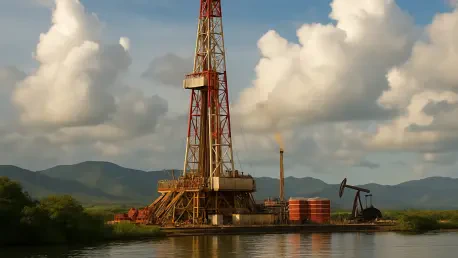
However, the path to reviving this sleeping giant is fraught with obstacles. Venezuela’s oil infrastructure, from drilling rigs to pipelines and refineries, is in a state of severe disrepair. Revitalizing the industry would require tens of billions of dollars in investment and years of complex engineering work to restore production capacity, a reality that tempers the short-term excitement with a heavy dose of long-term caution.
The Market’s Immediate Verdict a Sector-Specific Gold Rush
The financial markets rendered a swift and decisive judgment, creating a tiered response based on which companies would benefit first. U.S. refiners experienced an immediate surge, with shares of Valero and Marathon Petroleum climbing sharply. These companies are particularly desperate for the heavy crude that Venezuela produces, which is essential for manufacturing in-demand products like diesel and asphalt. The potential for a new, reliable supply source was enough to send their valuations soaring.
Even more pronounced were the gains for oilfield service providers. Companies like SLB and Halliburton, which specialize in the equipment and expertise needed to rebuild energy infrastructure, saw some of the steepest stock increases. Investors recognized that regardless of who ultimately pumps the oil, these firms would be the first to receive contracts for the massive, multi-billion dollar reconstruction effort required to bring Venezuelan fields back online.
In contrast, the reaction from major oil producers such as ExxonMobil and Chevron was more restrained. While their stocks saw moderate gains, the muted response reflects a more cautious, wait-and-see approach. These multinational giants are well aware of the immense political and financial risks involved, and their tempered optimism signals that they are waiting for more concrete signs of stability before committing to major capital investments.
A Reality Check Experts Urge Caution on the Path Forward
Despite the market’s initial surge, many seasoned energy analysts are urging restraint. Experts like Neal Dingmann of William Blair and John Freeman of Raymond James have voiced significant skepticism, pointing to the immense hurdles that lie between potential and reality. They argue that the market’s initial excitement overlooks the deeply entrenched challenges that have plagued Venezuela’s oil sector for years.
Their caution is rooted in a triad of formidable risks: persistent political instability, weak global energy prices, and the staggering capital required for reconstruction. With U.S. crude prices down 20% from the previous year, the economic incentive for multinational corporations to pour billions into a high-risk environment is significantly diminished. Attracting the necessary investment in a low-price market, especially given the country’s volatile political climate, remains the central and most difficult challenge to overcome.
Decoding the Future Key Indicators to Watch
The true trajectory of Venezuela’s oil revival will be revealed through a handful of critical indicators. First and foremost is the political barometer. The speed and stability of any government transition will be the single most important factor for potential investors. Multinational corporations will be closely watching for signs of a durable political settlement that can guarantee the long-term security of their assets and contracts before committing capital.
Ultimately, the most telling sign of progress will be the flow of money. The willingness of major oil companies and financial institutions to commit the billions of dollars necessary for infrastructure repair will serve as the ultimate litmus test. Tracking these capital commitments will provide a clear picture of corporate confidence in the country’s future. Until that capital begins to move in earnest, the revival will remain a speculative possibility rather than an emerging reality.
The narrative of Venezuela’s potential oil resurgence served as a powerful reminder of how deeply interconnected geopolitics and energy markets have become. The market’s volatile reaction underscored the global economy’s sensitivity to shifts in energy supply, while the cautious stance of industry veterans highlighted the immense practical challenges that temper speculative optimism. What this episode revealed was not a guaranteed outcome but a complex and uncertain path forward, where the promise of vast reserves was balanced against the stark realities of political risk and economic logic.