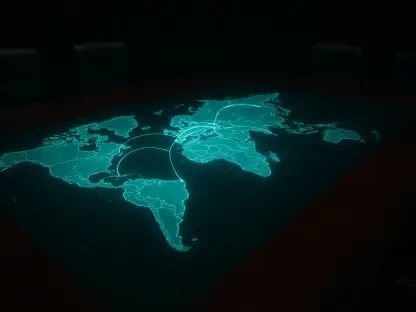

Advanced economies integrated into the AI supply chain, such as Taiwan and South Korea, are showing robust growth while energy-dependent nations face potential stagnation. The 2026 World Economic Outlook from the International Monetary Fund paints a picture of a global economy at a crossroads, defined by a “bifurcated” reality where technological triumph meets geopolitical tragedy. While the global growth forecast has been cautiously upgraded to 3.1 percent, this figure hides a widening gap between nations fueled by a historic investment boom in artificial intelligence and those crippled by a devastating conflict between the United States and Iran. This dual-speed world is currently testing the limits of economic resilience, as the benefits of innovation are increasingly concentrated in wealthy regions while developing nations face the brunt of rising energy costs and instability. The primary engine of optimism is the transformative influence of AI, which has accounted for nearly half of the increase in global trade over the last two years.
Regional Divergence: Analyzing Global Disparities
Geopolitical Fallout: The Growing Gap Between Tech Hubs and Conflict Zones
Regional data highlights the severity of this economic split, with the Middle East and Central Asia expected to see a contraction of 0.3 percent as the war disrupts production and transport. Saudi Arabia faces a particularly steep decline, with its economy projected to shrink by 3.3 percent following attacks on its vital oil infrastructure. Conversely, advanced economies are projected to grow by 2.1 percent, buoyed by AI-driven productivity and trade. This disparity is further complicated by a slowdown in China driven by weak domestic demand, suggesting that even major players outside the direct line of fire are not immune to the cooling effects of global uncertainty. This technology tailwind has acted as a primary engine for advanced economies, but the surge is directly countered by the “Iran war,” which has fundamentally destabilized the Middle East and triggered a massive spike in petroleum prices. This energy shock has created a harsh divide where energy importers struggle to avoid total stagnation.
Beyond the immediate conflict zones, the economic picture remains complicated by the performance of major players like China, which is grappling with internal challenges that further isolate it from the AI-driven boom. The world’s second-largest economy is facing a period of cooling growth, primarily influenced by weak domestic demand and a real estate market that has yet to find a stable floor. While not as directly impacted by the kinetic aspects of the Middle Eastern war, China’s stagnation acts as a drag on global trade volume, offsetting some of the gains seen in the West and in specialized Asian tech centers. This lack of synchronized growth suggests that the current global expansion is remarkably narrow, relying heavily on a few select sectors and regions to maintain momentum. Without a broader base of participation, the global economy remains vulnerable to any disruption in the tech sector, making the current stability feel increasingly fragile for those on the outside.
Economic Strategy: Managing Rising Costs and Monetary Constraints
A significant challenge accompanying this fragmented growth is the acceleration of global inflation, which is set to reach 4.7 percent this year. This persistent inflationary pressure leaves central banks with little choice but to maintain restrictive monetary policies, including further interest rate hikes to ensure price stability. For many nations, this creates a “stark choice” as they navigate high debt-to-GDP ratios that leave almost no fiscal room to maneuver. Governments are being forced to balance the urgent need for food and energy security against the long-term necessity of restoring fiscal health through spending cuts and debt management. This economic climate requires a delicate balance between containing price increases and supporting the most vulnerable populations who are hit hardest by rising fuel and food costs. Without significant fiscal space, low-income countries find themselves unable to invest in the very technologies that are currently driving the growth in more prosperous regions of the world.
The IMF Annual Meetings in Bangkok established that the transition from crisis management to strategic rebuilding was no longer optional for the international community. Policymakers recognized that the AI-led recovery required a deliberate expansion of technological infrastructure into developing markets to prevent a permanent global fracture. Strategic investments in supply-side resilience were prioritized to shield energy-importing nations from the volatile swings of the Middle Eastern energy market. Leaders shifted their focus toward creating temporary, targeted support mechanisms for the most vulnerable populations while aggressively tackling high sovereign debt levels. These actions served to broaden the benefits of the digital revolution, ensuring that innovation became a tool for global stabilization rather than a source of further division. By addressing the root causes of regional divergence, the global community worked toward a more inclusive growth model that was better equipped to withstand geopolitical shocks.