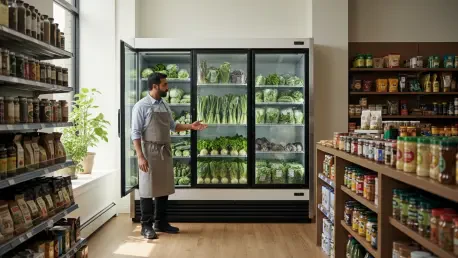

The persistent challenge of food insecurity across New York City’s diverse neighborhoods has prompted local officials to explore the implementation of publicly funded grocery stores as a direct solution to urban food deserts. These proposed municipal entities aim to provide affordable, high-quality produce in areas where traditional supermarkets have long refused to operate due to perceived low profit margins or high overhead costs. However, this initiative introduces a complex economic dilemma for the thousands of small-scale immigrant entrepreneurs who have filled these gaps for decades through bodegas and specialty markets. These businesses often operate on razor-thin margins, relying on community loyalty and niche products to survive in a hyper-competitive real estate market. The introduction of government-subsidized competitors could inadvertently destabilize the very cultural hubs that have historically anchored immigrant enclaves throughout the five boroughs. Maintaining this delicate balance requires a nuanced understanding of how local economies function in marginalized communities where the corner store is more than just a place to buy milk.
The Economic Intersection: Public Policy and Small Business Retail
Publicly managed grocery initiatives seek to bridge the gap between private enterprise and social welfare by treating nutrition as a fundamental right rather than a mere commodity. By utilizing municipal resources to negotiate bulk purchasing agreements and subsidize lease agreements, the city can theoretically offer lower prices than a typical corner store. These efforts are often centralized in districts where residents must travel long distances to access fresh vegetables or lean proteins, creating a systemic disadvantage for lower-income families. Advocates of this model argue that the government has a moral and fiscal responsibility to intervene when the free market fails to provide essential services. The strategy involves integrating advanced inventory management systems that minimize waste and maximize the shelf life of perishable items, a feat that is often difficult for independent shop owners with limited storage space. Consequently, the push for public groceries is not just about price, but about creating a more resilient urban infrastructure.
Immigrant-owned businesses provide more than just groceries; they serve as critical social and financial lifelines for newcomers who may lack access to traditional banking or social services. Many store owners offer informal credit to regular customers or stock specific regional ingredients that are vital for cultural continuity but too niche for a standardized public inventory. These establishments often function as community centers where news is shared, jobs are found, and language barriers are navigated with ease. If the city replaces these vibrant ecosystems with sterile, government-run storefronts, the social fabric of these neighborhoods could suffer irreparable damage. The loss of these businesses would also mean the disappearance of a primary ladder for upward mobility among first-generation residents. Unlike public sector jobs, which may have strict residency or certification requirements, small-scale retail has traditionally been an accessible entry point into the American economy for those with limited formal education but significant entrepreneurial drive.
The implementation of public grocery models necessitated a careful reevaluation of how municipal interventions impacted the historical contributions of immigrant-led retail sectors. Policymakers recognized that a one-size-fits-all approach to food access failed to account for the intricate social roles played by local shopkeepers. Instead of establishing a parallel system of government stores, the city prioritized a hybrid investment strategy that targeted infrastructure improvements within existing privately-owned shops. This shift allowed for the modernization of cold storage facilities and the expansion of digital inventory systems across hundreds of neighborhood bodegas. Looking ahead, it is essential to establish permanent advisory boards composed of immigrant business leaders to guide future expansions. Additionally, the development of a universal digital platform for local sourcing could allow small businesses to participate in bulk purchasing. Strengthening legal protections against commercial rent hikes will also be critical.