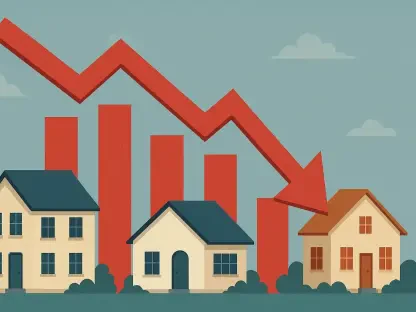

The once-impenetrable landscape of China’s real estate industry has undergone a seismic shift as hundreds of top-tier executives abandoned their positions amidst a relentless credit crunch and stagnant property sales. This exodus of talent has not been confined to struggling developers but has permeated even the most stable firms, signaling a fundamental transformation in how the sector operates. In the current year, the sheer volume of departures from the C-suite has created a leadership vacuum that is being filled by a new breed of professionals focused on survival rather than expansion. Many veteran managers who led firms during the decades of rapid growth found themselves ill-equipped to handle the tightening regulatory environment and the cooling of the middle-class appetite for new housing. As property prices continue to stabilize at lower levels, the turnover reflects a broader acknowledgment that the era of speculative development has ended, forcing companies to find leaders who can navigate a far more constrained financial and political environment.
Institutional Pressures: The End of High-Growth Ambitions
Bureaucratic Hurdles: State Intervention and Oversight
The increasing influence of state-owned enterprises and local government intervention has rewritten the rules of engagement for developers, making traditional leadership roles nearly unrecognizable. In the current landscape, the autonomy previously enjoyed by private developers has been significantly curtailed by new mandates requiring close coordination with state restructuring funds. This shift has led many executives to step down, as their expertise in aggressive land acquisition and high-leverage financing is no longer valued or permitted. Instead, the industry now prioritizes individuals with deep connections to regulatory bodies and a proven track record in bureaucratic negotiation. State intervention has focused on ensuring the delivery of pre-sold homes, which has shifted the primary focus of leadership from sales and marketing to operational logistics and legal compliance. Consequently, the profile of a successful real estate executive has moved away from the charismatic entrepreneur toward the cautious administrator, altering the long-term career trajectories for thousands of professionals in the field.
Financial Restructuring: From Expansion to Survival
The transition from a growth-oriented business model to one centered on debt management and internal restructuring has necessitated a complete overhaul of corporate governance within the sector. Finance-focused executives have replaced many visionary founders, as the primary objective for most developers in 2026 is no longer market share but the orderly liquidation of non-core assets. This restructuring process is often contentious, involving complex negotiations with international creditors and domestic banks who are increasingly wary of further exposure to real estate risk. The high level of executive turnover is a direct result of these pressures, as many leaders have been unable to meet the stringent repayment schedules dictated by the central government. Furthermore, the shift toward asset-light models, where developers manage properties rather than owning them, has rendered the skill sets of older executives obsolete. This vacuum has paved the way for younger, more adaptable managers who are comfortable operating within the tight margins of a service-based economy, signaling a permanent departure from the high-risk practices of the past decade.
Navigating the Aftermath: Redefining Real Estate Leadership
Digital Transformation: PropTech as the New Standard
Innovation has become the primary differentiator for the remaining firms, as digital transformation and property technology provide the only viable path toward maintaining profitability in a low-growth environment. New leadership teams are increasingly investing in artificial intelligence and big data analytics to optimize property management and enhance the efficiency of construction processes. This technological pivot has required a new set of competencies at the executive level, leading to the recruitment of leaders from the tech and logistics sectors rather than traditional real estate backgrounds. The integration of smart building technologies and green energy solutions has become a standard requirement for all new projects, reflecting a shift in consumer demand toward sustainability and long-term value. Leaders who fail to embrace these digital tools have found themselves marginalized, as the market now rewards transparency and data-driven decision-making over the opaque deals of the past. By leveraging these advanced technologies, firms have begun to stabilize their operations, offering a glimpse of a more resilient and efficient industry that prioritizes operational excellence over purely speculative gains.
Sustainable Governance: Strategic Foundations for Stability
The massive executive turnover observed throughout the year established a clear precedent for the future of the industry, emphasizing that transparency and conservative fiscal management were the only viable paths forward. Stakeholders recognized that the old guard’s methods were no longer compatible with the government’s vision of a stable, service-oriented economy. Consequently, successful organizations began to prioritize environmental, social, and governance (ESG) standards as a core component of their operational strategies. This transition involved implementing more robust internal auditing processes and fostering a culture of accountability that was previously absent in many large-scale developers. Boards of directors took decisive action by appointing leaders who demonstrated a commitment to long-term sustainability rather than short-term profit spikes. These new executives focused on building diverse revenue streams through property management and urban renewal projects. By moving away from the “build and flip” mentality, the industry laid the groundwork for a more mature market that provided consistent value to both homeowners and investors while minimizing the systemic risks that once threatened the national economy.