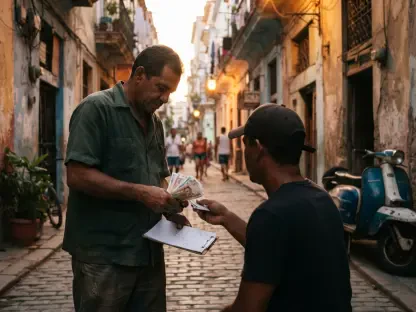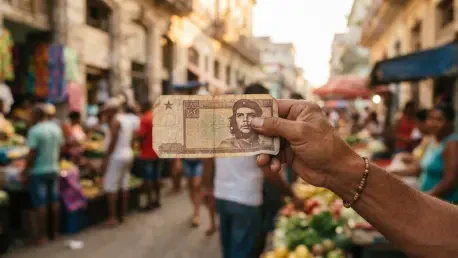

A massive 15.6 percent collapse in the value of the digital Freely Convertible Currency highlights the extreme volatility currently destabilizing Cuba’s retail sector. As of late October 2026, the Cuban Peso (CUP) is experiencing a historic devaluation in the informal market, reaching unprecedented lows against both the U.S. Dollar and the Euro. The widening chasm between state-mandated exchange rates and the harsh reality of street trading has left the local population to navigate an increasingly unpredictable and precarious economic landscape. This persistent downward shift underscores a chronic shortage of physical hard currency within the official banking system, driving a growing national reliance on foreign denominations for basic economic survival. While the government attempts to maintain a sense of order through fixed rates, the volume of transactions occurring outside these formal channels suggests that the state’s control over monetary value is diminishing rapidly as the informal market becomes the primary gauge for actual purchasing power.
Market Surges: The Rise of Cash and Digital Instability
The informal exchange rate for the U.S. Dollar recently hit a peak of 830 CUP, following a sustained upward climb that included a notable 3.4 percent increase in a single week. Simultaneously, the Euro has solidified its status as the most valuable and sought-after currency on the island, currently trading at approximately 919 CUP. This surge is fundamentally driven by a relentless and growing demand for physical cash, which is increasingly viewed by residents as the only reliable method for executing high-value transactions or securing the necessary funds for emigration efforts. In an environment where the local peso continues to lose its utility as a store of value, the premium placed on these foreign currencies reflects a broader lack of confidence in domestic financial instruments. The steady appreciation of the Euro, in particular, highlights its dominance in the private sector, where it remains the preferred medium for those looking to preserve wealth or engage in international trade.
In stark contrast to the steady rise of physical cash, the Freely Convertible Currency, or MLC, has exhibited extreme and erratic price swings that further complicate the domestic retail environment. This digital credit system, designed primarily for use in state-run stores, recently witnessed a massive single-day drop of over 15 percent, plummeting to an indicative value of just 570 CUP. Economic analysts attribute this specific type of volatility to a combination of low liquidity and a general erosion of public confidence in state-controlled financial systems. As more Cubans prioritize the acquisition of physical U.S. Dollars or Euros, the demand for digital credits that are restricted to government outlets has waned significantly. This shift illustrates a fundamental change in consumer behavior, where the flexibility of hard cash is favored over the rigid constraints of the MLC system, which is increasingly viewed as an inefficient and risky way to hold one’s savings or conduct daily commerce.
Structural Disconnect: Official Mandates vs. Economic Realities
A profound and widening disconnect now exists between the official exchange rates established by the Central Bank of Cuba and the actual cost of currency as dictated by the informal street market. While the government maintains a fixed official rate of approximately 738 CUP for the U.S. Dollar, the state banking system remains largely unable to provide hard currency to the general public at this price point. This failure of supply forces the vast majority of citizens into the informal market, where they are effectively hit with a “real-world penalty” of nearly 12.5 percent just to acquire the funds necessary for basic trade or personal needs. This discrepancy creates a dual-track economy where the official figures bear little resemblance to the price of imported goods or services. Consequently, the informal exchange rate has become the de facto benchmark for the island’s private economy, rendering the official government figures largely symbolic for most people who do not have special access to state-allocated funds.
Several critical economic drivers are fueling the intense demand for foreign denominations, with the most prominent being the ongoing wave of emigration and the operational requirements of private enterprises. Small and medium-sized private businesses, which have become essential for the distribution of consumer goods, must frequently import inventory from abroad to restock their shelves. Because these entities require dollars or euros to settle international accounts, they exert constant upward pressure on the informal exchange rate. Furthermore, many residents have taken to converting their peso-based earnings into harder currencies as a vital form of savings protection, attempting to shield their personal wealth from the rampant inflation currently eroding the value of the local currency. This defensive financial behavior is a direct response to the lack of viable domestic investment options and the absence of a stable national currency that can reliably preserve purchasing power over even a short duration of time.
Social Consequences: Navigating Inequality and Data Precision
The social consequences of this sustained devaluation are increasingly severe, as the real purchasing power of state salaries continues to diminish while the prices for basic goods remain tied to the informal exchange rate. This situation has exacerbated economic inequality across the island, creating a sharp divide between those with access to foreign remittances and those who must rely solely on the local peso-based economy. For many families, the cost of essential items has become prohibitively expensive, as internal price structures are adjusted almost daily to account for the fluctuations in the value of the dollar and euro. This environment of financial instability makes long-term planning nearly impossible for the average household, as the cost of living continues to outpace the modest adjustments made to public sector wages. The reliance on the informal market for survival has become a common necessity, yet it remains a source of constant stress for individuals trying to balance stagnant incomes with a rapidly inflating cost of necessities.
To address the need for transparency in this opaque environment, specialized exchange rate indexes utilized automated tools to monitor thousands of offers across social media platforms, providing a representative snapshot of the market. These systems successfully filtered out spam and atypical transactions to ensure that the reported values reflected the true street value of the peso during this volatile period. Looking forward, the establishment of more robust and accessible formal exchange mechanisms was identified as a critical step toward stabilizing the retail sector and reducing the reliance on informal trading. Policymakers and international observers noted that without significant structural changes to the currency distribution system, the disparity between official and street rates would likely continue to widen. The implementation of clearer fiscal policies and the enhancement of currency liquidity became necessary considerations for mitigating the social impacts of inflation. Ensuring that the broader population attained more equitable access to foreign exchange remained a priority for future economic stability.