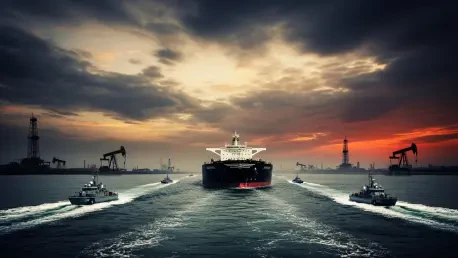

The vulnerability of the global energy market has never been more apparent than when analyzing the potential for a complete cessation of maritime traffic through the Strait of Hormuz. This narrow waterway serves as the primary artery for over 11 million barrels of crude oil every day and roughly one-fifth of the total global liquefied natural gas supply. Any sustained disruption here does not merely impact regional players; it sends a violent shockwave through the entire international financial system, potentially triggering a crisis of unprecedented proportions. Market analysts have long warned that the physical closure of this corridor would decouple pricing from traditional supply-demand fundamentals, shifting instead to a panic-driven model where security premiums dominate. As the geopolitical climate remains tense, the focus has shifted toward the strategic resilience of global supply chains and the ability of major economies to survive a total halt of Persian Gulf exports.
Immediate Economic Consequences of a Maritime Chokepoint
The Escalation of Global Fuel Prices
Economic modeling suggests that a prolonged blockade of the strait would lead to a vertical spike in energy costs, with Brent crude potentially skyrocketing toward the $200 per barrel mark. Such an increase would be accompanied by even more dramatic surges in refined products, where diesel and jet fuel could reach $300 per barrel due to the immediate scarcity of high-quality crudes required for mid-distillate production. The impact would vary significantly based on the duration of the conflict, with a quick resolution by mid-year allowing for a stabilization around $80. However, a “Summer Settlement” scenario indicates that even a few months of closure would trigger a shallow global recession as transportation costs cripple international trade. This volatility creates a massive inflationary burden that most central banks are currently ill-equipped to handle without aggressive interest rate hikes that could further dampen industrial productivity.
Impact on Regional and Global Economics
The systemic shock of a continued disruption through the end of the year would likely result in a 0.4% contraction in global GDP, marking only the third major global recession of the current century. While the international impact is severe, the regional consequences are catastrophic, with Middle Eastern economies projected to face a staggering 10.7% drop in regional GDP due to the total loss of export revenue and domestic industrial paralysis. In the West, both the European Union and the United States would likely see their growth stall entirely, entering a period of prolonged stagnation as energy-intensive sectors like manufacturing and chemicals become non-viable. This economic downturn is not merely a temporary dip but a fundamental shift in the fiscal health of nations that rely on stable energy imports to fuel their domestic markets. The interconnectedness of modern finance ensures that these regional losses quickly translate into a worldwide loss of investor confidence and liquidity.
Long-Term Structural and Strategic Adjustments
Shifts in Global Infrastructure Investment
Beyond the immediate price shocks, an extended crisis in the Persian Gulf would likely result in the permanent loss of some liquefied natural gas capacity and cause multi-year delays for critical energy projects. Many infrastructure developments currently scheduled for completion between 2026 and 2028 would face significant financing hurdles and physical supply chain interruptions, pushing back the global energy transition timeline. This instability would ultimately provide a strategic advantage to non-Gulf suppliers, particularly U.S. LNG exporters and producers in the North Sea or West Africa, as the world seeks more secure energy alternatives. As a result, the geography of global energy trade would undergo a permanent transformation, favoring pipelines and overland routes over vulnerable maritime chokepoints. This shift necessitates a massive reallocation of capital toward domestic production and the hardening of existing infrastructure against geopolitical interference.
Path Forward: Resilience and Diversification
The analysis of these scenarios demonstrated that a heavy reliance on a single maritime corridor remained a primary risk factor for global economic security. To mitigate such vulnerabilities, nations must prioritize the rapid diversification of their energy portfolios and fast-track the electrification of transportation networks to reduce the demand for imported hydrocarbons. Strategic petroleum reserves should be expanded and integrated with international partners to provide a more robust buffer against short-term supply shocks. Furthermore, investing in decentralized renewable energy systems and advanced nuclear technologies offered a pathway toward true energy independence that was less susceptible to regional conflicts. Moving forward, policymakers and industrial leaders had to treat energy security as a core component of national defense rather than a simple commodity market issue. By strengthening cross-border grid interconnections and supporting local manufacturing, the global economy can better insulate itself from the inevitable volatility of the Middle East.