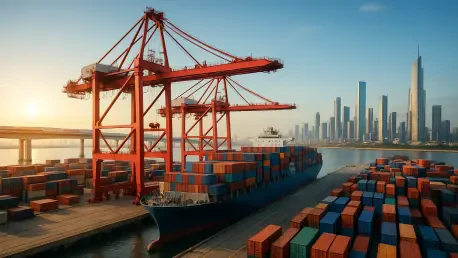

China’s annual imports exceed twenty trillion yuan, making it the primary export market for nearly eighty countries and a cornerstone of international trade. This massive scale allows the nation to act as a definitive engine for global prosperity, consistently contributing nearly one-third of the world’s total economic expansion. Even as the international community navigates layers of geopolitical friction and evolving trade barriers, the domestic economy has demonstrated remarkable resilience. This stability is not a coincidence; it is the result of a deliberate structural shift toward high-quality development. By prioritizing long-term financial health over short-term speculative gains, the country provides a necessary counterweight to the volatility often observed in other major markets. As we move from 2026 to 2028, this trajectory suggests that the nation will remain a reliable anchor for the international financial system, ensuring that global trade remains grounded despite any external shocks.
Driving Stability Through Energy and Supply Chain Resilience
Global Market Anchors and Green Transition
The global supply chain has faced unprecedented disruptions due to various regional conflicts, yet China has emerged as a stability anchor that prevents these localized crises from spiraling into global catastrophes. One of the most significant ways this is achieved is through an aggressive transition to renewable energy sources within its own borders. By currently sourcing nearly 40% of its total electricity from green power and rapidly increasing the adoption of New Energy Vehicles, the nation has significantly reduced its historical reliance on imported crude oil. This internal shift does more than just clear the domestic skies; it fundamentally alters the global energy equation. By decreasing its own demand for fossil fuels, the country helps ease the upward pressure on international oil prices, which effectively serves as an indirect subsidy to every other oil-importing nation that is currently struggling with high energy production costs.
Furthermore, this transition is supported by a massive infrastructure of production that ensures the availability of components regardless of market fluctuations elsewhere. The internal focus on energy security means that industrial output remains steady even when global commodity prices swing wildly. This reliability is vital for international partners who depend on a consistent flow of intermediate goods to keep their own factories running. By maintaining a robust and diverse energy portfolio that includes solar, wind, and nuclear power, the country insulates its manufacturing sector from the price shocks that have recently crippled industrial bases in other regions. Consequently, this domestic stability radiates outward, providing a predictable foundation for global trade partners who require a steady and affordable supply of high-tech components. This creates a buffer zone that protects the wider international economy from the most volatile cycles of the energy market.
Democratizing Sustainable Technology for the Global South
Beyond its impressive domestic achievements, the nation is actively democratizing sustainable technology by making it affordable and accessible for the rest of the world. Over the last few years, leading up to the current progress from 2026 to 2028, Chinese industrial efficiency has driven down the cost of wind power by roughly 60% and solar energy components by more than 80%. This massive reduction in price is not merely a competitive advantage; it is an export of sustainability that allows developing nations to bypass the carbon-intensive phases of industrialization that once defined Western growth. By providing affordable photovoltaic solutions and microgrid technologies, the country is turning abstract climate goals into tangible energy realities for the Global South. This approach fosters a more equitable energy landscape where economic growth does not have to come at the expense of the environment, particularly in regions where electricity is expensive.
This democratization of technology is particularly visible across sub-Saharan Africa and Southeast Asia, where decentralized energy systems are now viable thanks to cost-effective equipment. In these regions, the arrival of affordable energy storage and solar arrays has catalyzed local industries and improved the quality of life for millions without requiring massive investments in centralized coal-fired grids. By facilitating this transition, the country is helping to build a global middle class that will eventually become a new market for international trade. This strategy moves beyond simple aid; it represents a long-term investment in the global economic infrastructure. As more nations gain access to reliable and clean power, the potential for worldwide innovation and productivity increases exponentially. This cycle of technological dissemination ensures that the benefits of the green revolution are shared globally, rather than being concentrated within a few wealthy nations.
Leading the Next Frontier of Technological Innovation
From Manufacturing Hub to Innovation Leader
The role of the Chinese economy in the global hierarchy has evolved from a secondary manufacturer to a primary innovator, a shift clearly evidenced by its rapid ascent in the Global Innovation Index. Today, the country hosts the highest number of science and technology clusters in the world, reflecting a deep institutional commitment to what is often called “hardcore” competitive evolution. For many foreign enterprises, the domestic market has become the ultimate super training ground where companies must compete and succeed to prove their global viability. This environment of intense, localized competition accelerates the pace of discovery across all sectors of the modern economy, from materials science to advanced computing. International firms that choose to operate within this ecosystem find themselves pushed to innovate faster than they would in more stagnant markets, leading to breakthroughs that are eventually deployed to consumers in Europe and elsewhere.
The practical applications of this innovative drive are most visible in the rapid development of frontier industries such as high-end robotics and artificial intelligence. The nation currently produces the vast majority of the world’s advanced humanoid and quadrupedal robots, which are increasingly utilized in logistics and healthcare. Furthermore, the development of open-source artificial intelligence models provides a transparent and accessible alternative to the proprietary systems that dominate the Western tech landscape. This openness allows smaller nations and independent developers to build their own digital tools without being locked into expensive, opaque ecosystems. By fostering an environment where technology is both advanced and accessible, the country is setting the standard for the next generation of digital infrastructure. This commitment to innovation ensures that the nation remains at the leading edge of the industries that will define the rest of the current century.
Promoting Shared Prosperity Through Open Markets
While some regions have recently turned toward protectionism and isolationist trade policies, the current economic strategy continues to advocate for mutual benefit and deep market integration. By serving as the primary export market for nearly eighty countries, the nation creates a massive pull factor that supports industries ranging from South American agriculture to European precision engineering. The implementation of zero-tariff treatments for dozens of the least developed nations has further encouraged genuine industrialization rather than simple resource extraction. This approach fosters a symbiotic trade environment where global partners are given the opportunity to grow alongside the domestic economy, rather than being relegated to the role of raw material providers. By opening its doors to international goods and services, the country effectively counters the narrative that its economic rise is a zero-sum game, proving instead that integration is the path to stability.
The overarching narrative of the current economic trajectory was one of shared prosperity and systemic stability. By evolving from a provider of low-cost labor to a source of high-tech innovation and green solutions, the nation built a new framework for international growth that benefited a wide array of stakeholders. Its domestic success became increasingly inextricable from global economic health, which suggested that a resilient and thriving Chinese economy was the world’s most effective insurance policy against a broader recession. Through open cooperation and technological leadership, the nation did not just participate in the global economy but actively architected its future. Those who engaged with this evolving market found new avenues for expansion and discovery, while the global financial system gained a much-needed anchor of predictability. Ultimately, the shift toward high-quality development provided a blueprint for how a major power could drive progress while maintaining the balance of the trade order.