
The sudden escalation of military posturing in the Persian Gulf has transformed the global energy landscape into a high-stakes arena where a single maritime blockade can erase billions in market valuation overnight. As the world watches the friction between regional powers and Western coalitions, the focus has shifted toward the stability of supply routes that underpin the modern economy. This analysis examines the profound disruptions currently facing international finance, exploring how the threat to vital corridors drives crude prices and reshapes investor sentiment across the globe.
Geopolitical Volatility and the Global Energy Pulse
The intersection of Middle Eastern geopolitics and global energy security has once again taken center stage, sending ripples through international financial markets. As tensions escalate between regional powers and Western allies, the stability of the world’s most vital energy corridors is being called into question. The immediate and long-term consequences of these disruptions suggest that the threat of blockades and military posturing drives oil prices toward historic highs. By analyzing the current standoff in the Strait of Hormuz and the subsequent shifts in market sentiment, one gains a comprehensive look at the economic hurdles facing a world still reeling from inflationary pressures.
Historical Context: The Vulnerability of Global Supply Chains
The Middle East has long served as the primary heartbeat of the global oil trade, and historical precedents show that regional instability almost always leads to global economic contraction. From the oil shocks of the late twentieth century to more recent maritime skirmishes, the vulnerability of “choke points” has been a recurring theme in energy economics. These historical shifts established the current landscape where even the threat of a disruption can trigger a “fear premium” in crude pricing. Understanding this history is essential because it explains why modern markets react with such extreme sensitivity to rhetoric from regional leaders; the infrastructure of global energy is built upon a foundation of fragile geographical bottlenecks that have proven difficult to bypass or protect fully.
The Economic Consequences of Maritime Blockades and Supply Squeezes
The Strait of Hormuz: A Global Economic Lever
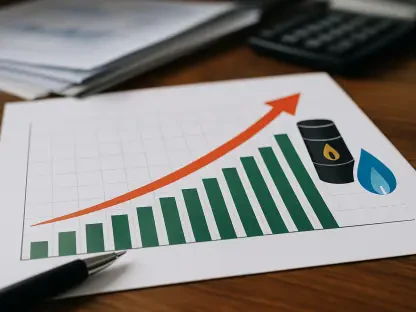
The current conflict has brought the Strait of Hormuz back into the spotlight as the ultimate strategic tool for regional influence. As a critical artery through which a significant portion of the world’s daily oil consumption passes, any credible threat to its closure sends shockwaves through the Stoxx 600 and other major indices. With regional leadership signaling a commitment to blockading this channel, Brent crude has surged past the $100-per-barrel mark, while West Texas Intermediate follows closely behind. The physical limitation of shipping routes creates a supply-side shock that even strategic reserve releases by the U.S. and the International Energy Agency struggle to mitigate, ultimately leading to a bearish outlook for global growth.
Sectoral Divergence and the Flight to Safety
While the broader market suffers, the impact of Middle East tensions is not felt uniformly across all sectors. The current crisis has created a stark divergence where oil, gas, and utility sectors see gains as energy costs rise, while industrial and mining sectors lag due to increased operational overhead. This volatility extends to the currency markets, where the British sterling and the euro have weakened against a strengthening U.S. dollar. This “flight to safety” reflects a broader investor sentiment that favors the dollar and traditional haven assets when geopolitical risks threaten to disrupt the flow of commodities and increase the $30 billion exposure risks faced by major financial institutions like Deutsche Bank.
Mitigating Risks: Military and Regulatory Interventions
To counter the threat of a total energy shutdown, global powers are resorting to both military and regulatory maneuvers. The U.S. Treasury and Energy Departments have introduced plans for military escorts for commercial vessels, alongside temporary waivers on sanctioned Russian oil to maintain a semblance of supply liquidity. However, these measures are often viewed as “stop-gap” solutions rather than permanent fixes. The complexity of balancing sanctions with the need for market stability creates a paradoxical environment where Western nations must occasionally ease pressure on adversaries to prevent a domestic economic collapse, highlighting the overlooked difficulty of maintaining energy security during active hostilities.
Future Outlook: Technological Shifts and Policy Evolution
The ongoing instability in the Middle East is likely to accelerate several emerging trends in the energy sector. In the near term, one can expect a renewed focus on domestic energy independence and a faster pivot toward alternative energy sources to reduce reliance on volatile regions. Economically, a more permanent shift in how energy derivatives are priced may occur, factoring in a higher baseline risk for maritime transit. Regulatory bodies will likely tighten oversight on private credit exposure to energy-dependent sectors, while technological innovations in logistics and subsea pipelines may be fast-tracked to circumvent traditional maritime choke points. Expert predictions suggest that as long as the Middle East remains a flashpoint, global markets will prioritize resilience over low-cost efficiency.
Key Insights for Navigating Market Uncertainty
The current crisis underscores several critical takeaways for investors and policymakers alike. First, energy security is inextricably linked to geopolitical stability; one cannot be managed without addressing the other. Second, businesses should adopt strategies that account for sustained high energy costs and potential supply chain disruptions, such as diversifying suppliers and hedging against currency volatility. For consumers and professionals, the focus remains on understanding that the “new normal” involves a high degree of sensitivity to international news. Applying these insights requires a proactive approach to risk management, ensuring that portfolios and business models are robust enough to withstand sudden shifts in the global energy landscape.
The Path Forward: Strategy in an Uncertain Era
The ability of global powers to stabilize these corridors and the speed at which the world transitioned to more secure energy sources defined the economic trajectory of the period. This topic remained significant because energy functioned as the lifeblood of the global economy, and its disruption was a challenge that required both strategic foresight and international cooperation. Proactive diversification of energy assets and the implementation of advanced maritime monitoring technologies became the primary defenses against future supply shocks. Ultimately, stakeholders who integrated geopolitical risk into their long-term planning were better positioned to navigate the volatile shifts in the international marketplace.