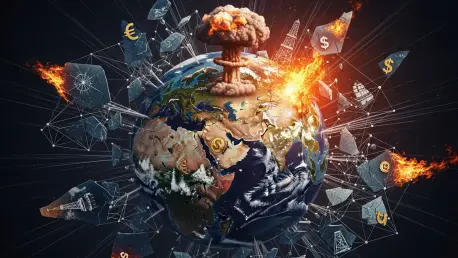

The geopolitical landscape of the mid-2020s shifted irrevocably when the simmering tensions between the United States, Israel, and Iran boiled over into an open military confrontation that effectively dismantled the long-standing foundations of international trade and energy distribution. This explosive conflict acted as a transformative catalyst, terminating decades of predictable commerce and forcing a violent, necessary transition away from fragile dependencies. As nations now navigate the aftermath, the global economy is no longer characterized by the pursuit of pure efficiency, pivoting instead toward a drive for national security and resilience within a fractured landscape. What was once a system of interconnected reliance has become a series of fortified economic blocks, each prioritizing self-sufficiency over the low-cost benefits of globalization. The shockwaves from the Persian Gulf reached every financial market, rewriting the rules of engagement for energy, logistics, and sovereign debt. Currently, the primary metric of success for a national economy is no longer growth alone but the ability to withstand systemic disruption and maintain critical infrastructure in a world where old alliances have largely evaporated.
The Restructuring of Global Energy and Alliances
The Acceleration of the Green Energy Transition: A Security Mandate
The near-total halt of oil and gas exports from the Persian Gulf during the peak of the 2025 hostilities created an immediate and profound energy shock, forcing nations to reconsider their reliance on fossil fuels under extreme duress. While some import-dependent countries initially returned to coal for basic survival, the crisis ultimately supercharged the shift toward wind, solar, and battery storage solutions as permanent security measures. Because renewable technology reached a critical tipping point in efficiency just as the war broke out, it has now become the most cost-effective and secure path forward for most developed and developing economies alike. Investment returns for green infrastructure are currently outpacing traditional energy projects for the first time in history, as the volatility of Middle Eastern oil makes fossil fuel investments appear increasingly risky. This transition is no longer just an environmental goal but a core component of national defense strategies across the globe.
Governments are now accelerating the deployment of modular nuclear reactors and long-duration energy storage systems to buffer against future geopolitical shocks. The rapid electrification of transport and heating sectors, once seen as a decades-long project, has been compressed into a much shorter timeframe due to the high cost and unreliability of imported hydrocarbons. In this environment, the decentralized nature of renewable energy serves as a strategic asset, making national power grids less vulnerable to the disruption of a single maritime chokepoint. While the initial capital requirements for this transition were significant, the long-term reduction in energy volatility is providing a new kind of stability. As nations achieve higher levels of energy sovereignty, the geopolitical leverage previously held by oil-exporting states is diminishing, fundamentally altering the balance of power in international relations and creating a world where energy is harvested locally rather than traded across contested waters.
The Fragmentation of Traditional Oil Cartels: New Energy Realities
On the geopolitical front, the war shattered long-standing energy alliances and realigned global power dynamics in ways that were previously unthinkable. The internal collapse of OPEC+ cohesion, most notably highlighted by the sudden departure of the United Arab Emirates, introduced unprecedented volatility into the global oil market. While Russia attempted to leverage the crisis to strengthen its ties with Saudi Arabia and maintain a grip on supply, the production void is increasingly being filled by South American nations like Brazil and Guyana. This represents a permanent westward shift in fossil fuel influence, reducing the traditional dominance of the Middle East and creating a more fragmented energy landscape. Markets that once looked to Riyadh for stability now find themselves navigating a world where supply is decentralized and political loyalty is no longer a guarantee of energy security, leading to a much more complex and unpredictable global pricing environment.
This fragmentation has led to the emergence of bilateral energy agreements that bypass traditional multilateral organizations entirely. Countries are now securing supply through direct investments in foreign extraction projects, creating exclusive corridors of resource flow that mirror the new geopolitical divides. This shift has weakened the ability of any single cartel to dictate global prices, but it has also removed the safety net that coordinated production cuts once provided during economic downturns. Consequently, oil prices now experience sharper, more localized fluctuations based on the specific stability of individual corridors. The decline of the unified cartel system signals the end of an era where energy prices were a relatively predictable variable in global economic planning. In this new reality, energy procurement has become an extension of diplomatic and military strategy, with states competing fiercely to secure the dwindling share of fossil fuels required to power their remaining traditional infrastructure.
Shifting Power Dynamics and Trade Security
China’s Strategic Dominance: Controlling the New Economy Hubs
China emerged as the primary strategic winner in the post-war landscape by securing its position as the world’s preeminent green manufacturing hub. As nations rushed to build independent energy networks to avoid Middle Eastern instability, they found themselves reliant on Chinese-made solar panels, wind turbines, and high-voltage cables. This dominance gives Beijing significant leverage over the global energy transition, as it effectively controls the essential components and software required for modern, secure power grids. The manufacturing capacity of the Chinese industrial sector has scaled to meet this global demand, creating a situation where the path to energy independence for most Western nations must paradoxically pass through a supply chain controlled by their primary strategic rival. This creates a new form of economic entanglement that is proving difficult to navigate for policymakers in Washington and Brussels who are attempting to balance security with progress.
Beyond hardware, the integration of Chinese management systems and software into global energy grids has raised significant concerns regarding data sovereignty and long-term security. The complexity of modern smart grids requires constant updates and specialized maintenance, much of which is currently serviced by Chinese technicians or proprietary algorithms. This technological lock-in means that even as countries diversify their energy sources, they remain tethered to the technological standards set by Beijing. Efforts to develop domestic alternatives in the United States and Europe are underway, but the sheer lead in scale and cost efficiency held by China makes these initiatives slow and expensive. The result is a global energy landscape where the physical resources may be local, but the operational control remains concentrated in a few strategic hands. This dynamic is forcing a reevaluation of trade policies, with a renewed focus on building “friend-shoring” networks that prioritize ideological alignment.
The Erosion of Maritime Safety: A New Era for Trade Norms
Maritime security was permanently compromised following the successful disruption of the Strait of Hormuz during the 2025 conflict. The era of guaranteed “free passage” through this vital global artery effectively ended, replaced by a precarious system of transit fees, heavy militarization, and constant risk assessments. This loss of trust in international shipping routes translated to higher insurance premiums and logistical costs, creating a lasting drag on the dynamism of Gulf economies and making global trade more expensive than ever before. Shipping companies are now opting for longer, costlier routes to avoid potential flashpoints, leading to a fundamental restructuring of international logistics. The increased cost of moving goods across oceans is being passed down to consumers, contributing to a broader trend of regionalization where trade happens within secure blocks rather than across a unified and open global marketplace that relied on the safety of the seas.
The degradation of maritime norms has also spurred a rush toward land-based trade routes and the expansion of polar shipping lanes, though neither can fully replace the volume of the traditional Southern route. This shift in logistics is favoring nations with robust rail infrastructure and those located along the emerging Arctic corridors. Furthermore, the reliance on naval escorts for commercial vessels has become a standard practice for many major powers, effectively turning international shipping into a series of protected convoys. This militarization of trade increases the cost of doing business and limits the participation of smaller nations that cannot afford to maintain a significant naval presence. The cumulative effect is a global trade system that is far more rigid and less responsive to market signals. As companies prioritize the safety of their cargo over the speed of delivery, the just-in-time manufacturing model that defined the previous decades is being replaced by a “just-in-case” strategy focused on inventory.
Macroeconomic Instability and the Fiscal Vice
Financial Instability: Persistent Inflation and Fiscal Constraints
The war derailed global growth projections and reignited the fires of inflation that central banks were close to extinguishing before the outbreak of hostilities. With growth forecasts dropping significantly, the global economy entered a jittery period of prolonged stagnation that continues to challenge policymakers. In the United States and Europe, sudden spikes in energy and transportation costs forced the Federal Reserve and other institutions to keep interest rates high, punishing consumers and businesses that were hoping for a return to affordable credit. This high-interest-rate environment stifled investment in new ventures, as the cost of borrowing often exceeds the projected returns in a stagnant market. The result is a persistent inflationary pressure coupled with low productivity, creating a challenging stagflationary trap that threatens to erode the purchasing power of the middle class across the developed world while making essential goods significantly more expensive.
Governments worldwide are now trapped in a fiscal vice, forced to manage record levels of public debt while simultaneously increasing spending on national defense and energy subsidies. This environment makes servicing existing debt increasingly difficult, leading to a surge in emergency loan requests across Asia and other emerging markets. The resulting economic environment is one where security and survival take precedence over long-term growth initiatives, leaving the global financial system more localized and vulnerable to future shocks. As fiscal space shrinks, many nations found it impossible to fund social programs or domestic infrastructure, leading to increased political instability and a retreat from international cooperation. The global financial architecture, once designed to promote integration, is now being used as a tool for economic warfare and the protection of narrow national interests. This shift toward protectionism and defensive fiscal policies is likely to define the economic landscape for the remainder of this decade.
Strategic Adaptation in a Divided World
The economic restructuring precipitated by the 2025 conflict necessitated a fundamental shift in how sovereign states and private enterprises approached risk and resource management. Policymakers ultimately prioritized the development of redundant supply chains and localized energy production to mitigate the fallout from a permanently destabilized Middle East. Moving forward, the global community was required to embrace a more modular economic framework that valued resilience over the thinning margins of just-in-time manufacturing. Strategic investments in domestic semiconductor production and advanced grid management systems became the new baseline for national competitiveness in this fragmented era. Leaders realized that the era of uninhibited global integration was over, replaced by a landscape defined by competitive regionalism and defensive economic clusters. Future stability depended on the ability of nations to maintain these secure trade corridors while avoiding the escalation of further regional conflicts that could disrupt the fragile recovery of the international system.