
Introduction
The ability to transform complex financial theories into functional trading algorithms without typing a single line of computer code has fundamentally altered the power dynamics of the modern stock market. For years, the sophisticated world of quantitative finance remained the exclusive playground of institutional hedge funds and individuals with elite programming skills, but the emergence of no-code interfaces has dismantled these traditional barriers to entry. This evolution is not merely a convenience; it represents a profound democratization of financial technology that allows retail investors to compete using the same systematic rigor as professional firms.
The primary objective of this article is to clarify how a novice can navigate this new technological landscape without falling victim to the myriad of risks inherent in automated trading. This content explores the current ecosystem of no-code platforms, identifies the safest tools available for the average user, and addresses the critical differences between marketing terminology and functional reality. Readers can expect to learn the mechanics of setting up a bot, the psychological shifts required for automation, and the essential security protocols needed to protect their capital from both market volatility and external threats.
Navigating the world of AI-driven trading requires a blend of technological literacy and financial discipline, especially since the gap between a tool’s potential and its actual performance can be immense. While the accessibility of these platforms has increased, the necessity for sound risk management remains as vital as ever. This guide provides a structured roadmap for those ready to move beyond manual execution toward a more disciplined, automated approach to managing their stock portfolios.
Key Questions or Key Topics Section
What Exactly Defines a Modern No-Code AI Trading Bot?
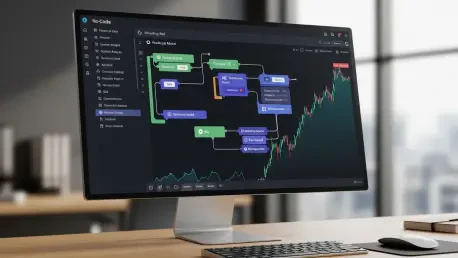
The term AI trading bot has become a ubiquitous marketing catch-all that often obscures the technical reality of the products being sold to retail investors. In the current market, it is essential to distinguish between simple rule-execution engines and genuine machine learning systems to avoid overestimating a tool’s capabilities. Most accessible platforms actually provide a user-friendly wrapper around traditional algorithmic logic, allowing individuals to use natural language to define their parameters rather than complex syntax.
At their core, these systems are categorized into four distinct groups based on their level of autonomy and intelligence. Rule-based systems execute simple if-then logic, such as purchasing a stock when its relative strength index falls below a certain threshold. AI-assisted platforms, such as Capitalise.ai and Composer, utilize large language models to help users refine these rules through conversational prompts. More advanced adaptive systems attempt to adjust their parameters dynamically as market conditions shift, while fully autonomous systems that make entirely independent decisions remain largely unavailable to the retail public.
Understanding these distinctions prevents a beginner from assuming that a bot possesses human-like intuition or the ability to predict black swan events. A bot that follows a moving average crossover is useful for maintaining discipline, but it is not learning or evolving based on the success of its trades. It is simply a tireless assistant that follows instructions perfectly, which is why the quality of the user’s logic remains the most important factor in the success of the automation.
Why Has the Trading Landscape Shifted Toward Automation?
Algorithmic trading now accounts for a significant majority of all United States equity volume, with estimates placing the figure between 60 and 73 percent. This dominance by machines was once a source of frustration for retail traders who felt they could not keep up with the speed and precision of institutional high-frequency algorithms. However, the current era has seen a massive shift as no-code platforms provide the average person with tools that were previously reserved for the elite, effectively leveling the technological playing field.
The recent surge in adoption is driven by the integration of natural language processing into trading interfaces, making the creation of a strategy as simple as writing a text message. For example, the acquisition of Capitalise.ai by Kraken and the major expansion of Alpaca’s AI assistant capabilities show that industry leaders view consumer-grade automation as a strategic necessity. TradingView has also become a central hub for this movement, linking its massive charting community to automated broker execution through simple webhook notifications.
Furthermore, the shift toward automation reflects a growing realization that human psychology is often the greatest obstacle to successful trading. By moving toward systematic execution, traders can eliminate the emotional biases of greed and fear that lead to poor decision-making during periods of high volatility. The modern environment allows a user to backtest an idea in seconds and deploy it immediately, ensuring that their investment thesis is executed with a level of consistency that manual trading simply cannot match.
Which Free Tools Provide the Best Entry Points for Beginners?
The availability of free or low-cost tools has made it possible for anyone to experiment with automated trading without a significant initial investment. However, the definition of free varies across the industry, and it is crucial to understand what features are included before committing to a specific ecosystem. Some platforms offer free research and testing but charge for live execution, while others offer a completely free experience by partnering with specific brokerage firms.
Alpaca stands out as one of the most accessible options for those who want to start with a sandbox environment. Their paper trading feature is free and provides a realistic simulation of live market data, allowing users to test strategies across multiple accounts without risking actual capital. This platform is particularly popular among those who want to bridge the gap between AI assistants like ChatGPT and live execution, as it supports a wide range of third-party integrations and conversational commands.
Capitalise.ai offers another compelling entry point, as the platform is often free for users who trade through supported brokers such as Interactive Brokers or FXCM. This platform focuses on text-to-strategy conversion, enabling users to write instructions in plain English that are then turned into executable code. For those interested in more sophisticated portfolio management, Composer provides a free tier for strategy generation and backtesting, although automated execution typically requires a monthly subscription fee once a user is ready to go live.
How Can New Users Mitigate Common Implementation Risks?
The ease of deploying a bot can create a false sense of security, leading beginners to overlook the technical and logic errors that can drain an account. A common mistake is assuming that because a strategy sounds good in one’s head, it will translate perfectly to a machine’s execution logic. To mitigate these risks, experts recommend a graduated approach that builds confidence through evidence rather than jumping directly into full-scale automation with a large amount of capital.
The first line of defense is rigorous paper trading for at least thirty to sixty days to observe how the bot handles different market cycles. This period allows the user to compare simulated results with their original expectations and identify discrepancies in slippage or execution timing. Moreover, moving to an alert-only phase before enabling full automation can serve as a vital training period. In this setup, the bot notifies the user when conditions are met, but the human must still manually confirm the trade, which helps build intuition for the system’s behavior.
Risk management also involves keeping strategies simple, as complexity is rarely an advantage for someone just starting out. A single, well-defined moving average crossover is much easier to monitor and troubleshoot than a multi-layered system involving dozens of indicators. By starting with a small amount of capital and scaling up only after the bot has proven itself over several months of live performance, a trader can ensure that a technical glitch or a logic flaw does not result in a catastrophic financial loss.
What Are the Real Strengths and Weaknesses of Automated Systems?
Automated systems are exceptionally good at maintaining discipline and removing the emotional volatility that plagues most retail investors. A bot does not experience the panic that leads to selling at the bottom of a drawdown, nor does it feel the overconfidence that causes a trader to chase a rally far beyond a reasonable entry point. This consistency allows a strategy to be executed exactly as it was designed, which is often the primary reason why systematic approaches outperform manual ones over the long term.
Despite these advantages, bots are inherently limited by their inability to adapt to sudden changes in market regimes or unexpected geopolitical events. A bot calibrated for a low-volatility, trending market can fail spectacularly when the environment shifts toward a high-volatility, range-bound scenario. Unlike human traders, most bots cannot interpret the nuances of an earnings call or the psychological impact of a sudden regulatory announcement. They follow their programmed logic to the letter, even when that logic is no longer appropriate for the current circumstances.
Furthermore, automation can lead to the rapid compounding of losses if a strategy is fundamentally flawed. While a human might pause to reflect after a series of bad trades, a bot will continue to execute according to its rules until the account is empty or it is manually deactivated. This makes automated trading a set and supervise activity rather than a set and forget one. Understanding that a bot is a tool for execution, not a replacement for market wisdom, is the key to using this technology safely.
Which Specific Strategies Are Most Suitable for Novices?
For those new to the world of automation, simple and historically tested strategies are far superior to complex, proprietary systems. The goal for a beginner is to understand the mechanics of the bot while maintaining a strategy that has a clear logic and a known track record. One of the most reliable entry points is the Golden Cross, which triggers a buy signal when a short-term moving average crosses above a long-term one, signaling a shift in momentum that is easy to define and monitor.
Another effective approach involves using automated dollar-cost averaging to build positions in broad market indices or major stocks over time. This strategy removes the psychological burden of trying to time the market and ensures that the investor is consistently accumulating assets regardless of short-term price fluctuations. Platforms like Capitalise.ai have dedicated features that allow users to split large orders into smaller, timed intervals, which is an excellent way to use automation for long-term wealth building rather than speculative day trading.
Bracket orders also represent a vital strategy for beginners because they build risk management directly into every trade. By setting a simultaneous take-profit target and a stop-loss order at the moment a position is opened, a trader ensures that their downside is always protected. This systematic approach to risk is much safer than manual trading, where an investor might hesitate to close a losing position in the hope that the price will recover. Using a bot to enforce these exit points is one of the most practical applications of the technology.
Why Should Investors Remain Skeptical of Backtested Results?
One of the most dangerous traps for a new bot user is the allure of a perfect backtest that shows extraordinary historical returns. It is relatively easy to tweak the parameters of an algorithm until it fits historical data perfectly, a process known as overfitting. However, a strategy that is tuned to the noise of the past is rarely equipped to handle the uncertainty of the future. Professional researchers have found that there is often almost no correlation between a strategy’s backtested performance and its subsequent live results.
Several factors contribute to this discrepancy, including the omission of realistic trading costs such as slippage and regulatory fees. In a backtest, a trade might be executed at a perfect price that is never actually available in a live market where liquidity varies. Additionally, survivorship bias can inflate results if the backtest only includes companies that are currently successful while ignoring those that went bankrupt or were delisted during the testing period. A strategy that looks like it produces thirty percent annual returns on paper might actually lose money when these real-world factors are applied.
Beginners should treat any backtest showing consistent high returns with a healthy dose of skepticism. A realistic strategy usually has a more modest profit factor and will inevitably experience periods of drawdown. Platforms like Composer attempt to address this by modeling realistic costs and slippage into their simulations, providing a more honest view of potential outcomes. The most important takeaway is that a backtest is a tool for finding flaws, not a guarantee of future profits.
Is Full Automation or a Semi-automated Setup Safer for Beginners?
The choice between full automation and a semi-automated setup is a critical decision that impacts both risk exposure and the user’s learning curve. Full automation means the bot handles everything from signal generation to order execution without any human intervention. While this offers the maximum benefit in terms of speed and consistency, it also requires the highest level of trust in the underlying logic and the technical stability of the platform. For a beginner, this lack of oversight can lead to significant anxiety during market turbulence.
In contrast, a semi-automated approach involves using a bot to scan the market and generate alerts, but the human trader must still hit the button to execute the trade. This setup is often facilitated through tools like TradingView, which can send notifications to a smartphone when certain conditions are met. This method allows the user to maintain a sense of control and serves as a final check against potential errors in the bot’s logic. It also helps the trader develop a deeper understanding of market movements by requiring them to stay engaged with the price action.
Psychologically, semi-automation acts as a bridge that helps individuals transition from manual trading to a more systematic mindset. It provides a safety net that prevents the bot from making a catastrophic error due to a data glitch or an extreme market event. Most experts recommend starting with this hybrid model and only moving toward full automation once the user has gained enough experience to trust their system during both profitable and losing streaks.
What Security Protocols Are Essential for Protecting a Trading Account?
Ensuring the security of one’s capital is just as important as the strategy itself when using third-party trading bots and no-code platforms. The most common security failure involves the improper management of API keys, which are the digital credentials that allow a bot to communicate with a brokerage account. If these keys are compromised, an unauthorized party could potentially execute trades or, in a worst-case scenario, withdraw funds if the permissions are not correctly configured.
To maintain a safe setup, a user must ensure that their API keys are restricted to trade-only or read-only access, with withdrawal permissions strictly disabled. It is also a best practice to use a separate brokerage account for automated trading rather than linking a bot to a primary long-term investment portfolio. This isolation limits the potential damage from a malfunctioning algorithm or a security breach to only a portion of the user’s total net worth. Furthermore, implementing hard risk caps and drawdown kill switches can provide an extra layer of protection by automatically halting all trading if losses exceed a specific threshold.
Vigilance against fraud is also necessary, as the rise of AI technology has led to an increase in scams promising guaranteed returns through secret algorithms. Regulatory bodies like the SEC and FINRA have issued explicit warnings about AI-washing, where companies make false claims about their technology’s capabilities. By sticking to established, regulated platforms and being skeptical of any tool distributed through unofficial channels like private messaging apps, a beginner can protect themselves from both market risk and criminal activity.
Summary or Recap
The modern landscape of automated trading offers a powerful array of tools that allow retail investors to implement systematic strategies with unprecedented ease. Platforms like Alpaca and Capitalise.ai provide the infrastructure for natural language strategy building and paper trading, which are essential for developing a disciplined approach to the market. While the barriers to entry have fallen, the fundamental principles of risk management and the need for realistic expectations remain unchanged.
Systematic trading helps eliminate emotional biases and ensures that a well-reasoned investment thesis is executed with perfect consistency. However, users must remain aware that these bots are primarily rule-execution engines rather than autonomous intelligences capable of navigating every market regime. The distinction between backtested potential and live performance is a critical reality that every beginner must respect to avoid the pitfalls of overfitting and unrealistic return expectations.
Ultimately, the safe use of no-code AI trading bots depends on a graduated implementation strategy that prioritizes security and evidence-based confidence. Starting with simulated environments, moving toward semi-automated alerts, and maintaining strict control over API permissions provides a solid foundation for growth. For those looking to deepen their understanding, exploring the documentation provided by SEC-registered broker-dealers and staying informed through regulatory investor alerts offers a path toward responsible and effective automated trading.
Conclusion or Final Thoughts
The emergence of no-code AI tools shifted the balance of power in the financial markets, allowing the average person to access sophisticated execution technology that was once a closely guarded secret of institutional firms. Throughout this transition, successful investors realized that the technology served as a multiplier of their own logic rather than a magical solution for generating wealth without effort. The platforms that gained the most traction were those that prioritized transparency, security, and the integration of natural language to simplify complex tasks.
As the industry matured, the focus moved away from the novelty of automation and toward the quality of the strategies being deployed. Those who approached these tools with a sense of caution and a commitment to rigorous testing were the ones who truly benefited from the removal of human emotion in their trading. The evolution of these bots provided a clear lesson that while the methods of execution changed, the requirements for discipline and risk management stayed exactly the same.
In the coming years, the intersection of advanced language models and financial execution will likely continue to expand, offering even more intuitive ways to manage capital. For anyone starting today, the most important action is to remain a perpetual student of the market while using technology to enforce the rules that lead to long-term success. By treating automation as a partner in a disciplined investment process, individuals can navigate the complexities of the stock market with a level of precision and security that was previously impossible.