
The relentless roar of construction across India’s emerging industrial corridors signals a nation in a hurry to redefine its global economic standing, yet the very circuits powering this transformation are increasingly forged in the factories of its most formidable rival. As the world’s fastest-growing large economy in 2026, the country finds itself in a precarious position. The national drive to transition from a service-oriented hub to a manufacturing powerhouse requires an astronomical amount of reliable electricity. While the government champions a green revolution to achieve energy independence, the infrastructure required to sustain this leap remains deeply intertwined with Chinese supply chains.
This dependency creates a profound nut graph for the nation’s strategic planners. To attract global giants like Apple and establish a foothold in semiconductor fabrication, the power grid must offer unwavering reliability. High-tech sectors, including artificial intelligence and advanced robotics, cannot function on the intermittent rhythms of sunshine and wind alone. Consequently, the pursuit of energy security has paradoxically led to a greater reliance on imported technology, creating a “Catch-22” where industrial sovereignty is bought with foreign-made hardware.
The High-Voltage Paradox of India’s Industrial Ambition
The friction at the heart of the national strategy is the dual objective of replacing China as a global manufacturing center while utilizing Chinese components to build that very alternative. This tension is most visible in the special economic zones where new factories are rising. These facilities require a continuous supply of electricity that domestic providers are struggling to guarantee without looking across the border. The economic momentum is undeniable, yet the hardware that regulates, stores, and transmits this power is frequently stamped with the “Made in China” label, highlighting a persistent gap in the local industrial ecosystem.
Furthermore, the urgency of the climate crisis and the pressure to meet international emissions targets have accelerated the deployment of green technology. However, domestic manufacturing capacity for high-end solar wafers and specialized electronics has not kept pace with the scale of deployment. This creates a situation where the faster the nation moves toward its renewable targets, the more it deepens its trade deficit with its primary geopolitical competitor. The immediate need for grid modernization often overrides the long-term goal of supply chain independence, leaving critical infrastructure vulnerable to external market shocks.
Bridging the Gap Between Installed Capacity and Actual Generation
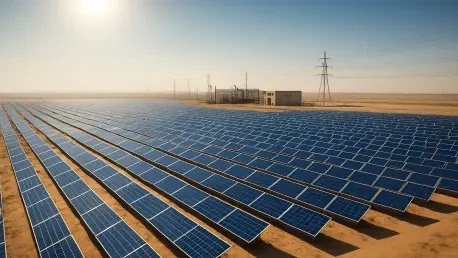
India has achieved remarkable milestones in its renewable footprint, reaching a stage where the nameplate capacity of solar and wind installations now rivals that of the aging coal fleet. On paper, the transition appears to be ahead of schedule, with massive solar parks stretching across the deserts of Rajasthan and Gujarat. However, a closer analysis of the grid reveals a more complex reality. In the current fiscal year of 2026, coal still accounts for nearly 70% of actual electricity generation. The discrepancy between what is installed and what is actually delivered to the consumer highlights the inherent limitations of weather-dependent power sources.
This “70% reality” underscores the reliability crisis facing a modernizing economy. Industrial operations require 24/7 power, a demand that solar and wind cannot meet without massive interventions. During peak hours or cloudy days, the grid often falls back on fossil fuels to prevent blackouts. This intermittency creates a bottleneck for sophisticated manufacturing processes that require a steady voltage. Bridging this gap is not just a matter of installing more panels; it requires a fundamental redesign of how energy is managed and stored, a task that has become the most significant technical challenge of the current decade.
The Battery Energy Storage System (BESS) Mandate
To address the stability of the grid, the Central Electricity Authority has introduced rigorous regulations for 2026 that mandate the inclusion of storage for all new government-commissioned solar and wind projects. The logic is sound: by requiring developers to bundle batteries with renewable plants, the government aims to ensure that green power can be used even after the sun sets. This shift is intended to transform intermittent energy into a “firm” and dispatchable resource. Yet, this policy mandate has suddenly exposed a massive “storage gap” in the domestic industrial base.
The scale of the requirement is staggering, with projected demand reaching 260 gigawatt-hours to support the evolving grid. Despite aggressive local incentives, the domestic manufacturing share for these critical components remains under 1%. As a result, the path to grid stability leads directly to the floors of Chinese factories. Approximately 80% of the batteries currently being integrated into the Indian grid are imported, creating a new layer of dependency just as the nation seeks to reduce its reliance on foreign fossil fuels. The transition is essentially moving the country from a dependency on Middle Eastern oil to a reliance on East Asian lithium-ion technology.
Strategic Vulnerabilities and the Geopolitical Tool
The concentration of battery component manufacturing in Beijing’s hands provides the Chinese government with a significant geopolitical tool. By controlling over 80% of the global market for processed battery minerals and cells, China holds the power to disrupt the energy transitions of its competitors through export quotas or price manipulations. This creates a strategic vulnerability for New Delhi, especially as diplomatic relations remain strained by border disputes and trade friction. The risk is that energy infrastructure, once a symbol of national progress, could become a lever for external political pressure.
Logistical challenges also persist, as trade barriers and visa hurdles make it difficult for Indian firms to maintain their Chinese-dependent infrastructure. The reluctance of Chinese companies to transfer core technology further complicates the situation. They view the Indian manufacturing sector not just as a customer, but as a rival that could eventually host the very supply chains that China currently dominates. This creates a barrier where India can assemble and test products but remains locked out of the high-value “upstream” segments of the energy technology market, such as cathode production and chemical processing.
Navigating the Path to Atmanirbhar Bharat: Self-Reliant India
Transitioning from a downstream assembler to a full-scale cell manufacturer is the primary objective of the “Self-Reliant India” initiative. Moving beyond the final stages of production requires a massive investment in research and development and the securing of raw material access. Indian firms are beginning to leverage critical-mineral initiatives, seeking partnerships in regions like South America and Australia to bypass Chinese-controlled processing hubs. The goal is to reach a local production target of 140 GWh, which would provide a significant cushion against global supply chain volatility and reduce the trade imbalance.
Managing this transition requires a delicate framework that balances immediate energy needs with a long-term industrial vision. It involves more than just subsidies; it requires a robust ecosystem that includes battery recycling, advanced chemistry research, and a workforce trained for high-tech manufacturing. As the nation works toward these goals from 2026 to the end of the decade, the focus is shifting toward creating a circular economy for minerals. This approach aims to reduce the total volume of imports needed by reclaiming materials from spent cells, eventually providing a domestic source of high-purity lithium and cobalt.
The journey toward energy sovereignty required a series of calculated policy shifts that prioritized structural independence over short-term cost savings. Authorities recognized that the reliance on a single geographic source for grid stability was an unsustainable risk for a rising power. By implementing aggressive recycling mandates and diversifying mineral partnerships, the government established a foundation for a more resilient energy sector. These actions ensured that the industrial expansion of the mid-2020s did not come at the expense of long-term security. Strategic planners realized that the true measure of a green transition was not merely the reduction of carbon, but the successful decoupling of national progress from the influence of geopolitical rivals.