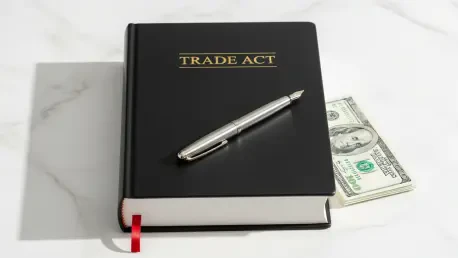

The Judicial Gavel Falls on Executive Trade Authority
A silent tremor rippled through the halls of the Department of Commerce this week as federal judges delivered a sharp rebuke to the administration’s aggressive protectionist agenda. The recent 2-1 ruling by the Court of International Trade in New York has sent shockwaves through the federal government, explicitly labeling the administration’s 10% global tariffs as “invalid” and “unauthorized by law.” This decision serves as a significant check on executive power, marking the second time in a single year that the judiciary has clipped the wings of trade policy.
By determining that the president overstepped the bounds of delegated power, the court has reignited a fierce debate over where congressional authority ends and executive discretion begins. This legal friction is not merely academic; it strikes at the heart of how the United States interacts with the global economy. The ruling challenged the assumption that broad emergency powers could be used indefinitely to reshape market dynamics without explicit legislative consent.
Understanding the Legal Fault Lines: The Trade Act
To grasp the weight of this ruling, one must look at Section 122 of the Trade Act of 1974, the specific statutory pillar used to justify this 10% levy. This legal setback follows a high-profile Supreme Court decision that dismantled separate tariffs justified under the International Emergency Economic Powers Act. These back-to-back defeats suggest a narrowing judicial tolerance for broad interpretations of trade laws that were originally intended to give the president limited flexibility.
The court emphasized that statutory language must be interpreted strictly to prevent the executive branch from absorbing powers reserved for the legislature. This trend toward judicial skepticism signaled a possible end to the era of trade policy by proclamation. Moreover, the decision highlighted the technical limitations of Section 122, which was designed for short-term balance-of-payments emergencies rather than long-term industrial strategy.
Plaintiffs, Precedents, and the Multi-Billion Dollar Path: Restitution
The legal challenge that toppled the strategy was spearheaded by an unlikely coalition including the state of Washington, the spice importer Burlap & Barrel, and the toy manufacturer Basic Fun!. Their victory does more than just halt collections for these specific entities; it sets a precedent that could allow thousands of American importers to seek massive refunds for past payments. While a dissenting judge argued that the law should allow more room to maneuver, the majority opinion firmly reestablished the necessity of strict adherence to statutory limits.
The financial implications for the Treasury are staggering, as the potential for restitution reaches into the billions of dollars. This case demonstrated that even small-scale importers can successfully challenge federal mandates when those mandates lack a firm legal foundation. Consequently, the ruling emboldened the private sector to scrutinize every new trade barrier through a lens of statutory compliance.
Constitutional Tension: The Expert Outlook on Appeals
Legal scholars point to a fundamental constitutional friction regarding the delegation of taxing power, which the U.S. Constitution primarily reserves for Congress. With the administration expected to appeal the decision to the U.S. Court of Appeals for the Federal Circuit, the case is likely destined for a final showdown at the Supreme Court. Experts suggested that the outcome would define the limits of presidential authority for decades, determining whether trade can be used as a primary tool of economic diplomacy.
This looming battle at the highest court will likely address whether the non-delegation doctrine requires a more originalist interpretation in the context of international commerce. If the current ruling stands, future administrations might find themselves tethered to specific congressional mandates for every percentage point of duty applied at the border. This shift would fundamentally alter the speed at which the executive branch can respond to global market fluctuations.
Navigating Trade Volatility: Ongoing Investigations
For businesses caught in the crossfire, the legal victory was tempered by the reality of new, looming threats from the Office of the U.S. Trade Representative. The administration already pivoted to alternative justifications for future levies, launching investigations into overproduction by 16 major trading partners and forced labor practices across 60 different economies. Importers identified the need to monitor these probes closely to anticipate where the next wave of enforcement might originate.
Strategic planning became the priority for companies seeking to insulate themselves from further volatility. Supply chain managers diversified their sourcing to regions less likely to fall under the umbrella of forced labor investigations or overproduction penalties. These proactive measures ensured that businesses remained resilient, even as the legal basis for global trade continued to shift toward more specific, human-rights-based enforcement actions.