
The rapid transition toward electrified heavy-duty transport is no longer just a question of reducing tailpipe emissions but has evolved into a strategic opportunity to stabilize national energy infrastructures. As fleet operators across Europe and North America deploy massive battery packs on wheels, companies like Scania are demonstrating that these vehicles can function as decentralized energy storage systems when they are not in motion. This shift transforms a truck from a mere logistics tool into a dynamic participant in the energy market, capable of feeding power back into the grid during peak demand periods. This bidirectional flow of electricity represents a fundamental change in how logistics companies view their capital assets. Instead of being passive consumers of energy that strain local utilities, high-capacity electric trucks are becoming essential components of a more resilient, flexible, and sustainable power ecosystem. By leveraging the energy density of modern batteries, the industry is moving toward a model where transport and utility sectors are inextricably linked.
Integrating Mobile Storage Into National Power Networks
The Mechanics of Bidirectional Power Transfer
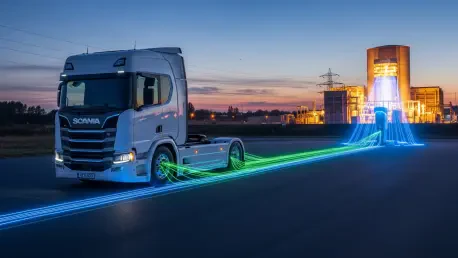
Scania’s implementation of bidirectional charging relies on sophisticated hardware and software interfaces that allow the truck to communicate seamlessly with the power distribution network. When a heavy-duty electric vehicle is plugged into a V2G-enabled charging station, it does not just draw current to fill its cells; it negotiates with the utility provider based on real-time grid requirements. If the grid experiences a sudden surge in demand or a dip in supply from renewable sources, the truck’s battery can discharge power to bridge the gap. This process is managed by high-speed power electronics that ensure the energy transfer occurs with minimal loss while maintaining the rigorous safety standards required for high-voltage systems. By leveraging the immense energy capacity of 40-ton long-haul vehicles, which often house batteries exceeding 600 kilowatt-hours, the potential impact on grid stability is significantly greater than that of smaller passenger cars. This high-capacity discharge capability is essential for supporting industrial-scale energy needs across the logistics sector.
Optimizing Renewable Energy and Grid Stability
Beyond simple load balancing, the integration of these heavy-duty assets allows for the mitigation of the duck curve effect where renewable energy production peaks during the day but drops sharply as demand rises. As fleets of electric trucks are increasingly scheduled to rest and recharge during specific intervals, they can be programmed to absorb excess solar energy during the afternoon and release it back during the evening rush. This creates a circular energy economy where the cost of operation for the logistics provider is offset by the revenue generated from grid services. Furthermore, this synchronization helps utility companies avoid the expensive and carbon-intensive process of firing up fossil-fuel peaker plants. Scania’s recent pilot projects have shown that a localized group of trucks can act as a virtual power plant, providing enough capacity to support entire industrial districts or suburban neighborhoods during critical stress events. By turning dormant assets into essential community resources, the technology provides a vital buffer against the intermittency of wind and solar power.
Strategic Asset Management and Technical Reliability
Protecting Battery Health and Operational Lifespan
One of the primary concerns for fleet managers adopting bidirectional technology is the potential for accelerated battery degradation caused by the additional charge and discharge cycles. To address this, Scania has integrated advanced thermal management and predictive analytics that monitor the chemical state of each battery cell in real-time. These systems use machine learning to determine the optimal discharge rates that minimize stress on the lithium-ion chemistry, ensuring that V2G participation does not void warranties or shorten the usable life of the vehicle. In many cases, shallow cycles—where only a small percentage of the battery is discharged—can actually be less damaging than the deep cycles typically seen in long-haul hauling. By carefully managing the State of Health and maintaining a consistent temperature during energy transfers, the software ensures that the truck remains a reliable transport asset for its entire projected service life. From 2026 to 2028, these management tools became essential for any operator looking to combine logistics efficiency with grid service revenue.
Developing a Global Standard for Energy Resilience
The implementation of these bidirectional systems across major logistics hubs successfully shifted the industry toward a more holistic view of vehicle utility and grid resilience. Engineers achieved a milestone by perfecting liquid-cooled cables and high-output inverters that managed bidirectional flows exceeding 500 kilowatts without thermal stress. During the initial rollout, fleet operators benefited from standardized energy compensation models that rewarded them for discharging power during peak evening hours. These developments proved that the transition to electric heavy-duty transport was not merely an environmental goal but a critical upgrade to national infrastructure. Looking forward, the foundation established during this period allowed for the subsequent synchronization of autonomous fleets with localized energy markets, maximizing both throughput and profitability. By treating the vehicle as a multi-functional power hub, the logistics sector effectively neutralized the green premium associated with electrification. The project eventually served as a global blueprint for sustainable industrial development.