
Understanding the Sudden Shift in Central Bank Rhetoric
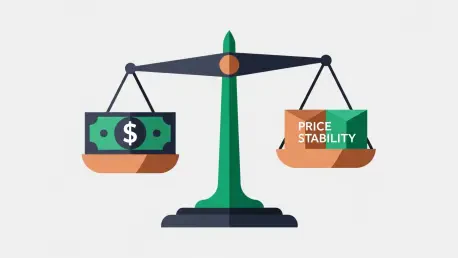
The sudden transformation of the Federal Reserve from a perceived guardian of growth into a staunch defender of price stability has fundamentally altered the global financial landscape. Kevin Warsh, long viewed by many as a potential ally of political interests favoring lower interest rates, recently shocked the financial sector with a rigorous, hawkish commitment to curbing inflation. This “Warsh Pivot” indicates a prioritize-at-all-costs approach to price stability, leaving market participants to grapple with a new reality where the 2% inflation target stands as an immovable objective. By examining the resulting market volatility and the central bank’s firm stance, the broader shift in national monetary policy becomes clear for all stakeholders involved.
From Political Pressure to Price Stability: The Evolution of Market Expectations
Before this significant pivot, a widespread consensus suggested that the central bank might buckle under the weight of a high-stakes election cycle. Many investors assumed that the administration’s desire for short-term economic expansion would override the necessity for long-term fiscal discipline, leading to a more accommodative policy. However, the Chairman dismantled these assumptions by centering every communication on the purchasing power of the dollar and the mandate for price stability. This matters because it marks a return to orthodox central banking principles where the institution no longer prioritizes growth over the cooling of consumer prices. This evolution signals that the central bank aims to remain insulated from the political noise surrounding the fiscal decision-making process.
Analyzing the Dynamics of the Warsh Pivot
Immediate Market Volatility: The Surge in Treasury Yields
The initial reaction from the financial world was characterized by sharp and immediate volatility as traders recalibrated their models. The 2-year Treasury yield, which serves as a primary barometer for interest rate expectations, surged as the market rushed to adjust to an aggressive hike cycle. Data indicated that the probability of a rate increase in July rose significantly, while the odds for a September move spiked toward nearly two-thirds. This shock occurred because many institutions had positioned themselves for a policy pause, yet they now face a future with multiple potential increases projected over the next several years.
Economic DatReconciling Rhetoric with Cooling Indicators
Interestingly, this aggressive rhetoric arrives at a time when some economic indicators are starting to show signs of cooling on their own. Core inflation figures have shown modest growth, and the price of various commodities has begun to retreat from previous peaks seen earlier in the cycle. This creates a complex dynamic where the central bank is saber-rattling to solidify its inflation-fighting credentials even as the broader economy begins to slow naturally. The inherent risk in this approach is the potential for over-tightening the screws of the economy just as natural market forces begin to do the heavy lifting of price stabilization.
Institutional Credibility: The Fight for Political Independence
Beyond the mechanics of interest rates, the recent pivot is a calculated effort to restore institutional credibility in an era of skepticism. By asserting a unanimous commitment to the inflation target, the leadership has effectively decoupled the institution from perceptions of political subservience. Maintaining global trust in the dollar requires this level of perceived independence, even if it causes short-term pain in the equity markets. This move serves to comfort those who fear persistent inflation while simultaneously warning those who have become overly reliant on a predictable cycle of monetary easing and cheap capital.
The Future of Interest Rates in an Unpredictable Economic Climate
Looking forward, the trajectory of American policy will likely be defined by a state of data-dependent hawkishness throughout the 2026 to 2028 period. While the verbal commitment remains firm, the actual execution of further hikes will hinge on whether downward trends in energy costs and global supply chain pressures persist. Innovation in communication will be a key feature, as the central bank uses its voice to anchor inflation expectations without necessarily needing to deploy every projected rate hike. This suggests a future where the threat of action becomes a tool just as powerful as the action itself in managing market behavior.
Strategic Implications for Investors and Policy Observers
The primary takeaway for professionals is that the era of easy money has entered a significant hiatus. Investors must now pivot toward defensive strategies and closely monitor sensitive barometers like the 2-year yield and monthly inflation prints. Applying this knowledge requires a realization that the Federal Reserve is currently more concerned with its institutional reputation than with stock market performance. Consequently, betting against this hawkish trend in the short term carried an elevated level of risk for any portfolio that remained over-leveraged in growth-oriented assets.
A New Era for the Federal Reserve’s Inflation Mandate
The Warsh Pivot represented a fundamental redefining of the mission of the Federal Reserve during a period of intense economic transition. By shifting from a perceived dovish lean to a staunchly hawkish one, the leadership re-established its commitment to price stability and institutional autonomy. This transition caused considerable turbulence in the short term but ultimately provided much-needed clarity for the global economy. The move dictated a new era where the central bank used transparency as a primary weapon to anchor expectations. This approach proved that the fight for price stability was the defining challenge that solidified the institution’s role as an independent economic stabilizer.