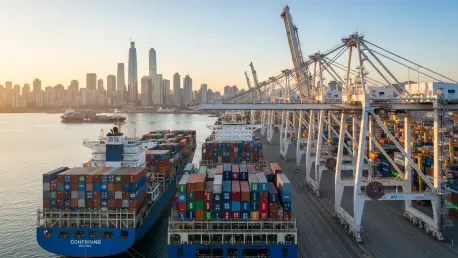

South Korea is currently navigating a period of stark economic divergence that presents a complex puzzle for policymakers and international investors alike. While the nation’s overseas shipments are breaking historical records, the internal landscape is marked by sluggish domestic demand and a cooling labor market. This phenomenon creates a dual reality where a booming high-tech export sector coexists with a struggling local retail and construction environment. According to recent data from the Ministry of Finance and Economy, the macroeconomy appears buoyed by global appetites for Korean-made goods, yet the average citizen feels a different pressure entirely. Persistent inflation and rising living costs are acting as a significant anchor on domestic vitality, preventing the wealth generated by international trade from permeating the broader population. Understanding this disconnect is essential for assessing the long-term stability of the region’s financial health as it balances global dominance with local fragility.
Bridging the Gap: Global Demand and Local Manufacturing
The recent surge in exports has been nothing short of extraordinary, characterized by a massive year-over-year increase driven by the insatiable global demand for semiconductors and advanced electronics. Components for artificial intelligence and high-performance computing have led the charge, alongside a resurgent shipbuilding industry that has secured multi-year contracts with major international logistics firms. This momentum has prompted official declarations that the national economic recovery is finally solidifying on the global stage. However, a deeper look at the industrial production index reveals a curious stagnation that contradicts these headlines. Despite the outward-facing success, overall domestic production has recently dipped, suggesting that the benefits of the export boom are concentrated in a few high-tech enclaves rather than lifting the entire industrial base. This bottleneck indicates that local factories are not yet scaling up to match the velocity of international sales.
Furthermore, the mismatch between outbound shipments and internal output suggests that the supply chains supporting major exporters are increasingly detached from the domestic small-business ecosystem. While large conglomerates report record profits from their global operations, the small and medium-sized enterprises that provide secondary components or services are struggling with rising operational costs and limited growth. This internal friction prevents the export-led stimulus from trickling down effectively to the rest of the economy. The manufacturing sector is essentially navigating a period of intensive recalibration, where resources are being funneled into high-margin tech exports while traditional heavy industry faces dwindling interest. If this trend continues without intervention, the risk of a “hollowed-out” industrial base becomes more pronounced, as the core drivers of employment and local stability fail to keep pace with the high-speed movements of the market.
Conflicting Sentiment: Consumer Hopes and Corporate Caution
A fascinating aspect of the current economic landscape is the widening gulf between consumer expectations and the strategic caution exhibited by business leaders. Interestingly, consumer sentiment has begun to trend upward, reflecting a growing sense of optimism among households who view the record-breaking export data as a sign of future prosperity. This positive outlook has translated into modest gains in private consumption, particularly regarding non-durable goods and essential services. Families appear more willing to spend on daily necessities, perhaps anticipating that the current macro-level success will eventually lead to higher wages or broader tax reliefs. However, this optimism remains fragile and is largely dependent on the stability of energy prices and food costs, which have historically dictated the tempo of the Korean retail environment. The disconnect remains significant because the perceived wealth effect from trade has not yet fully materialized for the average worker.
In contrast to the rising spirits of the general public, the corporate sector remains deeply entrenched in a defensive posture. Business leaders and facility managers are expressing heightened concern over a range of external variables, from shifting geopolitical alliances to the fluctuating costs of raw materials. While investment in high-tech facilities grew notably in the early part of the year, this was largely restricted to essential upgrades in the chip-making sector rather than broad-based expansion. The construction industry, in particular, serves as a stark reminder of this corporate hesitation. High interest rates and restrictive lending environments have led to a noticeable decline in building permits, signaling that property developers are bracing for a prolonged period of stagnation. This corporate pessimism creates a cycle where businesses are reluctant to hire or invest locally, further isolating the domestic economy from the windfall of international trade and making a recovery harder.
Strategic Pathways: Ensuring a Balanced Economic Recovery
To address the growing rift between export success and domestic hardship, several strategic measures were initiated to ensure a more equitable distribution of economic gains. The focus shifted toward incentivizing large conglomerates to integrate more local small-to-medium enterprises into their global supply chains, fostering a domestic ecosystem that could better benefit from international demand. Policymakers realized that relying solely on high-tech exports was insufficient for long-term national stability. By offering targeted tax credits for companies that expanded their local manufacturing footprint and invested in vocational training for the younger workforce, the government sought to bridge the skills gap that had left many workers sidelined. Furthermore, the stabilization of the construction sector became a priority, with new frameworks developed to manage interest rate risks and encourage sustainable urban development. These efforts were designed to transform export momentum into growth.
Ultimately, the goal became the creation of a symbiotic relationship between the export sector and the domestic market, where the success of one inherently strengthened the vitality and long-term prosperity of the other. The nation moved toward a model that prioritized local innovation and worker mobility to ensure that its global competitive advantages translated into a high quality of life for its citizens. This shift required a persistent commitment to structural reform rather than temporary fiscal fixes. Encouraging transparency in corporate pricing and supply chain management helped alleviate some of the inflationary pressures that had burdened households. Enhancing the social safety net to support workers in transitioning industries was another critical step as automation continued to reshape the labor market. While semiconductors and shipbuilding provided the foundation, the expansion into service industries and green technology offered more resilient employment paths.