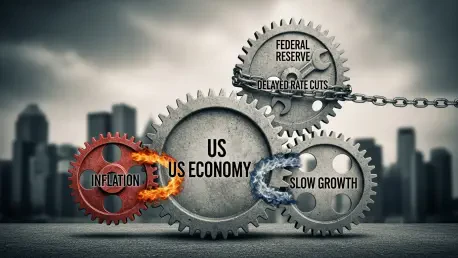

The delicate equilibrium of the American economy is currently being tested by a frustrating combination of persistent price pressures and a noticeable deceleration in overall domestic production. As policymakers attempt to steer the nation toward stability, recent indicators suggest that the path forward is increasingly narrow. This analysis explores how the interaction between consumer behavior and central bank strategy is shaping a reality where interest rate relief remains elusive. By dissecting the latest data, stakeholders can better understand why the Federal Reserve has maintained its restrictive stance despite mounting pressure.
The Path to the Current Economic Crossroads
The journey to this juncture began with disruptions that forced a reevaluation of monetary policy. For several years, the focus remained on taming cost spikes by raising the cost of borrowing. While the initial tightening cycle successfully lowered peak inflation, the momentum stalled before reaching the desired 2% target.
This stagnation is largely attributed to structural shifts in global trade and a labor market that has refused to cool as expected. Historical comparisons show that periods of high inflation often require extended periods of restrictive policy to fully dissipate. The central bank is cautious about repeating the mistakes of the past, where premature rate cuts led to secondary waves of price increases.
Analyzing the Forces Behind Market Volatility and Fed Hesitation
Persistent Inflationary Pressure: The PCE Reality
The Personal Consumption Expenditures price index remains the primary obstacle preventing a shift in monetary strategy. Recent tracking shows the 12-month headline inflation rate climbing to 3.8%, driven by a 5.5% surge in gasoline prices and a continuous 0.5% monthly increase in the cost of shelter. This persistence suggests that basic living expenses are not responding to high interest rates, keeping core inflation at a stubborn 3.3%.
Cooling Growth: The Strain on Household Savings
While inflation remains high, the domestic growth engine is showing fatigue as annualized growth was revised down to 1.6%. This deceleration is primarily a result of softening consumer demand as high prices weigh on the ability of households to spend. The personal savings rate has fallen to a low of 2.6%, suggesting that the resilience shown by consumers over the past few years is nearing its limit.
Complexities: Manufacturing, Labor, and Global Policy
The manufacturing sector continues to send mixed signals, with durable goods orders showing volatility outside of the transportation industry. Simultaneously, the labor market remains a pillar of strength with jobless claims at 215,000, which prevents a recession but keeps wage growth high enough to fuel further inflationary cycles. Internal debates within the Federal Reserve now center on whether higher rates are needed to finally achieve price stability.
Looking Ahead: The Shift Toward a Hawkish Future
The narrative in the financial markets has undergone a transformation as expectations for rate cuts are pushed further into the distance. Investors are now preparing for a “higher-for-longer” environment that could stretch through the coming years. There is even growing speculation that the next move by the central bank could be an increase rather than a decrease if price stability is not achieved through current measures.
Strategic Takeaways: Navigating a High-Rate Environment
In this climate, businesses must prioritize balance sheet health and operational efficiency while reducing reliance on cheap debt. Maintaining strong cash flow and reducing leverage are essential steps for navigating the current market volatility. For individual consumers, the environment demands a focus on debt management and rebuilding emergency funds to protect against potential shocks in the labor market and broader economy.
Sustaining Resilience: A Final Review
The interaction between stubborn inflation and a slowing economy defined the recent policy cycle and dictated the cautious approach taken by the Federal Reserve. The challenge of reaching the 2% target was exacerbated by rising costs in the housing and energy sectors, which outweighed the impact of restrictive monetary measures. Ultimately, the transition away from an era of easy credit required a fundamental realignment of expectations for all participants in the American market. This shift indicated that future economic resilience would depend more on fiscal efficiency than on central bank intervention.