
In the heart of financial markets, a quiet tension grips investors as Treasury yields hover at critical levels, with the 10-year benchmark steady at 4.09%. This stillness, almost eerie against the backdrop of a pivotal Federal Reserve meeting scheduled for December 9-10, signals a market on edge. Billions of dollars in investments hinge on whether the Fed will deliver a long-anticipated rate cut, potentially reshaping the economic landscape. As the clock ticks down, the question looms: will this decision ignite a rally, or deepen uncertainty?
The Pulse of the Market
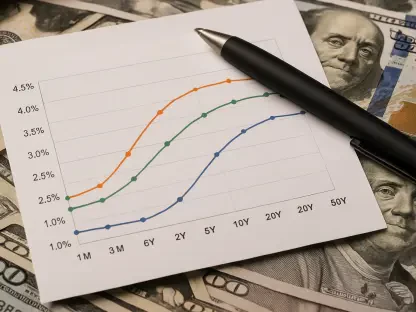
At this juncture, the importance of the Fed’s final policy meeting of the year cannot be overstated. Treasury yields, often seen as a barometer of economic health, reflect a collective holding of breath. With the 30-year yield edging up to 4.747% and the 2-year dipping to 3.514%, mixed signals dominate. Investors are pricing in an 89% chance of a quarter-point cut, dropping the fed funds rate to a range of 3.50% to 3.75%. This meeting isn’t just about numbers—it’s about the Fed’s signal on inflation and growth, which could ripple through every corner of the economy, from mortgages to corporate loans.
Decoding Yield Movements
Diving deeper, the current Treasury yield landscape tells a story of caution. The near-flat 10-year yield at 4.09% suggests investors are wary, balancing hope for a rate cut with fears of persistent inflation. Since yields move inversely to bond prices, this stability indicates a standoff between buyers and sellers. Meanwhile, the slight uptick in the 30-year yield hints at lingering concerns over long-term economic challenges, while the drop in the 2-year yield shows sensitivity to short-term policy expectations. Together, these movements paint a picture of a market poised for change, yet unsure of its direction.
A Shift in Expectations
Just weeks ago, the odds of a rate cut stood at a mere 35%, a stark contrast to today’s near-certainty. Futures trading data reveals how swiftly sentiment can pivot, driven by evolving economic signals. This rapid shift underscores the market’s reactivity—every piece of data, every Fed whisper, can tilt the scales. Investors now hang on the upcoming FOMC decision, knowing that a cut could ease borrowing costs, spurring business investments and consumer spending. However, the specter of inflation lingers, tempering optimism with a dose of reality.
Economic Indicators in the Spotlight
With Fed officials in a communications blackout, attention turns to a slew of upcoming economic reports. The ADP Employment Survey for November, weekly jobless claims, the delayed September PCE index, October durable goods orders, and December’s University of Michigan consumer sentiment numbers are all under scrutiny. Each dataset offers a glimpse into the U.S. economy’s health, potentially swaying expectations for future rate moves. For instance, a weak employment report could bolster the case for easing, while strong consumer sentiment might suggest resilience, complicating the Fed’s calculus. These releases are the market’s compass in an otherwise silent period.
Voices from the Field
Recent economic data adds another layer of complexity. The ISM manufacturing index for November fell below expectations, raising red flags about industrial slowdowns and fueling arguments for monetary easing. Industry experts, reflecting on such indicators, suggest that a rate cut might be imminent, though its impact on yields remains debated. Some analysts predict a short-term dip in yields if a cut materializes, while others caution that inflationary pressures could keep long-term rates elevated. This divergence of opinion mirrors the broader uncertainty, as markets grapple with interpreting mixed signals in a high-stakes environment.
Investor Dilemmas and Strategies
Amid this fog of uncertainty, investor sentiment varies widely. While many anticipate sustained rate cuts into the coming year, others remain skeptical, pointing to stubborn inflation as a potential roadblock. This split reflects deeper questions about the economy’s trajectory—will growth hold steady, or are headwinds gathering? For those navigating these waters, the focus is on adaptability. Keeping portfolios nimble, especially in bond holdings, becomes crucial as yields and prices move in opposition. The Fed’s next steps will likely clarify some of these concerns, but until then, vigilance is the watchword.
Wrapping Up the Waiting Game
Looking back, the tension surrounding the Federal Reserve’s December meeting kept markets in a delicate balance, with Treasury yields encapsulating the broader unease. Investors pored over every economic report, seeking clues about the Fed’s direction, while grappling with conflicting data like the disappointing ISM manufacturing index. Moving forward, staying attuned to key releases such as the PCE index remains essential for anticipating policy shifts. Beyond that, reassessing portfolio exposure to interest rate changes could offer a buffer against volatility. As the economic narrative unfolds, maintaining an informed stance will be the key to navigating the uncertainties that lie ahead.