
What began as a plan to rebuild a war-torn strip of land has rapidly escalated into a geopolitical fissure, drawing new lines in the sand that challenge the very foundation of postwar international cooperation. At the World Economic Forum in Davos, U.S. President Donald Trump unveiled his “Board of Peace,” an initiative presented as a solution for Gaza but which, in its execution, has starkly illuminated a growing divide between America’s new coalition of partners and its traditional Western allies. The signing ceremony on January 22 was less a moment of global unity and more a public display of the world’s realigned priorities, forcing nations to choose sides in a new diplomatic order.
When a Peace Plan Becomes a Global Power Play
The initiative, launched amid declarations that the Gaza war was “really coming to an end,” was designed to address the conflict’s devastating aftermath. Yet, the gathering of world leaders in the Swiss Alps did not signal a unified global front. Instead, the event served as a backdrop for an unexpected schism within the Western world. The board’s creation, intended to project American leadership in resolving a protracted crisis, immediately became a litmus test for international alliances, revealing deep-seated divisions and divergent strategic interests that had been simmering beneath the surface of transatlantic relations.
The core tension stems from the board’s swift transformation. Initially framed as a practical body for overseeing the reconstruction of the Gaza Strip, its mandate was dramatically expanded. With an endorsement from the United Nations Security Council secured in November, the board’s mission evolved into a far more ambitious project: promoting global stability and resolving conflicts worldwide. This pivot from a regional humanitarian effort to a platform for a new international order has set the stage for a dramatic reshaping of global governance, with President Trump’s administration at its center.
From Rubble to Rulemaking: The Board’s Ambitious Genesis
The board’s origin story is rooted in the practical necessity of rebuilding the Gaza Strip, a monumental task requiring immense international coordination and capital. President Trump presented it as a tangible, results-oriented solution to a seemingly intractable problem. The focus was on infrastructure, economic revival, and creating a stable environment—a vision that attracted many nations eager to see an end to the cycle of violence and destruction in the region. This practical starting point provided a compelling, non-ideological entry point for countries that might otherwise be hesitant to join a broader geopolitical initiative.
However, this initial humanitarian framing quickly gave way to a grander vision. The UN endorsement represented a critical turning point, bestowing upon the board a legitimacy that transcended the Gaza conflict. It was no longer just about reconstruction but about establishing a new mechanism for global peacemaking, one operating parallel to, and in some ways in competition with, existing international structures. This evolution signaled a clear intent to forge a new international order, where participation in the board would signify alignment with a U.S.-led approach to global security.
The New Coalition vs. the Old Guard: A Geopolitical Roll Call
The list of signatories revealed a formidable, if unconventional, alliance. Strong commitments came from key Middle Eastern powers, including Saudi Arabia, the UAE, Qatar, and Turkey, alongside Asian giants like Indonesia and Pakistan. This bloc represents a significant consolidation of influence, uniting nations critical to regional stability and economic power. They were joined by an eclectic group of leaders from other parts of the world, including Argentine President Javier Milei and Hungarian Prime Minister Viktor Orbán, highlighting a coalition built more on contemporary strategic interests than on traditional ideological alignments.
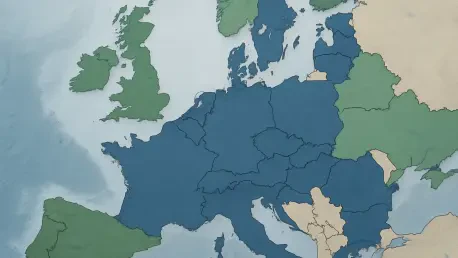
In stark contrast, the ceremony was marked by the conspicuous absence of many of America’s oldest allies. Canada, France, and Germany deliberately chose not to participate, signaling a significant break from U.S. foreign policy leadership. The United Kingdom was even more direct, with its foreign secretary explicitly stating that the UK would not sign due to “significant concerns” over the invitation extended to Russian President Vladimir Putin. This rejection from a core ally underscored the depth of the disagreement over the board’s composition and methods.
This hesitation was echoed across Europe, where many leaders called for a more coordinated response. Nations such as Belgium and Italy expressed a preference for a unified European position rather than individual endorsements, suggesting a desire to maintain the EU’s strategic autonomy. This collective caution was further highlighted when President Trump used the Davos stage to single out Spain for its defense spending, a public rebuke that only deepened the sense of division.
Whispers and Declarations: Key Voices on the Global Stage
The positions of several key nations remained shrouded in strategic ambiguity. The Kremlin, having received an invitation for President Putin, officially stated it was “studying all the details,” a classic diplomatic posture that keeps its options open. A potential meeting between Putin and a U.S. envoy is pending, leaving the door ajar for Russia’s potential involvement—a prospect that has already proven deeply divisive among Western nations.
Closer to the conflict’s epicenter, the Palestinian National Authority adopted a stance of cautious engagement. Its prime minister expressed a willingness to cooperate with the board but attached a crucial condition: the preservation and strengthening of its own governmental institutions for the reconstruction effort. This position reflects the delicate balance the PNA must strike between securing international aid and resisting any moves that could undermine its sovereignty. Meanwhile, Israel’s absence at the signing was notable, though reports suggest Prime Minister Benjamin Netanyahu is expected to join, a move that would add another complex layer to the board’s internal dynamics.
The Inner Circle: Deconstructing the Board’s Executive Leadership
To drive its ambitious agenda, the White House has assembled a powerful executive board composed of seasoned political and business leaders. The core American team includes U.S. Secretary of State Marco Rubio, Special Envoy Steve Witkoff, and Jared Kushner, placing the initiative firmly under the control of Trump’s most trusted advisers. Their leadership ensures that the board’s direction will remain closely aligned with the administration’s foreign policy objectives.
This American core is supplemented by a roster of international heavyweights chosen to operationalize the board’s vision and lend it global credibility. The inclusion of former U.K. Prime Minister Tony Blair, Apollo CEO Marc Rowan, and World Bank President Ajay Banga brings a wealth of diplomatic, financial, and developmental expertise. This blend of high-level political influence and private-sector prowess is designed to ensure the board can translate its grand strategic goals into tangible, on-the-ground projects, effectively bypassing traditional, and often slower, bureaucratic channels.
The formation of the Board of Peace at Davos was far more than a diplomatic ceremony; it was a watershed moment that publicly fractured long-standing alliances. While its stated mission was to bring stability to Gaza, its immediate effect was to crystallize a new geopolitical reality. The event drew a clear line between a new U.S.-led coalition and the traditional Western powers, who now face the challenge of navigating a world where their closest ally is actively forging a different path. The long-term consequences of this split have yet to be fully realized, but the divisions revealed in the Swiss Alps signaled a profound and perhaps irreversible shift in the global order.