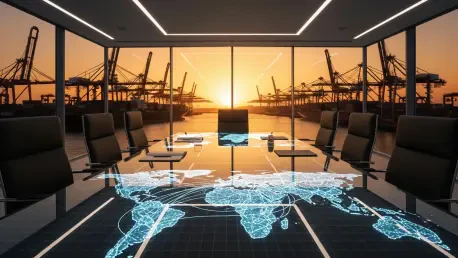

The specter of a large-scale military conflict involving Iran acts as a profound destabilizing force that reaches far beyond the immediate borders of the Middle East, threatening to dismantle the fragile architecture of the modern international system. This potential confrontation serves as a powerful multiplier for existing global crises, pushing the world toward a state of systemic chaos where traditional diplomatic and economic norms no longer apply. As the global community moves away from the post-Cold War era of relative cooperation, the threat of war in Iran highlights the extreme vulnerability of our interconnected world, signaling a definitive shift from a rules-based globalization toward a fragmented, militarized period defined by unpredictable power dynamics. This transition is not merely a temporary interruption of trade but a fundamental reorganization of how nations interact, suggesting that the old foundations of global stability are eroding and leaving a dangerous vacuum that invites further conflict and chronic economic uncertainty.
The intersection of energy security and geopolitical instability creates a volatile environment where the traditional tools of international statecraft often fall short of preventing escalation. In this atmosphere of “imperialism in disarray,” the primary concern is no longer just the containment of regional skirmishes but the management of a systemic breakdown. The resulting uncertainty forces every major global actor to reconsider their strategic priorities, as the risk of a spillover effect becomes an ever-present reality in the boardrooms and war rooms of the West and East alike. This geopolitical shift is characterized by a decline in the ability of international institutions to mediate disputes, leading to a world where raw power and military leverage become the primary currencies of diplomacy. Consequently, the prospect of war in Iran is the most significant litmus test for the durability of the current world order, revealing a landscape where the once-clear lines of international law are being blurred by the exigencies of regional survival and global dominance.
The Energy Chokepoint and Market Volatility
At the heart of the conflict’s economic impact is the Strait of Hormuz, a narrow and strategically vital waterway that functions as the most critical artery for the global energy market. Approximately 20 percent of the world’s petroleum production passes through this chokepoint, making it a geographical trigger for immediate and profound supply shocks that can paralyze international trade. Any credible threat of closure or even a minor restriction of access sends shockwaves through the commodities markets, driving extreme volatility in Brent crude prices and frequently pushing the cost per barrel into triple-digit territory. This sensitivity is not merely psychological; it is a reflection of the physical reality that there are few viable alternatives for the massive volumes of oil and liquefied natural gas that transit this passage daily. For energy-dependent economies, the Strait of Hormuz represents a single point of failure that can transform a localized naval skirmish into a worldwide industrial halt within a matter of days.
This surge in energy prices serves as a fundamental increase in the cost of inputs for nearly every industrial and logistical process on the planet, creating a cascading effect that reaches every corner of the consumer market. Because the global economy is currently navigating a period of high debt levels and lingering trade tensions, the energy channel acts as the primary transmission mechanism for a new wave of global inflation. When the cost of moving goods across oceans and powering massive manufacturing hubs rises, the regional military conflict effectively exports its costs to every household in the form of higher fuel, electricity, and goods prices. This phenomenon creates a regressive economic burden, where the most vulnerable populations in both developed and developing nations pay the highest price for geopolitical maneuvering. The volatility in the energy market thus acts as a persistent drag on investment, as businesses struggle to forecast costs in an environment where a single drone strike or naval blockade can rewrite the global balance sheet overnight.
Macroeconomic Stagnation and Global Recession
The widespread impact of the conflict on global growth and inflation has forced major financial institutions, such as the International Monetary Fund, to drastically revise their outlooks toward more pessimistic territory. Previous projections that anticipated a “soft landing” for the economy—stabilizing inflation without a deep downturn—have been largely abandoned in favor of warnings about significant losses in gross domestic product. In scenarios where military tensions remain high and oil prices stay elevated, global growth could plummet to levels as low as 2.5 percent, a figure that historically correlates with recessionary conditions in many industrialized nations. Such stagnation is particularly dangerous because it occurs at a time when many governments have already exhausted their fiscal and monetary tools. The lack of economic momentum hampers the ability of nations to invest in critical infrastructure or transition to greener technologies, effectively locking in a period of long-term underperformance that could stifle human progress for the remainder of the decade.
Compounding this stagnation is the persistent problem of “sticky” inflation, which prevents central banks from employing their traditional remedy of lowering interest rates to stimulate growth. To contain the rising costs driven by energy shortages, monetary authorities are forced to maintain high interest rates for longer periods, which in turn increases the debt-servicing burden on heavily indebted countries in the Global South. This creates a double-edged sword: high rates are necessary to fight inflation, but they simultaneously crush the ability of developing nations to fund public services or manage their existing loans. This economic squeeze is inherently regressive, as large multinational corporations and energy giants often find ways to capitalize on volatility and expand their profit margins, while workers find their real wages rapidly declining. The result is a widening gap between capital and labor, fueled by a conflict that prioritizes strategic positioning over the economic well-being of the global population, leading to a precarious cycle of low growth and high social tension.
Food Security and the Fertilizer Link
A less obvious but equally devastating dimension of the conflict involves the disruption of the global agricultural sector through the interruption of chemical supply chains. The blockage or militarization of the Strait of Hormuz does more than stop the flow of oil; it disrupts nearly 30 percent of the global trade in essential fertilizer components, such as urea, sulfur, and ammonia. As these critical inputs become scarce or prohibitively expensive, the global agricultural cycle faces a severe crisis that threatens to reduce crop yields across multiple continents. Farmers, particularly those in emerging markets who operate on thin margins, may be forced to reduce their use of fertilizers, leading to a long-term depletion of soil nutrients and a significant drop in food production. This direct link between energy chokepoints and food availability turns a regional war into a biological threat for millions, as the reduction in harvest size inevitably leads to skyrocketing prices for basic staples like wheat, corn, and rice.
For nations that are heavily dependent on food imports, this rise in the cost of living acts as a precursor to severe social instability and potential regime changes. The interplay between high energy costs and reduced food production creates a dangerous feedback loop where the cost of survival exceeds the income of the average citizen, triggering widespread civil unrest and political volatility. This “third dimension” of the war ensures that the consequences of the conflict are felt far from the front lines, reaching the dinner tables of the world’s most vulnerable populations in Africa, Asia, and Latin America. Unlike fluctuations in luxury goods, the price of bread is a non-negotiable factor in social order; when it becomes unaffordable, the resulting migration crises and internal conflicts can destabilize entire regions. Therefore, the fertilizer link serves as a stark reminder that modern warfare is no longer a localized event but a systemic shock that can compromise the basic human right to food security on a global scale.
The Shift Toward Militarized Global Value Chains
The ongoing tensions in the Middle East have accelerated the dismantling of traditional global value chains that were once organized purely for maximum efficiency and just-in-time delivery. In response to the chronic instability associated with Iran and the rise of competing global power blocs, corporations and states are now prioritizing “resilience” and “geostrategy” over low-cost production models. This shift marks a profound transition toward a segmented and militarized form of globalization where the security of the supply route is considered more important than the price of the labor involved. Major industrial players are no longer willing to bet their entire manufacturing process on the stability of a single region or a vulnerable maritime passage. Instead, they are diversifying their sources and investing in localized production hubs that can function even if a major conflict erupts in the Persian Gulf, effectively ending the era of hyper-globalization where efficiency was the only metric that mattered.
This reconfiguration of trade leads to a trend of selective nearshoring and the relocation of industrial hubs to “friendly” or allied nations that share similar security interests. The goal is to secure critical links in the production of high-end technology, such as semiconductors and renewable energy components, while reducing dependence on unstable corridors like the Middle East. This is not a total reversal of globalization, but rather a strategic redesign where the risk of regional conflict is now a permanent and internalized feature of business operations and national policy. Governments are increasingly intervening in the private sector to ensure that essential supply chains are shielded from geopolitical shocks, leading to a world where trade and national security are indistinguishable. Consequently, the global trade network is becoming a collection of hardened, overlapping circles of influence, where economic cooperation is predicated on military alignment, fundamentally changing the nature of international commerce for the foreseeable future.
Systemic Chaos and the Decline of Hegemony
The most significant geopolitical consequence of the conflict involving Iran is the visible decline of United States hegemony and the resulting onset of systemic chaos. As the ability of a single superpower to discipline its allies or effectively contain its rivals diminishes, the world enters a phase where no single entity possesses the authority to guarantee global stability. The transition away from a rules-based order, characterized by the rise of unilateral actions and the bypass of international law, has made the international landscape increasingly unpredictable and prone to escalation. This decline is not merely military but also moral and diplomatic, as the institutions designed to prevent such conflicts are sidelined in favor of direct, often violent, confrontations. The resulting power vacuum does not remain empty; instead, it is filled by a variety of regional and global actors who seek to redefine the rules of the game in their own favor, leading to a fractured world where consensus is a thing of the past.
The failure to achieve a decisive or lasting stabilization in the Iran conflict exposes the inherent limits of traditional military power in a multipolar world. Rather than restoring a sense of international authority, military intervention often reveals the extreme difficulty of imposing lasting political results in a landscape where proxy forces and asymmetric tactics are the norm. This realization further accelerates the decomposition of the established world order, as rival powers like China and Russia exploit these vulnerabilities to expand their own spheres of influence. The world is thus entering an era of permanent geopolitical friction, where the absence of a global arbiter leads to a cycle of small-scale wars that have disproportionate systemic impacts. This state of affairs suggests that the global community must learn to navigate a world without a center, where the threat of war is no longer a rare exception but a persistent feature of a disorganized and increasingly dangerous international environment.
Strategies for a Fragmented Future
The complexities of the current geopolitical landscape necessitate a fundamental shift in how nations and international organizations approach the preservation of stability. It is no longer sufficient to rely on the hope that trade interdependency will prevent major conflicts; instead, policymakers should actively decouple essential survival needs from the most volatile regions of the world. This involves not only the physical relocation of supply chains but also a massive investment in domestic energy independence and synthetic fertilizer production to mitigate the risks posed by chokepoints like the Strait of Hormuz. Governments must move beyond reactive crisis management and toward a proactive strategy of “hardened autonomy,” where the ability to provide food and energy to their citizens is guaranteed regardless of regional military escalations. By reducing the strategic leverage that any single nation can hold over the global economy, the international community can begin to lower the stakes of regional disputes and prevent them from spiraling into global catastrophes.
Furthermore, the transition into a multipolar world requires a new form of “minilateral” diplomacy, where smaller groups of stable, like-minded nations form resilient networks to protect shared interests in trade and security. Since large-scale international institutions are currently struggling to provide effective mediation, these smaller, more agile coalitions can serve as anchors of stability in an otherwise chaotic system. These networks should focus on establishing clear protocols for maritime security and the protection of digital infrastructure, ensuring that even during periods of high tension, the essential conduits of global life remain functional. Ultimately, the lessons learned from the instability in the Middle East suggest that the era of a single global order has passed. Success in this new environment will be defined by the ability to adapt to fragmentation, emphasizing regional self-sufficiency and the creation of robust, localized alliances that can weather the inevitable storms of a world in transition.